




Water Service Dresser Couplings

 --%3E %3Csvg version='1.1' id='Fill' xmlns='http://www.w3.org/2000/svg' xmlns:xlink='http://www.w3.org/1999/xlink' x='0px' y='0px' viewBox='0 0 100 100' enable-background='new 0 0 100 100' xml:space='preserve'%3E %3Cpath fill='%23F15C02' d='M79.44,0.95H20.56C9.78,0.95,0.95,9.78,0.95,20.56v58.87c0,10.79,8.82,19.61,19.61,19.61h58.87 c10.79,0,19.61-8.83,19.61-19.61V20.56C99.05,9.78,90.22,0.95,79.44,0.95z M65.38,58.24l9.38,29.58L49.69,69.78L24.5,87.82 l9.34-29.6L8.8,39.6l30.73-0.17c0,0,6.98-19.61,10-28.93c0.54,1.36,9.88,29.1,9.88,29.1H91.2L65.38,58.24z'/%3E %3C/svg%3E)
 --%3E %3Csvg version='1.1' id='Half' xmlns='http://www.w3.org/2000/svg' xmlns:xlink='http://www.w3.org/1999/xlink' x='0px' y='0px' viewBox='0 0 100 100' enable-background='new 0 0 100 100' xml:space='preserve'%3E %3Cg%3E %3Cpath fill='%23F15C02' d='M30.05,70.23l3.79-12.01L8.8,39.6l30.73-0.17c0,0,6.98-19.61,10-28.93c0.54,1.36,9.88,29.1,9.88,29.1h1.58 L93.71,7.18c-3.58-3.82-8.66-6.23-14.28-6.23H20.56C9.78,0.95,0.95,9.78,0.95,20.56v58.87c0,5.41,2.22,10.32,5.79,13.88 L30.05,70.23z'/%3E %3C/g%3E %3Cpath fill='%23FBC8B4' d='M93.71,7.18L60.98,39.6H91.2L65.38,58.24l9.38,29.58L49.69,69.78L24.5,87.82l5.55-17.59L6.75,93.32 c3.55,3.54,8.44,5.73,13.82,5.73h58.87c10.79,0,19.61-8.83,19.61-19.61V20.56C99.05,15.4,97.01,10.69,93.71,7.18z'/%3E %3C/svg%3E)


 --%3E %3Csvg version='1.1' id='No-RB' xmlns='http://www.w3.org/2000/svg' xmlns:xlink='http://www.w3.org/1999/xlink' x='0px' y='0px' viewBox='0 0 100 100' enable-background='new 0 0 100 100' xml:space='preserve'%3E %3Cpath fill='%23CECECE' d='M79.44,0.95H20.56C9.78,0.95,0.95,9.78,0.95,20.56v58.87c0,10.79,8.82,19.61,19.61,19.61h58.87 c10.79,0,19.61-8.83,19.61-19.61V20.56C99.05,9.78,90.22,0.95,79.44,0.95z M65.38,58.24l9.38,29.58L49.69,69.78L24.5,87.82 l9.34-29.6L8.8,39.6l30.73-0.17c0,0,6.98-19.61,10-28.93c0.54,1.36,9.88,29.1,9.88,29.1H91.2L65.38,58.24z'/%3E %3C/svg%3E)

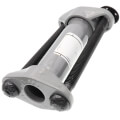
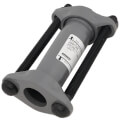
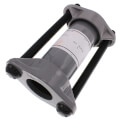
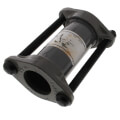
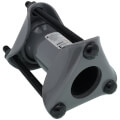
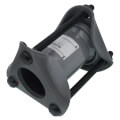
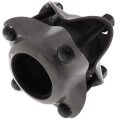
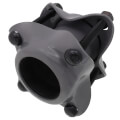
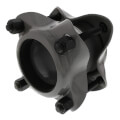
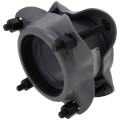
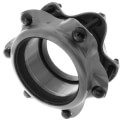
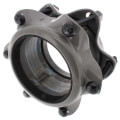
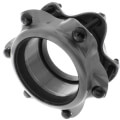
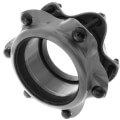
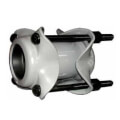
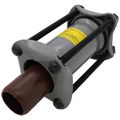
Water Service Dresser Couplings are mechanical compression fittings that join or repair plain-end water pipe without welding, threading, or flanging. Each coupling uses a carbon steel middle ring, two follower rings, two gaskets, and a set of steel track-head bolts that compress the gaskets against the pipe to form a seal. Couplings in this line carry pressure ratings to 1500 psi and a temperature range from negative 20°F to 1200°F, covering most municipal and commercial water service repairs. Gasket material options include Buna S, the most common choice, along with Buna N, Viton, EPDM, and graphite fiber hybrid compounds for less common fluids or temperatures. Crews reach for these couplings most often on emergency or underground water line repairs, where cutting in a welded or flanged joint isn't practical.
Subcategories
- Standard Dresser Couplings: Standard Dresser couplings use a cylindrical carbon steel middle ring and two follower rings that draw together over a set of steel track-head bolts, compressing a gasket against each pipe end to seal the joint. Water utility crews use this base design to join plain-end pipe sections without welding, threading, or flanging the ends first. Bolts get tightened alternately and in stages, reaching final torque across a minimum of three passes rather than fully tightening one bolt at a time. The basic coupling design handles pressure ratings to 1500 psi depending on size and gasket selection.
- Buna S Gasket Couplings: Buna S is the most common gasket compound used in Dresser couplings for general water service applications. Utility crews specify Buna S couplings for routine main repairs and connections where the fluid is straightforward potable or non-potable water at typical ambient temperatures. The gasket compresses between the middle ring and each pipe end to form the primary seal for the joint. Because Buna S covers most standard water service conditions, it serves as the default gasket choice unless a job calls for extended temperature or chemical resistance.
- Extended Temperature & Chemical Resistant Gasket Couplings: Couplings fitted with Buna N, Viton, EPDM, or graphite fiber hybrid gaskets extend Dresser coupling use beyond standard water service into applications with different fluids or temperature extremes. The line's overall temperature range spans negative 20°F to 1200°F depending on gasket selection, far beyond what a standard Buna S gasket alone would tolerate at the high end. Crews select the gasket material based on the specific fluid and temperature the joint will see in service. Matching gasket compound to application keeps the seal intact over the coupling's service life.
- Emergency & Underground Repair Couplings: Emergency and underground repair applications are where crews reach for Dresser couplings most often, since the mechanical joint design lets a plain-end pipe get reconnected without welding, threading, or flanging in a trench or confined space. The coupling's compression design works on pipe with a straight, plain end, which is typically all that's left after cutting out a damaged section. Because installation doesn't require heat or specialty tooling, a repair can move forward with equipment already carried on a service truck. Underground water main breaks account for much of the demand for this coupling style on service trucks.
Buying Guide
Choosing a Dresser coupling starts with pipe size and material at the repair point, since the middle ring and follower rings need to match the pipe's outside diameter closely enough for the gaskets to seat properly. Pressure rating comes next. Water Service Dresser Couplings in standard configurations handle pressure ratings to 1500 psi, which covers the overwhelming majority of municipal and commercial water lines, but confirming the rating on a specific size and style avoids a mismatch on higher pressure transmission mains. Gasket material is the detail most likely to get overlooked on a routine repair. Buna S handles standard water service and ambient temperature conditions and works for most jobs, while Buna N, Viton, EPDM, or graphite fiber hybrid gaskets extend protection to different fluids or to temperature extremes across the line's negative 20°F to 1200°F range. Installation practice affects joint reliability as much as the coupling itself. Track-head bolts need to be tightened alternately and in stages across a minimum of three passes rather than torqued one at a time, since uneven tightening can cock the middle ring and prevent the gasket from sealing evenly around the pipe. Crews doing emergency or underground repairs benefit from carrying a small range of sizes and gasket types on the truck, since matching the coupling to the pipe and fluid on site the first time avoids a second trip back to the yard.
Frequently Asked Questions
What pipe types can a Dresser coupling repair?
Dresser couplings join or repair plain-end pipe, meaning pipe with a straight cut end rather than a threaded, flanged, or beveled end. Water Service Dresser Couplings are commonly used on water mains and service lines, though the same mechanical joint design also applies to other plain-end pipe repairs. The middle ring and follower rings need to match the pipe's outside diameter for the gaskets to seat correctly.
What pressure can a Dresser coupling handle?
Dresser couplings carry pressure ratings to 1500 psi depending on size and gasket selection, which covers standard municipal and commercial water service applications. Confirming the rating for the specific size and style being installed avoids a mismatch on higher pressure lines. The gasket material chosen also affects the coupling's overall performance limits.
Which gasket material should be used in a Dresser coupling?
Buna S is the most common gasket and covers standard water service at typical ambient temperatures. Buna N, Viton, EPDM, and graphite fiber hybrid gaskets extend the coupling's range to different fluids or to temperature extremes across a rated span of negative 20°F to 1200°F. Selecting the gasket based on the fluid and temperature at the repair point keeps the seal reliable over time.
How should the bolts on a Dresser coupling be tightened?
Track-head bolts on a Dresser coupling need to be tightened alternately rather than one at a time, reaching final torque across a minimum of three passes. Tightening one bolt fully before moving to the next can cock the middle ring and keep the gasket from sealing evenly. Even, staged tightening keeps the seal consistent around the full pipe circumference.
Why are Dresser couplings common on emergency water line repairs?
The coupling's compression design lets a plain-end pipe get reconnected without welding, threading, or flanging, which fits the conditions of an underground or emergency repair where heat sources and specialty tooling aren't practical to bring to the site. Water Service Dresser Couplings can be installed with tools already carried on a typical service truck. The practicality of the design makes them a standard part of a water utility crew's repair kit.
