




Filters
SORT
Product Availability –
Brand –
Size –
Review Score –
 --%3E %3Csvg version='1.1' id='Fill' xmlns='http://www.w3.org/2000/svg' xmlns:xlink='http://www.w3.org/1999/xlink' x='0px' y='0px' viewBox='0 0 100 100' enable-background='new 0 0 100 100' xml:space='preserve'%3E %3Cpath fill='%23F15C02' d='M79.44,0.95H20.56C9.78,0.95,0.95,9.78,0.95,20.56v58.87c0,10.79,8.82,19.61,19.61,19.61h58.87 c10.79,0,19.61-8.83,19.61-19.61V20.56C99.05,9.78,90.22,0.95,79.44,0.95z M65.38,58.24l9.38,29.58L49.69,69.78L24.5,87.82 l9.34-29.6L8.8,39.6l30.73-0.17c0,0,6.98-19.61,10-28.93c0.54,1.36,9.88,29.1,9.88,29.1H91.2L65.38,58.24z'/%3E %3C/svg%3E)
Price Range –
EMT Insulated Compression Connectors

 --%3E %3Csvg version='1.1' id='No-RB' xmlns='http://www.w3.org/2000/svg' xmlns:xlink='http://www.w3.org/1999/xlink' x='0px' y='0px' viewBox='0 0 100 100' enable-background='new 0 0 100 100' xml:space='preserve'%3E %3Cpath fill='%23CECECE' d='M79.44,0.95H20.56C9.78,0.95,0.95,9.78,0.95,20.56v58.87c0,10.79,8.82,19.61,19.61,19.61h58.87 c10.79,0,19.61-8.83,19.61-19.61V20.56C99.05,9.78,90.22,0.95,79.44,0.95z M65.38,58.24l9.38,29.58L49.69,69.78L24.5,87.82 l9.34-29.6L8.8,39.6l30.73-0.17c0,0,6.98-19.61,10-28.93c0.54,1.36,9.88,29.1,9.88,29.1H91.2L65.38,58.24z'/%3E %3C/svg%3E)

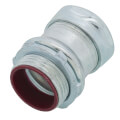
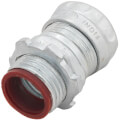
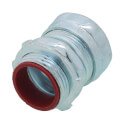
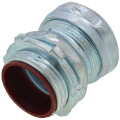
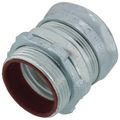
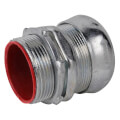
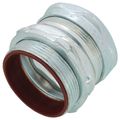
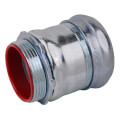
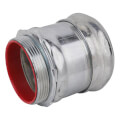
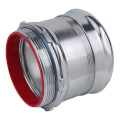
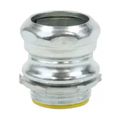
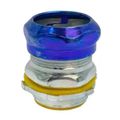
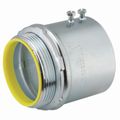
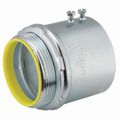
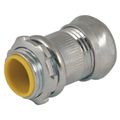
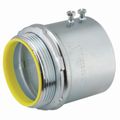

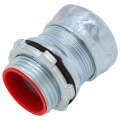
EMT Insulated Compression Connectors are fittings that join electrical metallic tubing to a box or enclosure while an insulated throat protects conductor insulation from abrasion during and after installation. The insulated throat on these connectors is rated up to 105°C, which holds up under the heat conductors can generate in a loaded circuit. Connectors come in steel with zinc plating or die cast zinc, and trade sizes typically run from 1/2 inch up to 4 inch to match common EMT runs. Zinc die cast connectors carry a UL concrete-tight listing without needing tape at the joint, and CSA concrete-tight and raintight listings extend their use to slab pours and some outdoor locations. Steel connectors meeting UL 514B, such as the Bridgeport 252-I, are common on standard commercial and industrial rough-in work. Choosing insulated versus non-insulated, and steel versus zinc, comes down to the conductor count, insulation type, and whether the connection lands in a wet, damp, or concrete-encased location.
Subcategories
- Steel Insulated Compression Connectors: Steel insulated compression connectors, such as the Bridgeport 252-I, use zinc-plated steel with an insulated throat rated to 105°C and meet UL 514B. Electricians use these on standard commercial and industrial EMT rough-in where a concrete-tight seal and abrasion protection at the throat are both required. The zinc plating resists corrosion during storage and after installation in dry to moderately damp locations. Trade sizes for steel insulated connectors typically span 1/2 inch through 4 inch.
- Die Cast Zinc Insulated Compression Connectors: Die cast zinc insulated compression connectors carry a UL concrete-tight listing without requiring tape at the connection, along with a CSA concrete-tight and raintight listing. Electricians use these where the connector needs to seal against moisture, such as a connection cast directly into a concrete slab. The insulated throat still carries the same 105°C rating found on steel versions. Sizes from 2-1/2 inch to 4 inch in this material can also be used with rigid conduit.
- Raintight Insulated Compression Connectors: Raintight insulated compression connectors add a sealing ring to the standard compression design so the connection stays sealed in wet or outdoor locations. Electricians use these on EMT runs that transition to an outdoor enclosure or exterior equipment connection. The insulated throat on raintight models still protects conductor insulation from abrasion at the point of entry. Zinc construction is common on raintight models for corrosion resistance in exposed locations.
Buying Guide
Picking the correct EMT connector starts with the installation environment, not just the conduit size. Dry, indoor commercial and industrial rough-in typically calls for a steel insulated compression connector, since steel construction meets UL 514B and costs less to stock in bulk than zinc die cast alternatives. Concrete-encased runs change the calculation. A connector cast into a slab needs a UL concrete-tight listing that holds without tape at the joint, which points toward die cast zinc EMT Insulated Compression Connectors rather than standard steel versions. Outdoor or exposed locations add another layer: a raintight listing, combined with CSA concrete-tight and raintight certification where applicable, keeps moisture out of the enclosure over years of weather exposure. Conductor protection matters just as much as the housing material. The insulated throat rated to 105°C on both steel and zinc versions protects wire insulation from abrasion as conductors get pulled through during rough-in and again during any future circuit changes. Trade size selection follows the EMT size already specified on the job, with common sizes running from 1/2 inch up through 4 inch, and larger zinc die cast sizes doubling as rigid conduit connectors in mixed-conduit systems. Confirming the box or enclosure knockout size against the connector's locknut and trade size before ordering avoids a mismatched fit on site. For most standard commercial work, steel insulated connectors cover the bulk of rough-in needs, reserving zinc die cast and raintight versions for wet, concrete, or outdoor conditions.
Frequently Asked Questions
What does the insulated throat on an EMT compression connector protect against?
The insulated throat on an EMT compression connector protects conductor insulation from abrasion as wires get pulled through the connector during installation. Insulated throats on these connectors carry a temperature rating up to 105°C, which holds up under normal circuit loading. Both steel and die cast zinc EMT Insulated Compression Connectors include this insulated throat feature.
When is a die cast zinc EMT connector needed instead of steel?
Die cast zinc EMT connectors carry a UL concrete-tight listing without requiring tape at the joint, along with CSA concrete-tight and raintight listings. Electricians reach for zinc die cast connectors when a run gets encased in a concrete slab or needs a raintight seal outdoors. Steel insulated connectors, which meet UL 514B, remain the standard choice for dry indoor rough-in.
What trade sizes are available for EMT insulated compression connectors?
EMT insulated compression connectors are available in trade sizes running from 1/2 inch up through 4 inch. Larger zinc die cast sizes, from 2-1/2 inch to 4 inch, can also connect to rigid conduit in mixed-conduit systems. Matching the connector's trade size to the specified EMT size keeps the box or enclosure knockout fit correct.
Are EMT compression connectors rated for outdoor use?
Standard EMT insulated compression connectors are rated for concrete-tight and dry to damp locations, while raintight variants add a sealing ring for outdoor or exposed installations. CSA concrete-tight and raintight listings apply to specific zinc die cast models built for that purpose. Confirming the specific listing on the connector before an outdoor installation keeps the connection compliant.
What standard do insulated EMT compression connectors meet?
Steel insulated EMT compression connectors, including the Bridgeport 252-I, meet UL 514B and carry a UL listing for concrete-tight connections. The insulated throat rating of 105°C applies across both steel and die cast zinc versions. Checking the specific UL file number on the connector packaging confirms the listing for inspection purposes.
