



Easy Heat Tape - Heat Cable
Easy Heat tape and heat cable protect exposed water lines and roof edges from freeze damage using electrically heated cable. The category covers pipe heat tape sized for water lines and de-icing cable designed to run along roof edges, valleys, and gutters.
Selecting the right length and wattage for a given run keeps the cable providing enough heat without wasting electricity on an oversized installation. Contractors installing freeze protection ahead of winter often size pipe heat tape and roof de-icing cable separately since each addresses a different freeze risk.
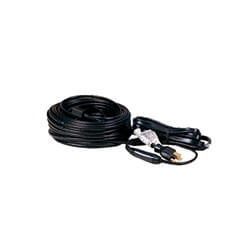

Subcategories
- Pipe Heat Tape - Heat Cable: Pipe heat tape protects exposed water lines running through unheated crawlspaces, attics, or exterior walls where ambient temperature can drop below freezing during winter months. Self regulating cable adjusts its own heat output along its length, drawing more power on colder sections of the pipe, and protects pipe down to about negative 60 degrees Fahrenheit while including a metal braided jacket that provides both an electrical ground path and physical protection against metal or plastic pipe.
- Roof & Gutter De-Icing: Roof and gutter de-icing cable installs along roof edges, valleys, and inside gutters and downspouts to keep melted snow draining off the roof instead of backing up behind an ice dam. Pre-terminated constant wattage kits come with a three-wire grounded plug and a 6 foot power cord, and are built to maintain a clear drainage channel on inclined roofs with asphalt tab shingles, gutters, and downspouts rather than melt snow across the entire roof surface.
Buying Guide
Identifying the actual problem being solved comes first, since pipe freeze protection and roof de-icing use different cable designs even though both fall under the same general heat cable category. Pipe cable is chosen based on pipe length, diameter, and insulation, while roof and gutter cable is chosen based on roof edge length, gutter and downspout runs, and the number of valleys that collect runoff.
Cable length needs to account for the full run being protected, including any extra length needed to loop into a downspout or wrap around a pipe fitting or valve. Ordering a length that falls short of the actual run leaves a gap in protection right where freezing is most likely to start.
Power source and circuit protection matter on both product types. Heat cable should plug into or be wired to a dedicated, GFCI protected circuit sized for the cable's wattage per foot, and a cable spanning a long run may need to be split across more than one circuit to stay within the circuit's rated capacity.
Control options range from a simple plug in thermostat to a roof mounted sensor that only energizes the cable when both cold temperature and moisture are present. A sensor based control on a roof system reduces unnecessary run time compared to a cable that's left on a fixed timer through the entire winter season.
Cable type needs to match the pipe or roofing material it's installed against. Metal braided cable designed for standard water pipe and asphalt shingle roofs isn't rated for installation directly on a metal roof, so confirming the intended surface and material compatibility before ordering avoids installing a product outside its listed use.
Frequently Asked Questions
How cold does it need to be before pipe heat cable turns on?
Self regulating pipe heat cable adjusts its own output continuously based on the surrounding temperature rather than switching fully on or off at one setpoint, so it draws more power as the pipe gets colder without needing a separate thermostat in many installations. Adding a thermostat control still makes sense on a system where cutting power entirely during warmer stretches is a priority.
Can pipe heat cable be used on plastic pipe?
Yes, self regulating pipe heat cable is built for both metal and plastic water pipe, with a braided jacket that provides an electrical ground path regardless of the pipe material underneath. Following the manufacturer's spacing and wrap instructions for the specific pipe material keeps the installation within its listed rating.
Will roof de-icing cable clear an entire roof of snow?
No. Roof and gutter de-icing cable is designed to maintain a clear drainage channel along the roof edge, in valleys, and through gutters and downspouts so melted snow can drain off instead of backing up into an ice dam. It isn't intended or rated to melt snow across an entire roof surface.
Can roof de-icing cable be installed on a metal roof?
Standard roof and gutter de-icing cable is intended for inclined roofs with asphalt tab shingles and isn't rated for installation directly on metal roofing, so a metal roof application needs a cable and mounting system specifically rated for that surface. Installing standard cable on an unrated roof type falls outside the manufacturer's listed use and can create a safety issue.
Does heat cable need to run on its own dedicated circuit?
Heat cable should be installed on a dedicated, GFCI protected circuit sized to the cable's total wattage, since combining it with other loads on a shared circuit increases the chance of nuisance tripping during the coldest, highest demand periods. Longer cable runs with higher total wattage may need to be split across multiple circuits to stay within each circuit's rated capacity.
Resources
Subcategories
- Pipe Heat Tape - Heat Cable: Pipe heat tape protects exposed water lines running through unheated crawlspaces, attics, or exterior walls where ambient temperature can drop below freezing during winter months. Self regulating cable adjusts its own heat output along its length, drawing more power on colder sections of the pipe, and protects pipe down to about negative 60 degrees Fahrenheit while including a metal braided jacket that provides both an electrical ground path and physical protection against metal or plastic pipe.
- Roof & Gutter De-Icing: Roof and gutter de-icing cable installs along roof edges, valleys, and inside gutters and downspouts to keep melted snow draining off the roof instead of backing up behind an ice dam. Pre-terminated constant wattage kits come with a three-wire grounded plug and a 6 foot power cord, and are built to maintain a clear drainage channel on inclined roofs with asphalt tab shingles, gutters, and downspouts rather than melt snow across the entire roof surface.
Buying Guide
Identifying the actual problem being solved comes first, since pipe freeze protection and roof de-icing use different cable designs even though both fall under the same general heat cable category. Pipe cable is chosen based on pipe length, diameter, and insulation, while roof and gutter cable is chosen based on roof edge length, gutter and downspout runs, and the number of valleys that collect runoff.
Cable length needs to account for the full run being protected, including any extra length needed to loop into a downspout or wrap around a pipe fitting or valve. Ordering a length that falls short of the actual run leaves a gap in protection right where freezing is most likely to start.
Power source and circuit protection matter on both product types. Heat cable should plug into or be wired to a dedicated, GFCI protected circuit sized for the cable's wattage per foot, and a cable spanning a long run may need to be split across more than one circuit to stay within the circuit's rated capacity.
Control options range from a simple plug in thermostat to a roof mounted sensor that only energizes the cable when both cold temperature and moisture are present. A sensor based control on a roof system reduces unnecessary run time compared to a cable that's left on a fixed timer through the entire winter season.
Cable type needs to match the pipe or roofing material it's installed against. Metal braided cable designed for standard water pipe and asphalt shingle roofs isn't rated for installation directly on a metal roof, so confirming the intended surface and material compatibility before ordering avoids installing a product outside its listed use.
Frequently Asked Questions
How cold does it need to be before pipe heat cable turns on?
Self regulating pipe heat cable adjusts its own output continuously based on the surrounding temperature rather than switching fully on or off at one setpoint, so it draws more power as the pipe gets colder without needing a separate thermostat in many installations. Adding a thermostat control still makes sense on a system where cutting power entirely during warmer stretches is a priority.
Can pipe heat cable be used on plastic pipe?
Yes, self regulating pipe heat cable is built for both metal and plastic water pipe, with a braided jacket that provides an electrical ground path regardless of the pipe material underneath. Following the manufacturer's spacing and wrap instructions for the specific pipe material keeps the installation within its listed rating.
Will roof de-icing cable clear an entire roof of snow?
No. Roof and gutter de-icing cable is designed to maintain a clear drainage channel along the roof edge, in valleys, and through gutters and downspouts so melted snow can drain off instead of backing up into an ice dam. It isn't intended or rated to melt snow across an entire roof surface.
Can roof de-icing cable be installed on a metal roof?
Standard roof and gutter de-icing cable is intended for inclined roofs with asphalt tab shingles and isn't rated for installation directly on metal roofing, so a metal roof application needs a cable and mounting system specifically rated for that surface. Installing standard cable on an unrated roof type falls outside the manufacturer's listed use and can create a safety issue.
Does heat cable need to run on its own dedicated circuit?
Heat cable should be installed on a dedicated, GFCI protected circuit sized to the cable's total wattage, since combining it with other loads on a shared circuit increases the chance of nuisance tripping during the coldest, highest demand periods. Longer cable runs with higher total wattage may need to be split across multiple circuits to stay within each circuit's rated capacity.