




Filters
SORT
Product Availability –
Length (Feet) –
Voltage –
Wattage –
Review Score –
 --%3E %3Csvg version='1.1' id='Fill' xmlns='http://www.w3.org/2000/svg' xmlns:xlink='http://www.w3.org/1999/xlink' x='0px' y='0px' viewBox='0 0 100 100' enable-background='new 0 0 100 100' xml:space='preserve'%3E %3Cpath fill='%23F15C02' d='M79.44,0.95H20.56C9.78,0.95,0.95,9.78,0.95,20.56v58.87c0,10.79,8.82,19.61,19.61,19.61h58.87 c10.79,0,19.61-8.83,19.61-19.61V20.56C99.05,9.78,90.22,0.95,79.44,0.95z M65.38,58.24l9.38,29.58L49.69,69.78L24.5,87.82 l9.34-29.6L8.8,39.6l30.73-0.17c0,0,6.98-19.61,10-28.93c0.54,1.36,9.88,29.1,9.88,29.1H91.2L65.38,58.24z'/%3E %3C/svg%3E)
Price Range –
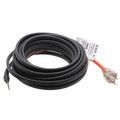
Pipe Heat Tape - Heat Cable


 --%3E %3Csvg version='1.1' id='Half' xmlns='http://www.w3.org/2000/svg' xmlns:xlink='http://www.w3.org/1999/xlink' x='0px' y='0px' viewBox='0 0 100 100' enable-background='new 0 0 100 100' xml:space='preserve'%3E %3Cg%3E %3Cpath fill='%23F15C02' d='M30.05,70.23l3.79-12.01L8.8,39.6l30.73-0.17c0,0,6.98-19.61,10-28.93c0.54,1.36,9.88,29.1,9.88,29.1h1.58 L93.71,7.18c-3.58-3.82-8.66-6.23-14.28-6.23H20.56C9.78,0.95,0.95,9.78,0.95,20.56v58.87c0,5.41,2.22,10.32,5.79,13.88 L30.05,70.23z'/%3E %3C/g%3E %3Cpath fill='%23FBC8B4' d='M93.71,7.18L60.98,39.6H91.2L65.38,58.24l9.38,29.58L49.69,69.78L24.5,87.82l5.55-17.59L6.75,93.32 c3.55,3.54,8.44,5.73,13.82,5.73h58.87c10.79,0,19.61-8.83,19.61-19.61V20.56C99.05,15.4,97.01,10.69,93.71,7.18z'/%3E %3C/svg%3E)










 --%3E %3Csvg version='1.1' id='No-RB' xmlns='http://www.w3.org/2000/svg' xmlns:xlink='http://www.w3.org/1999/xlink' x='0px' y='0px' viewBox='0 0 100 100' enable-background='new 0 0 100 100' xml:space='preserve'%3E %3Cpath fill='%23CECECE' d='M79.44,0.95H20.56C9.78,0.95,0.95,9.78,0.95,20.56v58.87c0,10.79,8.82,19.61,19.61,19.61h58.87 c10.79,0,19.61-8.83,19.61-19.61V20.56C99.05,9.78,90.22,0.95,79.44,0.95z M65.38,58.24l9.38,29.58L49.69,69.78L24.5,87.82 l9.34-29.6L8.8,39.6l30.73-0.17c0,0,6.98-19.61,10-28.93c0.54,1.36,9.88,29.1,9.88,29.1H91.2L65.38,58.24z'/%3E %3C/svg%3E)

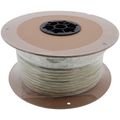





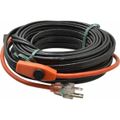
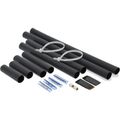
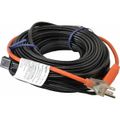


Pipe heat tape and heat cable are electric heating elements wrapped or run alongside water pipes to keep the pipe above freezing during cold weather, protecting against burst pipes in unheated crawlspaces, attics, exterior walls, and outdoor hose bibs. The cable generates a low, steady heat output along its length, either running continuously or cycling on through a built-in or external thermostat that activates once ambient temperature drops toward freezing. Plumbers and property managers install it most often on pipe runs that pass through unconditioned spaces where insulation alone can't keep the water above 32 degrees during a hard freeze.
Selecting the right length and wattage per foot for the specific pipe run keeps the whole line protected without wasted energy on oversized cable. Self-regulating cable designs adjust their own heat output along the run, which helps prevent hot spots where the cable overlaps itself at valves or fittings.
Subcategories
- Self-Regulating Heat Cable: Self-regulating heat cable automatically varies its heat output at every point along its length in response to the surrounding temperature, producing more warmth where the pipe is colder and less where it's already warm. It can be cut to length on the job and safely overlapped at fittings without creating a dangerous hot spot, which isn't the case with constant-wattage cable. Plumbers favor it for long or irregular pipe runs where temperature exposure varies along the route. It typically runs on standard household voltage and pairs with an external thermostat for automatic cycling.
- Constant-Wattage Heat Tape: Constant-wattage heat tape puts out the same fixed heat level along its entire length regardless of ambient conditions, making it a straightforward, lower-cost option for short, uniform pipe runs like a single exposed hose bib line. Because the output doesn't vary, it typically can't be overlapped or crossed over itself without risking overheating. It's commonly sold in fixed pre-terminated lengths for simple point-of-use applications. A plug-in thermostat controller is often used alongside it to limit operation to only the coldest hours.
- Roof & Gutter De-Icing Cable: Roof and gutter de-icing cable is a heavier-duty version of pipe heat cable designed to melt snow and ice buildup in gutters, downspouts, and roof valleys rather than protect a water line from freezing. It's typically installed in a zigzag pattern along the roof edge and routed down through the downspout to keep meltwater flowing instead of refreezing into an ice dam. Contractors size the cable run by roof edge length and downspout count rather than pipe diameter. Many models include a photocell or ambient thermostat so the cable only runs during freezing conditions.
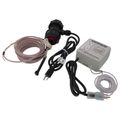
- Thermostats & Controllers: Thermostats and controllers turn heat cable on only when needed, cycling the circuit based on ambient temperature rather than running continuously, which cuts energy use over a full winter season. Some units mount inline on the cable itself, while others plug into a standard outlet and control the cable through the receptacle. Choosing a controller rated for the cable's voltage and amperage is necessary to avoid nuisance tripping or premature failure. Plumbers often pair one controller with several cable runs on a shared circuit where local code allows it.
Buying Guide
Sizing pipe heat cable correctly starts with measuring the full length of exposed or unheated pipe run, then adding extra length for any valves, elbows, or shutoffs that also need coverage, since a gap in coverage is where a freeze will start. Pipe diameter and insulation level both affect how much wattage per foot is needed to keep the line above freezing in the coldest expected conditions for the region, so a run in a well-insulated crawlspace needs less output than the same length of exposed pipe in an open unheated garage. Self-regulating cable is generally the safer choice whenever a run includes overlaps at valves or fittings, since constant-wattage cable can overheat at those crossing points.
Voltage and amperage draw should be checked against the circuit the cable will run on, particularly on longer runs or when multiple cable sections share a single breaker. Outdoor and wet-location installations need cable and connectors rated for exterior exposure, since a control box or splice kit not rated for moisture will fail well before the cable itself does. Pairing the cable with a thermostat or controller matched to the application, continuous ambient sensing for buried or hidden pipe runs versus a simple plug-in timer for a visible hose bib, keeps the system running only when needed and extends the service life of the whole setup.
Frequently Asked Questions
Can heat cable be cut to a custom length on the job site?
Self-regulating heat cable can typically be cut to length in the field using a proper end-termination kit, which makes it flexible for irregular pipe runs. Constant-wattage heat tape is usually sold in fixed, pre-terminated lengths and generally can't be shortened without voiding its rating.
Is it safe to overlap heat cable where it crosses itself at a valve?
Self-regulating cable is designed to be overlapped without creating a hot spot, since its heat output adjusts locally along the run. Constant-wattage cable puts out the same heat everywhere along its length, so overlapping it can concentrate heat and create a fire risk.
Does pipe heat cable need to run continuously all winter?
Most installations pair the cable with a thermostat or controller that only activates the circuit when ambient temperature drops toward freezing, rather than running it continuously. This reduces energy cost significantly compared to a cable left on for the entire season.
What's the difference between pipe heat tape and roof de-icing cable?
Pipe heat tape is designed to wrap directly around a water pipe to prevent freezing inside the line, while roof and gutter de-icing cable is a heavier-duty product meant to melt snow and ice buildup on exterior roof edges and downspouts. The two are sized and rated differently and generally aren't interchangeable.
Can heat cable be used on both metal and plastic pipe?
Most heat cable products are rated for use on common plumbing materials including copper, PVC, and PEX, but the manufacturer's installation instructions should always be checked for any pipe-material restrictions before installation. Wrapping technique can also vary slightly depending on the pipe material.
