




Filters
SORT
Product Availability –
Brand –
Review Score –
 --%3E %3Csvg version='1.1' id='Fill' xmlns='http://www.w3.org/2000/svg' xmlns:xlink='http://www.w3.org/1999/xlink' x='0px' y='0px' viewBox='0 0 100 100' enable-background='new 0 0 100 100' xml:space='preserve'%3E %3Cpath fill='%23F15C02' d='M79.44,0.95H20.56C9.78,0.95,0.95,9.78,0.95,20.56v58.87c0,10.79,8.82,19.61,19.61,19.61h58.87 c10.79,0,19.61-8.83,19.61-19.61V20.56C99.05,9.78,90.22,0.95,79.44,0.95z M65.38,58.24l9.38,29.58L49.69,69.78L24.5,87.82 l9.34-29.6L8.8,39.6l30.73-0.17c0,0,6.98-19.61,10-28.93c0.54,1.36,9.88,29.1,9.88,29.1H91.2L65.38,58.24z'/%3E %3C/svg%3E)
Roof & Gutter De-Icing Cables


 --%3E %3Csvg version='1.1' id='Half' xmlns='http://www.w3.org/2000/svg' xmlns:xlink='http://www.w3.org/1999/xlink' x='0px' y='0px' viewBox='0 0 100 100' enable-background='new 0 0 100 100' xml:space='preserve'%3E %3Cg%3E %3Cpath fill='%23F15C02' d='M30.05,70.23l3.79-12.01L8.8,39.6l30.73-0.17c0,0,6.98-19.61,10-28.93c0.54,1.36,9.88,29.1,9.88,29.1h1.58 L93.71,7.18c-3.58-3.82-8.66-6.23-14.28-6.23H20.56C9.78,0.95,0.95,9.78,0.95,20.56v58.87c0,5.41,2.22,10.32,5.79,13.88 L30.05,70.23z'/%3E %3C/g%3E %3Cpath fill='%23FBC8B4' d='M93.71,7.18L60.98,39.6H91.2L65.38,58.24l9.38,29.58L49.69,69.78L24.5,87.82l5.55-17.59L6.75,93.32 c3.55,3.54,8.44,5.73,13.82,5.73h58.87c10.79,0,19.61-8.83,19.61-19.61V20.56C99.05,15.4,97.01,10.69,93.71,7.18z'/%3E %3C/svg%3E)




 --%3E %3Csvg version='1.1' id='No-RB' xmlns='http://www.w3.org/2000/svg' xmlns:xlink='http://www.w3.org/1999/xlink' x='0px' y='0px' viewBox='0 0 100 100' enable-background='new 0 0 100 100' xml:space='preserve'%3E %3Cpath fill='%23CECECE' d='M79.44,0.95H20.56C9.78,0.95,0.95,9.78,0.95,20.56v58.87c0,10.79,8.82,19.61,19.61,19.61h58.87 c10.79,0,19.61-8.83,19.61-19.61V20.56C99.05,9.78,90.22,0.95,79.44,0.95z M65.38,58.24l9.38,29.58L49.69,69.78L24.5,87.82 l9.34-29.6L8.8,39.6l30.73-0.17c0,0,6.98-19.61,10-28.93c0.54,1.36,9.88,29.1,9.88,29.1H91.2L65.38,58.24z'/%3E %3C/svg%3E)










Subcategories
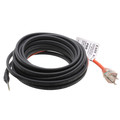
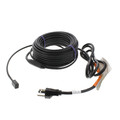
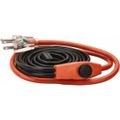
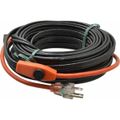
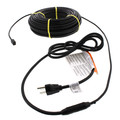
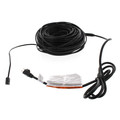
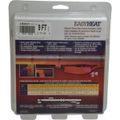
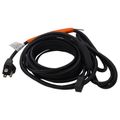
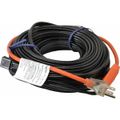
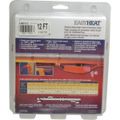
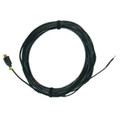
- Easy Heat Tape - Heat Cable: This self-regulating heating cable is sold in fixed pre-terminated lengths with a factory-installed plug, which simplifies installation for roof edges and gutters that match one of the standard lengths offered. The self-regulating design increases heat output in colder sections of the cable and reduces it where ice has already melted, so the cable does not overheat where it is not needed.
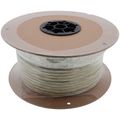
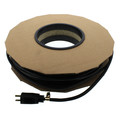
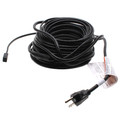
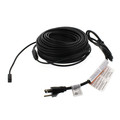
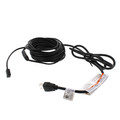
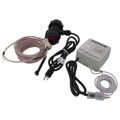
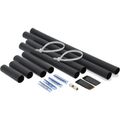
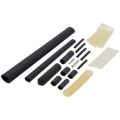
- RX Roof and Gutter De-Icing Cables: This constant-wattage heating cable is typically sold by the foot or in cut-to-length kits, giving an installer more flexibility to match cable length to an irregular roofline or a run longer than a pre-terminated length covers. Because output stays constant along the run, spacing and layout planning matter more than with a self-regulating product.
Buying Guide
Sizing a de-icing cable system starts with measuring the linear footage of every roof edge, valley, and gutter run that needs protection, then adding the extra length a zigzag layout at the eave requires beyond a straight run.
Self-regulating cable suits most straightforward gutter and roof edge jobs because it ships in fixed lengths with a plug already attached, cutting installation down to mounting clips and a nearby outlet. Constant-wattage cable by the foot fits irregular rooflines or runs that fall between standard pre-terminated lengths.
Confirm the outlet situation before finalizing a plan. Cable systems need a dedicated, properly rated outlet close enough to the roof edge or gutter that an extension cord is not needed, since a cord run outdoors in freezing weather is its own hazard.
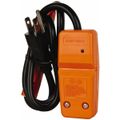
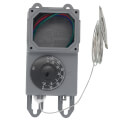
A thermostat or plug-in controller that switches the cable on only when temperature and moisture call for it cuts down on runtime compared to a system left plugged in continuously through the season, which also reduces wear on the cable over several winters.
Mounting clips and gutter hangers should match the cable manufacturer's spacing guidance, since a cable that is not held against the gutter or roof edge properly will not transfer heat evenly and can leave gaps where ice still forms.
Frequently Asked Questions
What is the difference between self-regulating and constant-wattage de-icing cable?
Self-regulating cable adjusts its own heat output along its length based on temperature, putting out more heat in colder spots and less where ice has already cleared. Constant-wattage cable puts out the same heat per foot along the entire run regardless of local conditions.
How much roof and gutter cable length do I need?
Measure every roof edge, valley, and gutter run that needs protection, then add extra length for the zigzag pattern typically used at the eave, since a straight-line measurement will undercount the cable actually needed.
Do de-icing cables need a dedicated outlet?
Yes. These systems draw enough current that they need a properly rated, dedicated outlet close to the installation area, rather than relying on an extension cord run outdoors in freezing weather.
Can de-icing cable be cut to a custom length?
Constant-wattage cable sold by the foot or in cut-to-length kits can be sized to an irregular roofline, while pre-terminated self-regulating cable comes in fixed lengths and is not intended to be cut.
Do these cables need a controller or thermostat to operate?
A cable can be plugged directly into an outlet and run continuously, but adding a thermostat or plug-in controller limits runtime to conditions that actually call for heat, which reduces both energy use and wear on the cable.
