




Electric Heat Kits


 --%3E %3Csvg version='1.1' id='No-RB' xmlns='http://www.w3.org/2000/svg' xmlns:xlink='http://www.w3.org/1999/xlink' x='0px' y='0px' viewBox='0 0 100 100' enable-background='new 0 0 100 100' xml:space='preserve'%3E %3Cpath fill='%23CECECE' d='M79.44,0.95H20.56C9.78,0.95,0.95,9.78,0.95,20.56v58.87c0,10.79,8.82,19.61,19.61,19.61h58.87 c10.79,0,19.61-8.83,19.61-19.61V20.56C99.05,9.78,90.22,0.95,79.44,0.95z M65.38,58.24l9.38,29.58L49.69,69.78L24.5,87.82 l9.34-29.6L8.8,39.6l30.73-0.17c0,0,6.98-19.61,10-28.93c0.54,1.36,9.88,29.1,9.88,29.1H91.2L65.38,58.24z'/%3E %3C/svg%3E)
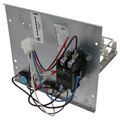
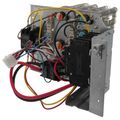

Electric heat kits are factory-matched heating accessories that install inside an air handler or furnace cabinet to add electric resistance heat to a forced-air system. They're most often paired with heat pumps, giving the system a backup heat source for the coldest days when the heat pump alone can't keep up, or supplying primary heat in an air handler that has no other heat source installed. A kit typically bundles the heating elements, a mounting frame sized to the cabinet, and the fuses or circuit breakers needed to protect each heating stage on its own branch circuit. Contractors size a kit to the air handler model and the home's electrical service rather than treating it as a universal add-on, since the frame, element layout, and breaker requirements are specific to the equipment it's installed in. Getting that match right keeps the installation safe and keeps the system's airflow and temperature rise within the range the equipment was designed for.
Subcategories
- Single-Element Kits: These kits use one heating element stage and suit smaller air handlers or homes with modest supplemental-heat needs. Contractors reach for them when the heat pump carries most of the load and the electric heat only needs to cover short cold snaps. Installation is simpler than a multi-stage kit since there's only one element and one circuit to wire in. They're a common fit for smaller ducted or ductless air handler models.
- Multi-Stage Kits: Multi-stage kits split the total heating capacity across two or more elements that energize in sequence rather than all at once. That staged approach avoids pulling the full electrical load the instant the thermostat calls for backup heat, which is easier on the home's electrical panel. They're the more common choice on larger air handlers and colder climates where the electric heat has to do more of the work. A sequencer or the air handler's control board manages which stages are active at a given time.
- Circuit Breaker and Fuse Kits: Every electric heat kit needs branch-circuit protection sized to its heating elements, and some kits are sold specifically for that protection hardware. These kits include the breakers or fuse blocks that mount to the heating element assembly and protect each stage. Electricians and HVAC techs use them when replacing failed protection components or when a kit's original breakers don't match the installed elements. Matching the amperage rating to the element's rated draw is the main consideration.
- Field-Installed Element Kits: These are heating elements sold as a retrofit for air handlers that shipped without electric heat, letting a contractor add supplemental heat to an existing system later. They require more on-site fitting than a factory-matched kit built for a specific model, since the installer has to confirm cabinet clearance and airflow before mounting. This option comes up most often when a homeowner adds a heat pump to a system that previously ran on gas or oil heat alone and wants electric backup instead of full duct or furnace changes.
Buying Guide
The starting point for choosing electric heat kits is the air handler or furnace they'll install into. Manufacturers design these kits to match a specific model or model family, so the equipment's model number is the first thing to confirm before comparing anything else. Trying to adapt a kit built for a different cabinet size or airflow rating usually means fighting with mounting brackets and duct connections that were never meant to line up, and can push the system outside its rated temperature rise.
Next comes the home's electrical service. A kit's total heating capacity has to fit within the breaker space and panel capacity available, which is why multi-stage kits exist, spreading the load across staged elements instead of one large single-stage element to ease the demand on the panel at startup. For a heat pump installation, the kit's role also matters: is it there to cover emergency heat when the compressor can't run, or to supplement the heat pump on the coldest days? That answer affects how many stages make sense.
Installation labor is part of the comparison too. A factory-matched kit built for the exact air handler model goes in faster and with fewer surprises than a field-installed retrofit element, since the frame, wiring harness, and clearances are already worked out. A retrofit kit still gets the job done on older equipment, but budget more time for fitting and for confirming duct and cabinet clearance on site before ordering.
Finally, check that the breakers or fuses included with the kit match local electrical code requirements for the branch circuits involved, and confirm the kit's amperage and stage count against the air handler's control board before finalizing an order, since a mismatch there is one of the more common causes of a failed startup after installation.
Frequently Asked Questions
Can any electric heat kit fit any air handler?
No. Electric heat kits are built to match a specific air handler model or model family, with a frame, element layout, and wiring harness sized to that cabinet. Check the air handler's model number against the manufacturer's compatibility list before ordering.
Do electric heat kits replace a heat pump's compressor heat?
Not typically. Most electric heat kits are installed as backup or supplemental heat for a heat pump system, kicking in during defrost cycles or when outdoor temperatures drop below the heat pump's efficient operating range. The heat pump still handles the bulk of normal heating.
Why do some kits have multiple heating stages instead of one large element?
Staging spreads the total electrical draw over time instead of pulling it all at once, which is easier on the home's electrical panel and breakers. Multi-stage kits also let the control board bring on only as much heat as the thermostat is calling for.
What has to be checked on the electrical panel before installing a kit?
Confirm the panel has enough available breaker space and amperage capacity for the kit's total load, and that the branch-circuit wiring is sized correctly for the breakers included with the kit. This is worth checking before the kit arrives on site, not after.
Can a field-installed heat kit be added to a furnace or air handler that didn't originally have one?
In many cases yes, using a retrofit element kit rather than a factory-matched one. It requires more on-site verification of cabinet clearance and airflow than a factory kit, since it wasn't engineered specifically for that cabinet.
