




Filters
SORT
Product Availability –
Product Type –
Review Score –
 --%3E %3Csvg version='1.1' id='Fill' xmlns='http://www.w3.org/2000/svg' xmlns:xlink='http://www.w3.org/1999/xlink' x='0px' y='0px' viewBox='0 0 100 100' enable-background='new 0 0 100 100' xml:space='preserve'%3E %3Cpath fill='%23F15C02' d='M79.44,0.95H20.56C9.78,0.95,0.95,9.78,0.95,20.56v58.87c0,10.79,8.82,19.61,19.61,19.61h58.87 c10.79,0,19.61-8.83,19.61-19.61V20.56C99.05,9.78,90.22,0.95,79.44,0.95z M65.38,58.24l9.38,29.58L49.69,69.78L24.5,87.82 l9.34-29.6L8.8,39.6l30.73-0.17c0,0,6.98-19.61,10-28.93c0.54,1.36,9.88,29.1,9.88,29.1H91.2L65.38,58.24z'/%3E %3C/svg%3E)
Price Range –
Electrode Kits



 --%3E %3Csvg version='1.1' id='No-RB' xmlns='http://www.w3.org/2000/svg' xmlns:xlink='http://www.w3.org/1999/xlink' x='0px' y='0px' viewBox='0 0 100 100' enable-background='new 0 0 100 100' xml:space='preserve'%3E %3Cpath fill='%23CECECE' d='M79.44,0.95H20.56C9.78,0.95,0.95,9.78,0.95,20.56v58.87c0,10.79,8.82,19.61,19.61,19.61h58.87 c10.79,0,19.61-8.83,19.61-19.61V20.56C99.05,9.78,90.22,0.95,79.44,0.95z M65.38,58.24l9.38,29.58L49.69,69.78L24.5,87.82 l9.34-29.6L8.8,39.6l30.73-0.17c0,0,6.98-19.61,10-28.93c0.54,1.36,9.88,29.1,9.88,29.1H91.2L65.38,58.24z'/%3E %3C/svg%3E)
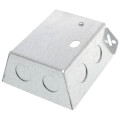
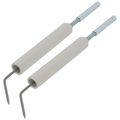
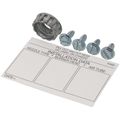

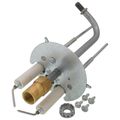
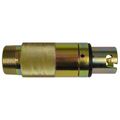
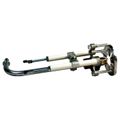
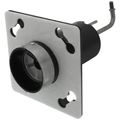

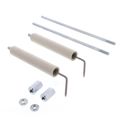
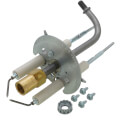
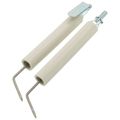
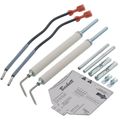
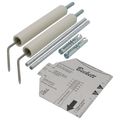
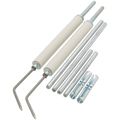
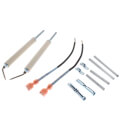
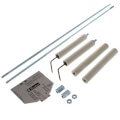
Electrode kits supply the ignition electrodes, mounting bracket, and gasket needed to restore reliable spark ignition on an oil burner, replacing the small ceramic-insulated electrode tips that arc together to ignite the oil and air mixture at burner startup. Over time, electrode tips erode from repeated arcing and can accumulate carbon buildup, both of which widen the spark gap beyond the burner manufacturer's specification and lead to hard starts, delayed ignition, or a complete failure to light. A kit typically bundles both electrode rods along with the bracket that holds them in the correct position and gap relative to the nozzle, since replacing the electrodes alone without checking bracket alignment often leaves the gap wrong even with new parts installed. Technicians commonly replace an electrode kit during annual burner service rather than waiting for a no-start call, since worn electrodes are one of the most predictable maintenance items on an oil burner. Correct gap and positioning directly affect how reliably a burner lights on the first attempt each heating cycle.
Subcategories
- Electrode Rods and Tips: Electrode rods are the ceramic-insulated components that carry high voltage from the ignition transformer to the spark gap near the nozzle. Replacement rods are sold to match specific burner makes and models since rod length and tip shape affect where the spark forms relative to the oil spray pattern. Worn or pitted tips widen the spark gap over time, which is one of the most common causes of ignition trouble on an aging burner. Technicians check and, if needed, reset the gap to the burner manufacturer's specification any time rods are replaced.
- Electrode Brackets and Mounting Hardware: The bracket holds both electrode rods in a fixed position relative to the nozzle and to each other, and it has to be set correctly for the spark to form in the right location. A bent or corroded bracket can throw off electrode alignment even when the rods themselves are new. Replacement brackets are matched to the specific burner model since mounting hole spacing and rod clearance vary across manufacturers. Technicians typically check bracket alignment with a gauge each time electrodes are serviced.
- Electrode Kit Gaskets and Seals: Gaskets seal the electrode assembly against the burner housing, keeping combustion air and any oil residue from leaking around the mounting point. A worn gasket can allow a small air leak that affects combustion efficiency even when the electrodes themselves are functioning correctly. Replacing the gasket along with the electrode kit is standard practice during a full burner tune-up. Matching gasket thickness to the specific burner model keeps the electrode assembly properly seated.
Buying Guide
Match an electrode kit to the exact oil burner make and model rather than assuming a universal fit, since rod length, tip shape, and bracket geometry all vary between manufacturers and even between different burner series from the same manufacturer. Pulling the model number off the burner nameplate before ordering is the most reliable way to get the correct kit on the first attempt.
Check whether the kit includes both electrode rods and the mounting bracket, or rods only, since some burners need bracket replacement more often than others due to corrosion or repeated adjustment over the years. If only rods are needed, confirm the existing bracket is not bent, cracked, or corroded before reusing it, since a compromised bracket will throw off electrode gap even with brand-new rods installed.
Confirm the correct spark gap specification for the burner before installation, since Electrode Kits are only as effective as the gap they are set to once installed. A gap that is too wide can cause hard starts or ignition failure, while a gap that is too narrow can lead to premature electrode erosion from excessive arcing. Setting the gap with a proper gauge, rather than by eye, keeps burner startup reliable across heating seasons.
Frequently Asked Questions
How often should oil burner electrodes be replaced?
Most technicians replace electrodes as part of an annual burner tune-up rather than waiting for an ignition failure, since worn tips and a widened spark gap are predictable wear items. Burners that see heavier cycling, such as those on larger systems, may need electrode service more frequently. Checking electrode condition at every seasonal service visit catches wear before it causes a no-start call.
What are the signs of a worn or misadjusted electrode?
Hard starts, delayed ignition with a noticeable pop at burner startup, or a complete failure to light are the most common symptoms of worn or misgapped electrodes. Visible carbon buildup or pitting on the electrode tips during inspection is also a clear sign replacement is due. A gap that measures outside the burner manufacturer's specification confirms the diagnosis.
Do I need to replace the bracket every time I replace electrode rods?
Not necessarily. If the existing bracket is straight, free of corrosion, and holds the rods at the correct gap and position, rods-only replacement is usually sufficient. A bent, cracked, or heavily corroded bracket should be replaced along with the rods, since it will not hold the correct gap even with new electrodes installed.
Why does spark gap matter so much for burner ignition?
The gap determines both the voltage needed to jump the spark and where that spark forms relative to the oil spray pattern coming off the nozzle. Too wide a gap can prevent reliable ignition, while too narrow a gap causes excessive arcing that erodes the electrode tips faster than normal. Setting the gap to the manufacturer's specification with a gauge is the standard method rather than estimating by eye.
Can a universal electrode kit be used on any oil burner?
No, electrode rod length, tip shape, and bracket geometry are specific to each burner make and model, so a kit designed for one burner will often not fit or align correctly on another. Ordering by the burner's exact model number, pulled from the nameplate, is the reliable way to get a correct-fitting kit. Using a mismatched kit can leave the spark gap wrong even after installation.
