




Fantech Kitchen Fans
Fantech kitchen fans are exhaust fans built specifically for range hood and kitchen ventilation applications, where higher airflow and grease-rated construction matter more than in typical bathroom exhaust fans. Fantech's kitchen fan lineup includes in-line duct-mounted models and exterior roof or wall-mounted units. This gives contractors options depending on where the fan needs to physically sit in the ventilation path.
Choosing between an in-line fan and an exterior-mounted unit depends on duct routing, available mounting locations, and noise considerations. Moving the fan motor outside the kitchen space reduces the sound level indoors. This category also includes range hood liner components used to complete a ducted range hood installation.
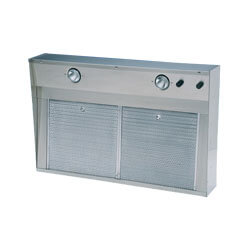

Subcategories
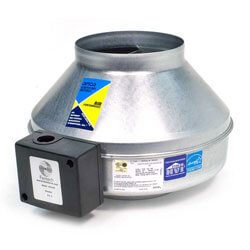
- FG Series Inline Round Centrifugal Exhaust Fans: The FG series mounts inline within round ductwork rather than at the hood itself, moving the fan noise further from the kitchen. Centrifugal fan design allows these units to handle the static pressure common in longer kitchen exhaust duct runs. Contractors select FG series fans based on required airflow and available inline mounting space along the duct route.
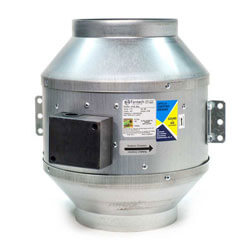
- FKD Series Inline Round Mixed Flow Centrifugal Fans: The FKD series combines mixed-flow and centrifugal fan characteristics to move higher airflow volumes through round ductwork while still handling elevated static pressure. They're suited to kitchen exhaust applications that need more airflow than a standard inline fan can deliver. Like the FG series, they mount within the duct run rather than at the hood.
- Range Hood Liners: Range hood liners are the interior ducting components that connect a range hood to the exhaust fan and duct system. They complete the airflow path from the cooking surface to the exterior. They're sized to match the hood's outlet dimensions. Contractors use liners to finish a ducted hood installation alongside the exhaust fan itself.
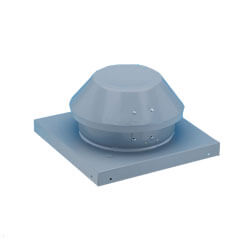
- RE & REC Exterior Roof Centrifugal Exhaust Fans: These fans mount on the roof at the point where the kitchen exhaust duct terminates, keeping the fan motor and noise entirely outside the building. Roof-mounted placement also removes the fan from interior space constraints. Contractors specify these when roof access and duct routing allow for an exterior termination point.
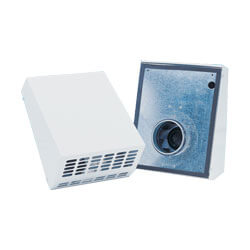
- RVF Series Exterior-Mount Centrifugal Exhaust Fans: The RVF series mounts on an exterior wall or roof rather than inline within the duct, offering another option for moving the fan motor outside the conditioned space. They handle the static pressure typical of kitchen exhaust applications. Contractors choose between RVF and other exterior models based on available mounting location and duct routing.
Buying Guide
The first decision for a kitchen exhaust fan is mounting location: inline within the duct run, or exterior-mounted on a roof or wall. That choice determines how much fan noise reaches the kitchen. It also determines how the ductwork needs to be routed.
Airflow requirements for kitchen exhaust are typically higher than for bathroom fans, especially over commercial-grade or high-output cooking equipment. Contractors should size the fan to the hood's required CFM rather than defaulting to a standard residential exhaust fan.
Static pressure from duct length, elbows, and grease filters affects how much air a fan can actually move. This is why centrifugal and mixed-flow designs are common in kitchen exhaust applications. They're built to maintain airflow against higher resistance than a simple axial fan.
Where roof or exterior wall access is available, moving the fan outside the building reduces indoor noise significantly compared to an inline or hood-mounted fan. This matters in kitchens where sound level affects the space's usability.
Completing a ducted range hood installation also requires matching liner components to the hood's outlet size. A mismatched liner can create airflow restrictions that reduce the exhaust fan's effective performance.
Frequently Asked Questions
What's the difference between an inline and exterior-mounted kitchen exhaust fan?
An inline fan mounts within the duct run itself. It moves fan noise away from the hood but stays inside the building envelope. An exterior-mounted fan sits on the roof or an outside wall, keeping the fan motor and its noise entirely outside the kitchen space.
Why do kitchen exhaust fans need higher airflow than bathroom fans?
Kitchen cooking, especially over commercial-grade equipment, generates more heat, grease, and airborne particulates than a bathroom. Kitchen exhaust fans are therefore typically rated for higher CFM to clear that air effectively.
What is a range hood liner used for?
A range hood liner connects the hood's outlet to the duct system. It completes the interior airflow path from the cooking surface to the exhaust fan and ultimately to the exterior.
Why do some kitchen exhaust fans use centrifugal or mixed-flow designs?
Centrifugal and mixed-flow fans maintain airflow better against higher static pressure. Long duct runs, elbows, and grease filters create that pressure. It is more common in kitchen exhaust systems than in simpler bathroom exhaust setups.
Does moving the fan outside the kitchen reduce noise?
Yes. Exterior roof or wall-mounted fans keep the motor and its operating noise outside the building. This generally results in a quieter kitchen compared to an inline or hood-mounted fan of similar airflow capacity.
Resources

 --%3E %3C!DOCTYPE svg PUBLIC '-//W3C//DTD SVG 1.1//EN' 'http://www.w3.org/Graphics/SVG/1.1/DTD/svg11.dtd'%3E %3Csvg version='1.1' id='Layer_1' xmlns='http://www.w3.org/2000/svg' xmlns:xlink='http://www.w3.org/1999/xlink' x='0px' y='0px' width='90px' height='90px' viewBox='0 0 90 90' enable-background='new 0 0 90 90' xml:space='preserve'%3E %3Crect x='27' y='23' fill='%23FFFFFF' width='43' height='44'/%3E %3Cg%3E %3Cdefs%3E %3Crect id='SVGID_1_' width='90' height='90'/%3E %3C/defs%3E %3CclipPath id='SVGID_2_'%3E %3Cuse xlink:href='%23SVGID_1_' overflow='visible'/%3E %3C/clipPath%3E %3Cpath clip-path='url(%23SVGID_2_)' fill='%234186AD' d='M45,0C20.1,0,0,20.1,0,45c0,24.9,20.1,45,45,45c24.9,0,45-20.1,45-45 C90,20.1,69.9,0,45,0'/%3E %3C/g%3E %3Cpath fill='%23FFFFFF' d='M60.6,47.4l-22.5,14c-0.5,0.3-1,0.399-1.5,0.399s-0.9-0.1-1.4-0.399c-0.9-0.5-1.4-1.4-1.4-2.5v-28 c0-1,0.6-2,1.4-2.5c0.9-0.5,2-0.5,2.9,0.1l22.5,14.1C61.4,43.1,61.9,44,61.9,45S61.4,46.9,60.6,47.4'/%3E %3C/svg%3E)
Subcategories
- FG Series Inline Round Centrifugal Exhaust Fans: The FG series mounts inline within round ductwork rather than at the hood itself, moving the fan noise further from the kitchen. Centrifugal fan design allows these units to handle the static pressure common in longer kitchen exhaust duct runs. Contractors select FG series fans based on required airflow and available inline mounting space along the duct route.
- FKD Series Inline Round Mixed Flow Centrifugal Fans: The FKD series combines mixed-flow and centrifugal fan characteristics to move higher airflow volumes through round ductwork while still handling elevated static pressure. They're suited to kitchen exhaust applications that need more airflow than a standard inline fan can deliver. Like the FG series, they mount within the duct run rather than at the hood.
- Range Hood Liners: Range hood liners are the interior ducting components that connect a range hood to the exhaust fan and duct system. They complete the airflow path from the cooking surface to the exterior. They're sized to match the hood's outlet dimensions. Contractors use liners to finish a ducted hood installation alongside the exhaust fan itself.
- RE & REC Exterior Roof Centrifugal Exhaust Fans: These fans mount on the roof at the point where the kitchen exhaust duct terminates, keeping the fan motor and noise entirely outside the building. Roof-mounted placement also removes the fan from interior space constraints. Contractors specify these when roof access and duct routing allow for an exterior termination point.
- RVF Series Exterior-Mount Centrifugal Exhaust Fans: The RVF series mounts on an exterior wall or roof rather than inline within the duct, offering another option for moving the fan motor outside the conditioned space. They handle the static pressure typical of kitchen exhaust applications. Contractors choose between RVF and other exterior models based on available mounting location and duct routing.
Buying Guide
The first decision for a kitchen exhaust fan is mounting location: inline within the duct run, or exterior-mounted on a roof or wall. That choice determines how much fan noise reaches the kitchen. It also determines how the ductwork needs to be routed.
Airflow requirements for kitchen exhaust are typically higher than for bathroom fans, especially over commercial-grade or high-output cooking equipment. Contractors should size the fan to the hood's required CFM rather than defaulting to a standard residential exhaust fan.
Static pressure from duct length, elbows, and grease filters affects how much air a fan can actually move. This is why centrifugal and mixed-flow designs are common in kitchen exhaust applications. They're built to maintain airflow against higher resistance than a simple axial fan.
Where roof or exterior wall access is available, moving the fan outside the building reduces indoor noise significantly compared to an inline or hood-mounted fan. This matters in kitchens where sound level affects the space's usability.
Completing a ducted range hood installation also requires matching liner components to the hood's outlet size. A mismatched liner can create airflow restrictions that reduce the exhaust fan's effective performance.
Frequently Asked Questions
What's the difference between an inline and exterior-mounted kitchen exhaust fan?
An inline fan mounts within the duct run itself. It moves fan noise away from the hood but stays inside the building envelope. An exterior-mounted fan sits on the roof or an outside wall, keeping the fan motor and its noise entirely outside the kitchen space.
Why do kitchen exhaust fans need higher airflow than bathroom fans?
Kitchen cooking, especially over commercial-grade equipment, generates more heat, grease, and airborne particulates than a bathroom. Kitchen exhaust fans are therefore typically rated for higher CFM to clear that air effectively.
What is a range hood liner used for?
A range hood liner connects the hood's outlet to the duct system. It completes the interior airflow path from the cooking surface to the exhaust fan and ultimately to the exterior.
Why do some kitchen exhaust fans use centrifugal or mixed-flow designs?
Centrifugal and mixed-flow fans maintain airflow better against higher static pressure. Long duct runs, elbows, and grease filters create that pressure. It is more common in kitchen exhaust systems than in simpler bathroom exhaust setups.
Does moving the fan outside the kitchen reduce noise?
Yes. Exterior roof or wall-mounted fans keep the motor and its operating noise outside the building. This generally results in a quieter kitchen compared to an inline or hood-mounted fan of similar airflow capacity.