




Filters
SORT
Product Availability –
RPM –
Duct Size –
Max. Amps –
Rated Watts –
Review Score –
 --%3E %3Csvg version='1.1' id='Fill' xmlns='http://www.w3.org/2000/svg' xmlns:xlink='http://www.w3.org/1999/xlink' x='0px' y='0px' viewBox='0 0 100 100' enable-background='new 0 0 100 100' xml:space='preserve'%3E %3Cpath fill='%23F15C02' d='M79.44,0.95H20.56C9.78,0.95,0.95,9.78,0.95,20.56v58.87c0,10.79,8.82,19.61,19.61,19.61h58.87 c10.79,0,19.61-8.83,19.61-19.61V20.56C99.05,9.78,90.22,0.95,79.44,0.95z M65.38,58.24l9.38,29.58L49.69,69.78L24.5,87.82 l9.34-29.6L8.8,39.6l30.73-0.17c0,0,6.98-19.61,10-28.93c0.54,1.36,9.88,29.1,9.88,29.1H91.2L65.38,58.24z'/%3E %3C/svg%3E)
 --%3E %3Csvg version='1.1' id='With-RB' xmlns='http://www.w3.org/2000/svg' xmlns:xlink='http://www.w3.org/1999/xlink' x='0px' y='0px' viewBox='0 0 100 100' enable-background='new 0 0 100 100' xml:space='preserve'%3E %3Cpath fill='%23FBC8B4' d='M79.44,0.95H20.56C9.78,0.95,0.95,9.78,0.95,20.56v58.87c0,10.79,8.82,19.61,19.61,19.61h58.87 c10.79,0,19.61-8.83,19.61-19.61V20.56C99.05,9.78,90.22,0.95,79.44,0.95z M65.38,58.24l9.38,29.58L49.69,69.78L24.5,87.82 l9.34-29.6L8.8,39.6l30.73-0.17c0,0,6.98-19.61,10-28.93c0.54,1.36,9.88,29.1,9.88,29.1H91.2L65.38,58.24z'/%3E %3C/svg%3E)
Price Range –
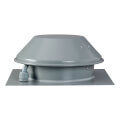
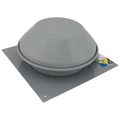
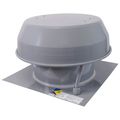
RE & REC Exterior Roof Centrifugal Exhaust Fans

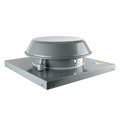

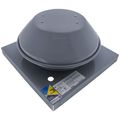
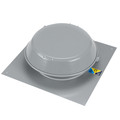
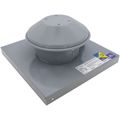
 --%3E %3Csvg version='1.1' id='Half' xmlns='http://www.w3.org/2000/svg' xmlns:xlink='http://www.w3.org/1999/xlink' x='0px' y='0px' viewBox='0 0 100 100' enable-background='new 0 0 100 100' xml:space='preserve'%3E %3Cg%3E %3Cpath fill='%23F15C02' d='M30.05,70.23l3.79-12.01L8.8,39.6l30.73-0.17c0,0,6.98-19.61,10-28.93c0.54,1.36,9.88,29.1,9.88,29.1h1.58 L93.71,7.18c-3.58-3.82-8.66-6.23-14.28-6.23H20.56C9.78,0.95,0.95,9.78,0.95,20.56v58.87c0,5.41,2.22,10.32,5.79,13.88 L30.05,70.23z'/%3E %3C/g%3E %3Cpath fill='%23FBC8B4' d='M93.71,7.18L60.98,39.6H91.2L65.38,58.24l9.38,29.58L49.69,69.78L24.5,87.82l5.55-17.59L6.75,93.32 c3.55,3.54,8.44,5.73,13.82,5.73h58.87c10.79,0,19.61-8.83,19.61-19.61V20.56C99.05,15.4,97.01,10.69,93.71,7.18z'/%3E %3C/svg%3E)
 --%3E %3Csvg version='1.1' id='No-RB' xmlns='http://www.w3.org/2000/svg' xmlns:xlink='http://www.w3.org/1999/xlink' x='0px' y='0px' viewBox='0 0 100 100' enable-background='new 0 0 100 100' xml:space='preserve'%3E %3Cpath fill='%23CECECE' d='M79.44,0.95H20.56C9.78,0.95,0.95,9.78,0.95,20.56v58.87c0,10.79,8.82,19.61,19.61,19.61h58.87 c10.79,0,19.61-8.83,19.61-19.61V20.56C99.05,9.78,90.22,0.95,79.44,0.95z M65.38,58.24l9.38,29.58L49.69,69.78L24.5,87.82 l9.34-29.6L8.8,39.6l30.73-0.17c0,0,6.98-19.61,10-28.93c0.54,1.36,9.88,29.1,9.88,29.1H91.2L65.38,58.24z'/%3E %3C/svg%3E)


RE & REC exterior roof centrifugal exhaust fans are roof-mounted ventilation units that pull air out of a building through a curb or roof opening and discharge it outdoors. Their centrifugal wheel design moves air along a curved path rather than straight through the housing, which lets them work against the static pressure of longer duct runs better than a simple axial fan can. Because the motor and wheel sit outside on the roof, these fans are built with weatherproof housings that hold up to sun, rain, and temperature swings year-round. Contractors spec them for kitchen, bathroom, and general exhaust applications where the exhaust point needs to sit above the roofline rather than through a sidewall.
Subcategories
- General Exhaust Roof Fans: These handle standard building exhaust such as restroom or utility room ventilation, where moving a steady volume of air out through the roof is the main requirement. They're typically sized to a target airflow rather than to handle grease or heavy contaminants. Building owners rely on these for continuous or intermittent exhaust duty.
- Kitchen-Duty Exhaust Fans: Built for grease-laden exhaust from commercial kitchen hoods, these units use heavier-gauge housings and hardware suited to grease exposure. They're paired with a compatible curb and grease duct system rather than installed as a standalone fan. Restaurant and commercial kitchen installs are the primary use case.
- Direct Drive Models: The fan wheel mounts straight to the motor shaft with no belt, which cuts down on the moving parts that need periodic maintenance. Contractors favor these where roof access for belt adjustment is inconvenient. They're a common choice for smaller and mid-size exhaust volumes.
- Belt Drive Models: A belt and pulley arrangement lets the fan speed be adjusted independently of motor speed, which gives more flexibility on larger installations where airflow needs fine-tuning. These typically handle higher exhaust volumes than direct drive units. Regular belt inspection is part of the maintenance routine on these models.
Buying Guide
Sizing starts with the exhaust volume the space actually needs, which depends on the room's use, code requirements, and how many other exhaust points share the same system. Undersizing a roof fan means a space won't ventilate properly, while oversizing wastes energy and can create excess noise. A mechanical contractor typically works this calculation from the building's ventilation requirements rather than guessing.
Drive type is the next decision. Direct drive units simplify maintenance since there's no belt to inspect or replace, which makes them a practical choice for smaller jobs or roofs that are awkward to access. Belt drive units trade a bit more maintenance for the ability to fine-tune airflow, which matters more on larger commercial installations.
Application matters just as much as airflow. RE & REC exterior roof centrifugal exhaust fans built for kitchen duty use different materials and hardware than general exhaust models, since grease-laden air is more corrosive and combustible than typical building exhaust. Matching the fan to a grease-rated curb and duct system is part of that decision, not an afterthought.
Roof curb compatibility deserves attention before ordering, since the fan needs to seat on a curb sized and rated for that specific unit. A mismatch here causes installation delays.
Weatherproofing and housing material should suit the local climate, particularly in coastal or high-humidity areas where corrosion resistance matters more over the life of the unit.
Frequently Asked Questions
What's the difference between direct drive and belt drive roof exhaust fans?
Direct drive fans mount the wheel straight to the motor shaft, which means less maintenance since there's no belt to adjust. Belt drive fans use a pulley system that allows airflow to be tuned independently of motor speed, which suits larger or more variable exhaust needs.
Can a general exhaust roof fan be used for a commercial kitchen hood?
No, kitchen exhaust involves grease-laden air that needs a fan and curb rated for that duty, with heavier-gauge construction than a standard general exhaust unit. Using the wrong fan type on a kitchen system is a code and safety issue, not just a performance one.
How is a roof exhaust fan sized for a space?
Sizing is based on the required exhaust airflow for the room's use and any applicable code requirements, not the roof opening size alone. A mechanical contractor typically calculates this from the building's total ventilation needs.
Does the roof curb come with the fan?
Not always. Curbs are often sold separately and need to be matched to the specific fan model and roof opening. Confirming curb compatibility before ordering avoids installation delays.
How often does a belt drive roof fan need maintenance?
Belt drive units need periodic belt inspection and adjustment as part of routine maintenance, in addition to the general bearing and motor checks both drive types require. Direct drive units skip the belt step entirely.
