




Flex Duct
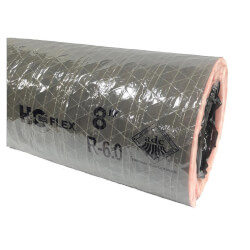
Flex duct is flexible ductwork used to route conditioned air from a trunk line or plenum to individual supply and return registers. Job sites value it for how easily it bends around obstructions compared to rigid metal duct. Flex duct is built around a wire helix core wrapped in an inner liner and an outer jacket. It comes insulated or non-insulated, depending on whether the run passes through conditioned or unconditioned space.
SupplyHouse carries flex duct in gray polyester and metalized jacket options, along with the connectors, sleeves, and support hardware needed for a complete run. Choosing the right flex duct means matching diameter and insulation level to the HVAC system's airflow requirements. It also means picking a jacket type suited to where the duct will be installed, whether that is an attic, crawlspace, or finished mechanical space.


Subcategories
- Air Connectors: Air connectors join flex duct to a plenum, trunk line, or register boot, forming the transition point at each end of a flex duct run.
- Flex Duct Braces: Flex duct braces support and hold flex duct runs in place across joists or open spans, keeping the duct from sagging over its length.
- Flexmaster Fabriflex Ducting: Flexmaster Fabriflex ducting is a specific manufactured flex duct line built to the same general wire-helix construction as other flex duct but under the Flexmaster brand.
- Gray Polyester Jacket Air Ducts: Gray polyester jacket air ducts use a polyester outer jacket, a common choice for standard residential and light commercial flex duct runs.
- Metalized Jacket Air Ducts: Metalized jacket air ducts use a metalized outer jacket instead of polyester, offering different vapor barrier and reflective properties for specific installation conditions.
- Sleeves: Sleeves are the connector pieces used to join two sections of flex duct together or to attach flex duct to a fitting along a run.
Buying Guide
Match duct diameter to the airflow the run needs to carry. An undersized flex duct run restricts airflow and increases static pressure on the system, while an oversized run wastes material without improving performance.
Choose insulated flex duct for any run passing through unconditioned space, like an attic or crawlspace, to reduce energy loss and prevent condensation on the duct's exterior.
Decide between a polyester and metalized jacket based on the install location. A metalized jacket can offer different puncture resistance and vapor barrier performance than a standard polyester jacket, which matters in tighter or more exposed runs.
Keep flex duct runs as short and straight as practical. Every bend or excess length of flex duct adds resistance to airflow. Pulling a run tight and supporting it properly with braces helps the system perform closer to design specifications.
Stock connectors, sleeves, and braces alongside the duct itself. A flex duct run is rarely just the duct. Running out of a connector or brace mid-installation stalls the job.
Frequently Asked Questions
Should flex duct be insulated in every application?
Insulated flex duct is typically used for runs through unconditioned spaces like attics or crawlspaces. Runs entirely within conditioned space may not need insulation, depending on the system's design requirements.
What is the difference between polyester and metalized jacket flex duct?
A polyester jacket is the standard option for most residential and light commercial runs. A metalized jacket offers different reflective and vapor barrier properties suited to specific installation conditions.
How does sag affect a flex duct run?
Excess sag increases resistance and reduces airflow efficiency along the run. Support flex duct with braces at regular intervals to minimize sag.
Can flex duct be used for an entire duct system?
Often not. Flex duct is commonly used for branch runs connecting to individual registers, while trunk lines are often built from rigid duct. The exact mix depends on the system design.
What connects two sections of flex duct together?
Sleeves and connectors join sections of flex duct to each other or to a fitting. Choosing the correct size and type keeps the connection sealed and supported.
Resources
Other Resources
Subcategories
- Air Connectors: Air connectors join flex duct to a plenum, trunk line, or register boot, forming the transition point at each end of a flex duct run.
- Flex Duct Braces: Flex duct braces support and hold flex duct runs in place across joists or open spans, keeping the duct from sagging over its length.
- Flexmaster Fabriflex Ducting: Flexmaster Fabriflex ducting is a specific manufactured flex duct line built to the same general wire-helix construction as other flex duct but under the Flexmaster brand.
- Gray Polyester Jacket Air Ducts: Gray polyester jacket air ducts use a polyester outer jacket, a common choice for standard residential and light commercial flex duct runs.
- Metalized Jacket Air Ducts: Metalized jacket air ducts use a metalized outer jacket instead of polyester, offering different vapor barrier and reflective properties for specific installation conditions.
- Sleeves: Sleeves are the connector pieces used to join two sections of flex duct together or to attach flex duct to a fitting along a run.
Buying Guide
Match duct diameter to the airflow the run needs to carry. An undersized flex duct run restricts airflow and increases static pressure on the system, while an oversized run wastes material without improving performance.
Choose insulated flex duct for any run passing through unconditioned space, like an attic or crawlspace, to reduce energy loss and prevent condensation on the duct's exterior.
Decide between a polyester and metalized jacket based on the install location. A metalized jacket can offer different puncture resistance and vapor barrier performance than a standard polyester jacket, which matters in tighter or more exposed runs.
Keep flex duct runs as short and straight as practical. Every bend or excess length of flex duct adds resistance to airflow. Pulling a run tight and supporting it properly with braces helps the system perform closer to design specifications.
Stock connectors, sleeves, and braces alongside the duct itself. A flex duct run is rarely just the duct. Running out of a connector or brace mid-installation stalls the job.
Frequently Asked Questions
Should flex duct be insulated in every application?
Insulated flex duct is typically used for runs through unconditioned spaces like attics or crawlspaces. Runs entirely within conditioned space may not need insulation, depending on the system's design requirements.
What is the difference between polyester and metalized jacket flex duct?
A polyester jacket is the standard option for most residential and light commercial runs. A metalized jacket offers different reflective and vapor barrier properties suited to specific installation conditions.
How does sag affect a flex duct run?
Excess sag increases resistance and reduces airflow efficiency along the run. Support flex duct with braces at regular intervals to minimize sag.
Can flex duct be used for an entire duct system?
Often not. Flex duct is commonly used for branch runs connecting to individual registers, while trunk lines are often built from rigid duct. The exact mix depends on the system design.
What connects two sections of flex duct together?
Sleeves and connectors join sections of flex duct to each other or to a fitting. Choosing the correct size and type keeps the connection sealed and supported.