




Filters
SORT
Product Availability –
Brand –
Size –
Series –
Review Score –
 --%3E %3Csvg version='1.1' id='Fill' xmlns='http://www.w3.org/2000/svg' xmlns:xlink='http://www.w3.org/1999/xlink' x='0px' y='0px' viewBox='0 0 100 100' enable-background='new 0 0 100 100' xml:space='preserve'%3E %3Cpath fill='%23F15C02' d='M79.44,0.95H20.56C9.78,0.95,0.95,9.78,0.95,20.56v58.87c0,10.79,8.82,19.61,19.61,19.61h58.87 c10.79,0,19.61-8.83,19.61-19.61V20.56C99.05,9.78,90.22,0.95,79.44,0.95z M65.38,58.24l9.38,29.58L49.69,69.78L24.5,87.82 l9.34-29.6L8.8,39.6l30.73-0.17c0,0,6.98-19.61,10-28.93c0.54,1.36,9.88,29.1,9.88,29.1H91.2L65.38,58.24z'/%3E %3C/svg%3E)
 --%3E %3Csvg version='1.1' id='With-RB' xmlns='http://www.w3.org/2000/svg' xmlns:xlink='http://www.w3.org/1999/xlink' x='0px' y='0px' viewBox='0 0 100 100' enable-background='new 0 0 100 100' xml:space='preserve'%3E %3Cpath fill='%23FBC8B4' d='M79.44,0.95H20.56C9.78,0.95,0.95,9.78,0.95,20.56v58.87c0,10.79,8.82,19.61,19.61,19.61h58.87 c10.79,0,19.61-8.83,19.61-19.61V20.56C99.05,9.78,90.22,0.95,79.44,0.95z M65.38,58.24l9.38,29.58L49.69,69.78L24.5,87.82 l9.34-29.6L8.8,39.6l30.73-0.17c0,0,6.98-19.61,10-28.93c0.54,1.36,9.88,29.1,9.88,29.1H91.2L65.38,58.24z'/%3E %3C/svg%3E)
Price Range –
Float & Thermostatic Steam Traps


 --%3E %3Csvg version='1.1' id='No-RB' xmlns='http://www.w3.org/2000/svg' xmlns:xlink='http://www.w3.org/1999/xlink' x='0px' y='0px' viewBox='0 0 100 100' enable-background='new 0 0 100 100' xml:space='preserve'%3E %3Cpath fill='%23CECECE' d='M79.44,0.95H20.56C9.78,0.95,0.95,9.78,0.95,20.56v58.87c0,10.79,8.82,19.61,19.61,19.61h58.87 c10.79,0,19.61-8.83,19.61-19.61V20.56C99.05,9.78,90.22,0.95,79.44,0.95z M65.38,58.24l9.38,29.58L49.69,69.78L24.5,87.82 l9.34-29.6L8.8,39.6l30.73-0.17c0,0,6.98-19.61,10-28.93c0.54,1.36,9.88,29.1,9.88,29.1H91.2L65.38,58.24z'/%3E %3C/svg%3E)
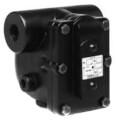
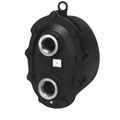
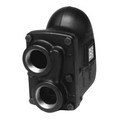
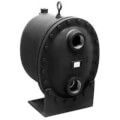
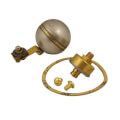
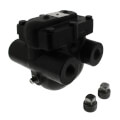

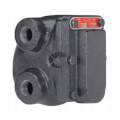
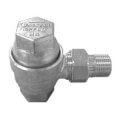

Float & Thermostatic Steam Traps, commonly called F&T traps, remove condensate from a steam system continuously while venting air through an integral air vent. A stainless steel float ball rises and falls with the condensate level inside the trap body, operating the main valve to discharge condensate as soon as it accumulates rather than waiting for a batch to build up. Sizes range from 1/2-inch up to 4-inch connections, covering everything from small unit heaters to large commercial and industrial steam mains. Pressure ratings vary significantly by model, with heavy-duty versions such as the FTC80-FB series rated up to 1160 psig for industrial process steam. Because F&T traps handle both light and heavy condensate loads without needing to cycle on and off, they're a standard choice anywhere automatic temperature control matters, such as heat exchangers, unit heaters, and process equipment where a steady drain point keeps heat transfer efficient.
Subcategories
- Standard F&T Traps: Standard float and thermostatic traps cover the core of the product line, built around a stainless steel float that rises and falls with condensate level to operate the discharge valve continuously. An integral air vent ships as standard equipment, letting the trap discharge air along with condensate without a separate venting device. Sizes span 1/2-inch through 4-inch connections, covering unit heaters up through large commercial steam mains. General heating and process applications with steady, continuous condensate loads suit this tier well.
- High-Pressure F&T Traps: High-pressure models extend well beyond standard ratings, with versions such as the FTC80-FB series rated up to 1160 psig for demanding industrial process steam. Construction uses heavier bodies and components to handle that additional pressure while retaining the same float and thermostatic operating principle as lighter-duty models. Industrial plants running high-pressure steam mains rely on this tier where a standard-duty trap wouldn't hold up. Connection sizing at this tier still falls within the broader 1/2-inch to 4-inch range covered across the product line.
- F&T Traps with Steam Lock Release: Steam lock release is an optional feature added to the standard float and thermostatic design to vent trapped steam pockets that can otherwise stop the float mechanism from operating, a condition called steam locking. Facilities running equipment prone to rapid pressure swings often specify this option to keep the trap functioning reliably. Standard models across the line ship with an integral air vent as the base configuration, with steam lock release available as an add-on. Choosing this option at the specification stage avoids a nuisance failure mode that's otherwise difficult to diagnose in the field.
Buying Guide
Start with system pressure before narrowing down a specific model. F&T trap ratings vary widely across the product line, with heavy-duty versions such as the FTC80-FB series rated up to 1160 psig for industrial process steam, so choosing a trap rated below actual system pressure risks failure while over-specifying adds unnecessary cost. Pull the actual operating pressure from the system's boiler or process documentation rather than estimating.
Match connection size and type to the existing piping next. F&T traps come in threaded connections spanning 1/2-inch to 4-inch, so confirm both the pipe size and thread type, typically FNPT, before ordering a replacement. On a retrofit job, matching the existing trap's connection avoids reworking adjacent piping just to fit a new trap.
Consider condensate load pattern when choosing Float & Thermostatic Steam Traps over other trap types. Float and thermostatic traps drain condensate continuously and handle both light and heavy loads without cycling, which makes them the standard choice for heat exchangers, unit heaters, and any equipment with automatic temperature control. Applications with intermittent, batch-style condensate loads sometimes suit a different trap type better, so confirming the load pattern first prevents specifying the wrong trap category altogether.
Finally, check whether the application is prone to steam locking, a condition where trapped steam prevents the float from operating. Equipment with frequent pressure swings benefits from the steam lock release option, while standard integral air venting covers most steady-state heating applications without needing the added feature.
Frequently Asked Questions
What pressure range do float and thermostatic steam traps cover?
Float and thermostatic steam trap pressure ratings vary widely by model, with heavy-duty versions such as the FTC80-FB series rated up to 1160 psig for industrial process steam. The correct rating depends on the actual operating pressure of the connected steam system, not just the pipe size. Pulling pressure data from the boiler or process documentation confirms the right model before ordering.
What sizes do F&T steam traps come in?
Float and thermostatic steam traps are available in connection sizes from 1/2-inch up to 4-inch, covering everything from small unit heaters to large commercial and industrial steam mains. Threaded FNPT connections are common across most of the size range. Matching the existing connection size and thread type simplifies a retrofit installation.
When should a float and thermostatic trap be chosen over another steam trap type?
Float and thermostatic traps work best where condensate load is continuous rather than intermittent, since they drain condensate as it accumulates instead of waiting to discharge in batches. Equipment with automatic temperature control, such as heat exchangers and unit heaters, relies on this continuous drainage to maintain steady heat transfer. Applications with batch-style or highly intermittent condensate loads sometimes suit a different trap category instead.
What does steam lock release do on a float and thermostatic trap?
Steam lock release vents trapped steam pockets that can otherwise stop the float mechanism from operating correctly, a condition called steam locking. Facilities add this option to standard float and thermostatic traps when equipment is prone to rapid pressure swings, such as certain heat exchangers. Standard models ship with an integral air vent, while steam lock release is specified separately when the application calls for it.
What temperature can a float and thermostatic steam trap handle?
Most float and thermostatic steam traps tolerate operating temperatures up to around 450°F, matching typical saturated steam conditions at their rated pressure. Cast iron body construction is common across this temperature range. Confirming both pressure and temperature ratings together, rather than just one, is the safest way to match the trap to actual system conditions.
