




Flow Meters
Flow meters and the manifolds, balancing valves, and gauges around them give hydronic and radiant heating installers a way to measure and balance water flow through each zone or loop of a system. Without accurate flow data, a multi zone boiler or radiant floor system can end up with some loops starved of hot water and others overloaded, leading to uneven room temperatures and premature pump wear. The category groups the meters, manifolds, and related tools used to set up, balance, and service those systems.
Radiant floor heating, hydronic baseboard, and snowmelt systems all depend on correct flow balancing to perform as designed. A flow meter mounted on a manifold lets an installer read and adjust each loop individually, while circuit setters and gauges provide the pressure and temperature data needed to diagnose a system that isn't heating evenly. Choosing the right combination of components depends on the number of zones, the piping material in use, and whether the job is new construction or a retrofit onto existing piping.




Subcategories
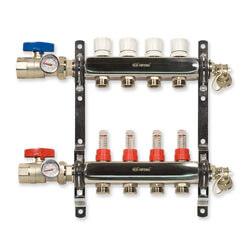
- Bluefin Radiant Heat Manifolds: Bluefin's manifold line distributes water to individual radiant floor loops and includes built in flow meters on each port for loop by loop balancing. Installers use them on new radiant slab and staple up installations where loop lengths vary and need individual adjustment.
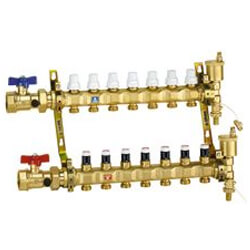
- Caleffi Manifolds & Accessories: Caleffi manifolds pair stainless steel or brass bodies with flow meter ports and mounting brackets built for tight mechanical room installs. The accessory line covers end caps, fill and purge valves, and mounting hardware that complete a manifold station.
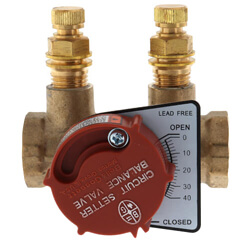
- Circuit Setters: Circuit setters are calibrated balancing valves installed in each branch of a hydronic system, letting a technician set and lock a precise flow rate using a handheld meter. They're common on multi zone hydronic and chilled water systems where balanced flow keeps every zone performing to design.
- CPS HVAC Tools: CPS HVAC Tools covers handheld gauges, meters, and diagnostic tools technicians carry for flow, pressure, and temperature readings across HVAC and hydronic service calls. Compact, field ready designs suit both installation and ongoing maintenance work.
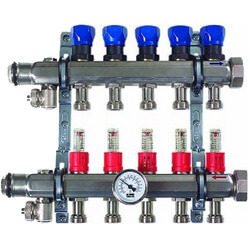
- Mr. PEX Manifolds: Mr. PEX manifolds serve PEX based radiant and hydronic systems, with flow meter equipped ports for balancing multiple loops from a single distribution point. Available configurations include both radiant heating and potable water manifolds.
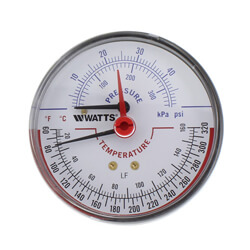
- Temperature & Pressure Gauges: Temperature and pressure gauges mount directly into hydronic piping and boiler systems to give installers a quick visual read of operating conditions during startup, balancing, and service calls. Dial and digital styles cover a range of pressure and temperature ranges used across residential and light commercial systems.
Buying Guide
Flow meter selection starts with the manifold or valve it needs to pair with, since meters are rarely sold as standalone inline devices for residential radiant work. Matching the manifold brand and port size to the piping already installed avoids compatibility headaches on both new installs and manifold replacements.
Loop count drives manifold sizing more than total system heat load. A radiant slab with many short loops needs a manifold with enough ports to keep each loop's length reasonably close to the others, since large length mismatches make balancing harder even with good flow meters in place.
Material compatibility matters when mixing components from different manufacturers. Brass, stainless steel, and different thread standards aren't always interchangeable across brands, so installers should confirm port thread type and manifold body material before combining a flow meter, manifold, and valve from separate lines.
Circuit setters and standalone balancing valves fit larger multi zone hydronic systems better than manifold mounted meters, particularly on commercial or larger residential jobs with branch piping rather than a home run manifold layout. They allow flow to be set and locked at each branch without dismantling the piping later.
Temperature and pressure gauges belong at key points in any flow meters setup, not just at the boiler, so a technician can diagnose an imbalance without pulling meter readings at every port. Placing gauges at supply and return headers gives a fast first read before troubleshooting an individual loop.
Frequently Asked Questions
How do flow meters help balance a radiant heating system?
A flow meter on each manifold port shows the actual flow rate through that loop, letting an installer open or close the port's balancing valve until every loop matches its design flow. Without that reading, shorter loops tend to steal flow from longer ones, leaving some rooms warmer than others.
Can a flow meter be added to an existing manifold that doesn't have one?
Only if the manifold has open, compatible ports designed to accept a meter fitting from the same brand or a matching thread standard. Retrofitting a meter onto an incompatible port usually isn't practical, so the manifold and meter are typically sourced as a matched set.
What's the difference between a flow meter and a circuit setter?
A flow meter gives a direct visual flow reading at a manifold port, while a circuit setter is a calibrated balancing valve that combines a flow measurement with a lockable adjustment, typically used on larger branch piping rather than radiant manifolds.
Do these components work with both PEX and copper piping?
Manifolds and meters are available for both, but the connection fittings differ, so the piping material in the job should be confirmed before ordering. PEX systems typically use crimp, press, or expansion fittings at the manifold, while copper systems use sweat or press connections.
Where should temperature and pressure gauges be installed in a hydronic system?
Gauges are typically placed at the boiler supply and return, and at the main supply and return headers feeding the manifolds, giving a fast system wide read before checking individual zones. Additional gauges at problem zones can help narrow down a specific imbalance.
Resources
Subcategories
- Bluefin Radiant Heat Manifolds: Bluefin's manifold line distributes water to individual radiant floor loops and includes built in flow meters on each port for loop by loop balancing. Installers use them on new radiant slab and staple up installations where loop lengths vary and need individual adjustment.
- Caleffi Manifolds & Accessories: Caleffi manifolds pair stainless steel or brass bodies with flow meter ports and mounting brackets built for tight mechanical room installs. The accessory line covers end caps, fill and purge valves, and mounting hardware that complete a manifold station.
- Circuit Setters: Circuit setters are calibrated balancing valves installed in each branch of a hydronic system, letting a technician set and lock a precise flow rate using a handheld meter. They're common on multi zone hydronic and chilled water systems where balanced flow keeps every zone performing to design.
- CPS HVAC Tools: CPS HVAC Tools covers handheld gauges, meters, and diagnostic tools technicians carry for flow, pressure, and temperature readings across HVAC and hydronic service calls. Compact, field ready designs suit both installation and ongoing maintenance work.
- Mr. PEX Manifolds: Mr. PEX manifolds serve PEX based radiant and hydronic systems, with flow meter equipped ports for balancing multiple loops from a single distribution point. Available configurations include both radiant heating and potable water manifolds.
- Temperature & Pressure Gauges: Temperature and pressure gauges mount directly into hydronic piping and boiler systems to give installers a quick visual read of operating conditions during startup, balancing, and service calls. Dial and digital styles cover a range of pressure and temperature ranges used across residential and light commercial systems.
Buying Guide
Flow meter selection starts with the manifold or valve it needs to pair with, since meters are rarely sold as standalone inline devices for residential radiant work. Matching the manifold brand and port size to the piping already installed avoids compatibility headaches on both new installs and manifold replacements.
Loop count drives manifold sizing more than total system heat load. A radiant slab with many short loops needs a manifold with enough ports to keep each loop's length reasonably close to the others, since large length mismatches make balancing harder even with good flow meters in place.
Material compatibility matters when mixing components from different manufacturers. Brass, stainless steel, and different thread standards aren't always interchangeable across brands, so installers should confirm port thread type and manifold body material before combining a flow meter, manifold, and valve from separate lines.
Circuit setters and standalone balancing valves fit larger multi zone hydronic systems better than manifold mounted meters, particularly on commercial or larger residential jobs with branch piping rather than a home run manifold layout. They allow flow to be set and locked at each branch without dismantling the piping later.
Temperature and pressure gauges belong at key points in any flow meters setup, not just at the boiler, so a technician can diagnose an imbalance without pulling meter readings at every port. Placing gauges at supply and return headers gives a fast first read before troubleshooting an individual loop.
Frequently Asked Questions
How do flow meters help balance a radiant heating system?
A flow meter on each manifold port shows the actual flow rate through that loop, letting an installer open or close the port's balancing valve until every loop matches its design flow. Without that reading, shorter loops tend to steal flow from longer ones, leaving some rooms warmer than others.
Can a flow meter be added to an existing manifold that doesn't have one?
Only if the manifold has open, compatible ports designed to accept a meter fitting from the same brand or a matching thread standard. Retrofitting a meter onto an incompatible port usually isn't practical, so the manifold and meter are typically sourced as a matched set.
What's the difference between a flow meter and a circuit setter?
A flow meter gives a direct visual flow reading at a manifold port, while a circuit setter is a calibrated balancing valve that combines a flow measurement with a lockable adjustment, typically used on larger branch piping rather than radiant manifolds.
Do these components work with both PEX and copper piping?
Manifolds and meters are available for both, but the connection fittings differ, so the piping material in the job should be confirmed before ordering. PEX systems typically use crimp, press, or expansion fittings at the manifold, while copper systems use sweat or press connections.
Where should temperature and pressure gauges be installed in a hydronic system?
Gauges are typically placed at the boiler supply and return, and at the main supply and return headers feeding the manifolds, giving a fast system wide read before checking individual zones. Additional gauges at problem zones can help narrow down a specific imbalance.