




Galvanized Pipe Fittings

Pipe Fittings & Nipples
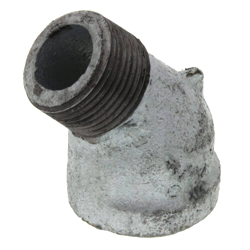
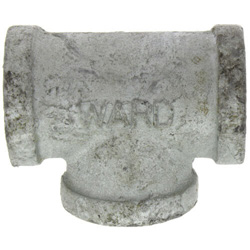



| PRODUCT | SIZE | SINGLE UNIT | BOX UP & SAVE | STOCK STATUS | LIST | COMPARE |
|---|---|---|---|---|---|---|
Added! $52.76 each In Stock  Get 19 by Tomorrow, Nov 25 In Stock Get 19 by Tomorrow, Nov 25 | In Stock Get 19 by Tomorrow, Nov 25 In Stock Get 19 by Tomorrow, Nov 25 | |||||

Galvanized fittings are steel pipe fittings coated with a layer of zinc that protects the underlying metal from rust and corrosion. The zinc coating acts as a sacrificial layer, corroding in place of the steel underneath, which extends the fitting's service life in applications exposed to moisture or outdoor conditions.
Galvanized fittings connect standard threaded steel pipe in configurations ranging from simple couplings to elbows, tees, and reducers, and they remain common in older plumbing systems as well as new installations where a durable, corrosion-resistant connection is needed. Threading, fitting size, and pipe schedule all need to match the pipe being connected, since a mismatched thread pitch will not seal properly regardless of how well the fitting itself is made.
Subcategories
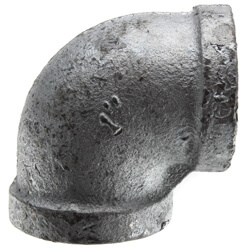
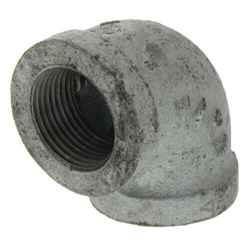
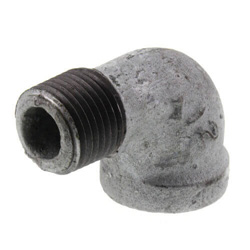
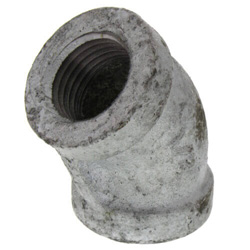
- Galvanized Elbows: Elbows change the direction of a pipe run, most commonly at 45 or 90 degree angles, and they come in standard and street configurations depending on whether both ends are threaded the same way. They're used anywhere a galvanized pipe run needs to turn a corner, from a basement supply line to an exterior hose bib connection.
- Galvanized Tees and Couplings: Tees split a single pipe run into two directions, commonly used where a branch line feeds off a main supply run, while couplings join two straight lengths of pipe in line. Both fittings rely on matching thread pitch and pipe diameter to seal correctly, and mixing fitting brands generally isn't an issue as long as the thread standard matches.
- Galvanized Nipples and Reducers: Nipples are short lengths of threaded pipe used to connect two fittings or extend a run by a small amount, while reducers step a pipe run down from a larger diameter to a smaller one. Reducers are useful anywhere a system transitions from a main supply line to a smaller branch or fixture connection.
Buying Guide
Choosing galvanized fittings starts with confirming the exact pipe size and thread standard already in place, since a fitting that's off by even a small thread pitch difference will not seal reliably no matter how well it's manufactured. Checking the existing pipe's markings, or measuring thread count directly, avoids ordering a fitting that looks correct but doesn't actually match.
Wall thickness and schedule matter for fittings used in higher-pressure applications, since a standard-schedule fitting may not be rated for the same pressure as a heavier-schedule pipe run it's connecting to. Matching schedule, not just diameter, keeps the whole assembly rated consistently.
Galvanized fittings hold up well in exterior and damp locations because of their zinc coating, but that coating is not indestructible. Cutting or threading a galvanized pipe on site exposes bare steel at the cut, which loses the corrosion protection right at that joint unless it's addressed with a compatible coating or paint. For that reason, ordering fittings pre-sized to the run, rather than cutting and threading pipe on site, keeps the zinc coating intact at every connection.
For gas piping applications specifically, checking local code requirements before using galvanized fittings is worth doing, since some jurisdictions restrict galvanized pipe on gas lines due to zinc's interaction with certain gas compounds over time.
Frequently Asked Questions
What makes galvanized fittings resistant to corrosion?
The zinc coating on a galvanized fitting corrodes before the underlying steel does, acting as a sacrificial layer that protects the base metal. That protection lasts until the zinc coating itself wears away, at which point the steel underneath becomes vulnerable the same as an uncoated fitting.
Can galvanized fittings be mixed with fittings from a different manufacturer?
Generally yes, as long as the thread standard and pipe size match. Standard pipe thread is manufactured to a common specification, so fittings from different manufacturers typically thread together correctly as long as both are built to that same standard.
Are galvanized fittings safe to use on gas lines?
Some jurisdictions restrict or prohibit galvanized pipe and fittings on gas lines due to concerns about zinc coating interacting with certain gas compounds over time. Checking local plumbing and gas code requirements before using galvanized fittings on a gas application is a necessary step.
Does cutting or threading galvanized pipe on site affect its corrosion resistance?
Yes. Cutting or threading exposes bare steel at that spot, removing the zinc coating's protection right at the new joint. Using fittings pre-sized to the run, where possible, keeps the coating intact rather than creating an exposed point that can corrode faster than the rest of the pipe.
What's the difference between a galvanized nipple and a reducer?
A nipple is a short length of threaded pipe used to connect two fittings or extend a run slightly, keeping the same diameter throughout. A reducer instead steps a pipe run down from one diameter to a smaller one, used where a system transitions from a main line to a smaller branch or fixture connection.
