




Gleason Reel

 --%3E %3Csvg version='1.1' id='No-RB' xmlns='http://www.w3.org/2000/svg' xmlns:xlink='http://www.w3.org/1999/xlink' x='0px' y='0px' viewBox='0 0 100 100' enable-background='new 0 0 100 100' xml:space='preserve'%3E %3Cpath fill='%23CECECE' d='M79.44,0.95H20.56C9.78,0.95,0.95,9.78,0.95,20.56v58.87c0,10.79,8.82,19.61,19.61,19.61h58.87 c10.79,0,19.61-8.83,19.61-19.61V20.56C99.05,9.78,90.22,0.95,79.44,0.95z M65.38,58.24l9.38,29.58L49.69,69.78L24.5,87.82 l9.34-29.6L8.8,39.6l30.73-0.17c0,0,6.98-19.61,10-28.93c0.54,1.36,9.88,29.1,9.88,29.1H91.2L65.38,58.24z'/%3E %3C/svg%3E)
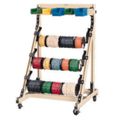

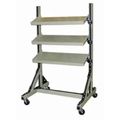
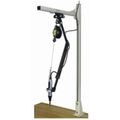
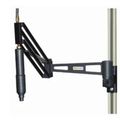
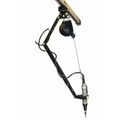
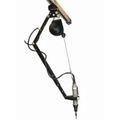
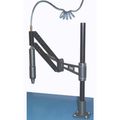
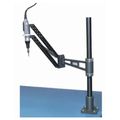
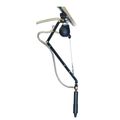
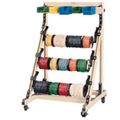

Gleason Reel has built cable, hose, and tool-handling equipment since 1911 from its plant in Mayville, Wisconsin. The company has operated as a Hubbell brand since a 1996 acquisition folded it into the Hubbell Industrial Products Group. Its core business stayed industrial equipment that keeps cables, hoses, and hand tools organized and supported at a work station rather than consumer-facing hardware.
Aviation, mining, oil and gas, and general manufacturing make up the bulk of Gleason Reel's customer base. The tool balancer and torque arm lines sold through distributors like SupplyHouse serve a narrower slice of that catalog. These are shop and production environments where a technician works with the same power or air tool repeatedly at one station.
Product Lines
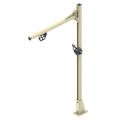
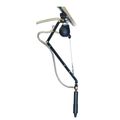
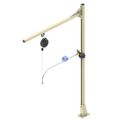
SupplyHouse stocks Gleason Reel's tool positioner and balancer line. It is built around spring-loaded or constant-pull mechanisms that suspend a tool from an overhead mount and offset its weight, so an operator isn't fighting the tool's full mass on every use. The WSP-AM post-mounted positioner, for example, is built for air tools and adjusts tension across a 1.0 to 7.0-pound range while keeping the tool oriented perpendicular to the work piece.
Torque arms are the companion product to the balancer line. They control the reactive torque a powered tool generates during tightening, so force transfers to the arm's mount instead of the operator's wrist. Both product families come out of Gleason Reel's broader material handling and industrial workplace solutions catalog. That catalog also includes cable and hose reels and slip rings for markets outside the plumbing and HVAC trades.
Why Contractors Specify Gleason Reel
Repetitive tool use, whether it's a fastening gun on an assembly line or a grinder at a fabrication bench, wears on a hand and wrist faster than the job itself does. A balancer or positioner reduces that fatigue by carrying the tool's weight between uses. Shops that run the same tool at the same station all day are the main audience, more than a mobile field crew moving between job sites.
Gleason Reel has built this equipment for industrial settings since 1911. It has operated as a Hubbell brand since 1996.
How to Choose Gleason Reel Products
Match the balancer or positioner's weight rating to the actual tool being suspended. Going too light lets the tool droop, and going too heavy makes it harder to pull down into working position. Air tools with lighter bodies, similar to the range the WSP-AM covers, usually pair with a lighter-duty positioner. Constant-pull balancers are built for heavier grinders or fastening tools.
Mounting location matters as much as the unit itself. A post-mounted positioner needs a fixed vertical support nearby, while an overhead balancer needs ceiling or beam clearance directly above the work station. Confirming that clearance before ordering avoids a mismatch between the hardware and the space it's going into.
Frequently Asked Questions
What does a Gleason Reel tool balancer actually do?
It suspends a hand tool from an overhead or post mount and offsets the tool's weight with a spring or constant-pull mechanism. An operator can then pick the tool up and set it down without supporting its full mass each time.
How is a tool positioner different from a tool balancer?
A positioner, like the WSP-AM, adds orientation control on top of weight support, holding the tool perpendicular to the work piece automatically. A standard balancer mainly handles the weight and lets the operator control the angle.
What weight range does the Gleason Reel WSP-AM cover?
The WSP-AM adjusts across a 1.0 to 7.0-pound range and is built for air tools.
Does a torque arm replace the need for a tool balancer?
No, the two solve different problems. A torque arm absorbs the reactive twisting force a tool generates during tightening, while a balancer supports the tool's static weight. Torque arms are the companion product to the balancer line.
Is Gleason Reel equipment built for occasional field use or full-time production work?
The line is designed around stations where the same tool is used repeatedly at one spot all shift. That is closer to an assembly line or fabrication bench than a field service call. A crew that only needs a given tool a few times a day is less likely to get value from a fixed-mount balancer or positioner.
