



Goodman Evaporator Coils

 --%3E %3Csvg version='1.1' id='No-RB' xmlns='http://www.w3.org/2000/svg' xmlns:xlink='http://www.w3.org/1999/xlink' x='0px' y='0px' viewBox='0 0 100 100' enable-background='new 0 0 100 100' xml:space='preserve'%3E %3Cpath fill='%23CECECE' d='M79.44,0.95H20.56C9.78,0.95,0.95,9.78,0.95,20.56v58.87c0,10.79,8.82,19.61,19.61,19.61h58.87 c10.79,0,19.61-8.83,19.61-19.61V20.56C99.05,9.78,90.22,0.95,79.44,0.95z M65.38,58.24l9.38,29.58L49.69,69.78L24.5,87.82 l9.34-29.6L8.8,39.6l30.73-0.17c0,0,6.98-19.61,10-28.93c0.54,1.36,9.88,29.1,9.88,29.1H91.2L65.38,58.24z'/%3E %3C/svg%3E)
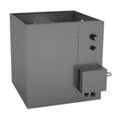
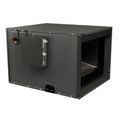

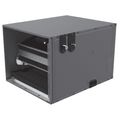

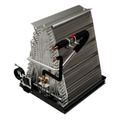
Goodman evaporator coils are the indoor heat-exchange component that pairs with a Goodman air handler or furnace to complete a split-system air conditioner or heat pump. Installers use them to absorb heat from indoor air as refrigerant passes through, the step that actually produces the cooling effect a homeowner feels at the register. Goodman builds its coil line from an all-aluminum design, using aluminum tubing, fins, and end plates rather than mixing copper and aluminum, which the manufacturer positions as a single-metal solution for consistent heat-transfer performance. Contractors size a coil to match the outdoor condensing unit's tonnage and the air handler or furnace cabinet it will sit inside, since a mismatched coil hurts both efficiency and dehumidification. Because the coil sits directly in the airstream, getting cabinet dimensions and connection orientation right during selection avoids a return trip to swap a wrong-fit unit mid-installation.
Subcategories
- Cased Evaporator Coils: Cased coils arrive in a fully enclosed, insulated cabinet, letting a contractor set the unit in place without building a separate plenum box around it. They are the faster install of the two main configurations, which matters on replacement jobs where the customer wants the system running the same day. The enclosure also protects the coil fins from job-site damage before the system is sealed up. Cased units pair well with a straightforward upflow or downflow furnace installation.
- Uncased Evaporator Coils: Uncased coils ship without an outer cabinet, so the installer builds or supplies the surrounding plenum on site. That flexibility suits custom duct configurations, tight mechanical closets, or retrofits where an existing cabinet has to be reused. Because there is no factory enclosure, the installer is responsible for sealing the plenum properly to prevent air bypass around the coil. Uncased configurations are common on new-construction jobs where the ductwork is being built to match the equipment.
- Horizontal Evaporator Coils: Horizontal coils are built for attic or crawlspace installations where the air handler or furnace lies on its side instead of standing upright. Contractors choose them specifically for these tight, non-vertical spaces where a standard upflow or downflow coil will not fit the airflow path. Orientation matters here since a coil designed for horizontal airflow will not drain condensate correctly if installed vertically. Getting the airflow direction and drain-pan slope right during rough-in avoids condensate pooling later.
- Multi-Position Evaporator Coils: Multi-position coils work in upflow, downflow, or horizontal orientation, letting a distributor stock one coil for several installation types instead of three separate configurations. Contractors like the flexibility on jobs where the final equipment orientation is not locked in until the site visit. Some multi-position coils require an orientation-specific drain pan kit to be installed correctly for whichever position is used. Confirming the drain kit at time of order avoids a delay on install day.
Buying Guide
Matching a Goodman evaporator coil to the rest of the system starts with tonnage: the coil has to correspond to the cooling capacity of the outdoor condensing unit or heat pump, since an undersized coil restricts airflow and an oversized one can hurt dehumidification performance. Cabinet width and height need to match the furnace or air handler the coil will sit on or inside, and contractors should double check whether the job calls for a cased unit that installs as a complete, insulated box or an uncased coil that fits into ductwork already built on site. Refrigerant compatibility is another checkpoint, since coils built for one refrigerant type are not universal across older and newer condensing units, and pairing the wrong coil with a system can cause performance and warranty issues down the line. For attic or crawlspace jobs, Goodman Evaporator Coils built specifically for horizontal orientation handle condensate drainage differently than upflow or downflow units, so orientation needs to be locked in before ordering rather than adjusted in the field. Multi-position coils offer a hedge against last-minute orientation changes, though they may need a separate drain pan kit depending on how they end up installed. Contractors replacing an existing coil should also verify that the connection size and refrigerant line set match the existing system to avoid an unplanned line-set replacement on a same-day swap.
Frequently Asked Questions
What is the difference between a cased and uncased Goodman evaporator coil?
A cased coil comes in its own insulated cabinet and installs as a complete unit, while an uncased coil needs a separate plenum built or supplied by the installer. Cased coils are typically faster to install on straightforward replacement jobs. Uncased coils give more flexibility on custom ductwork or tight mechanical spaces.
Can any Goodman evaporator coil pair with any Goodman air handler?
No, the coil has to match both the tonnage of the outdoor unit and the cabinet dimensions of the air handler or furnace it pairs with. Mismatched sizing can restrict airflow and reduce both cooling capacity and dehumidification. Checking the manufacturer's matching charts before ordering avoids this problem.
Do horizontal evaporator coils work in a vertical (upflow or downflow) installation?
Not correctly. Horizontal coils are designed for the condensate drainage and airflow pattern of an attic or crawlspace installation, and installing one vertically can cause condensate to pool instead of drain properly. Multi-position coils are the better choice when the final orientation is not fixed in advance.
What refrigerant do Goodman evaporator coils use?
Compatibility depends on the specific coil model and the system it is paired with, since different product lines are built around different refrigerants. Contractors should confirm refrigerant compatibility against the matched condensing unit before ordering. Mixing refrigerant compatibility is not something field adjustment can fix.
Why choose an all-aluminum coil over a copper-and-aluminum coil?
Goodman builds its coil line around an all-aluminum design for tubing, fins, and end plates, which the manufacturer positions as a more consistent single-metal approach to heat transfer. Some contractors also point to reduced galvanic corrosion risk when only one metal type is present in the coil assembly. Either design works when properly matched to the rest of the system.
