




'/%3E%3C/svg%3E)
 --%3E %3Csvg version='1.1' id='Fill' xmlns='http://www.w3.org/2000/svg' xmlns:xlink='http://www.w3.org/1999/xlink' x='0px' y='0px' viewBox='0 0 100 100' enable-background='new 0 0 100 100' xml:space='preserve'%3E %3Cpath fill='%23F15C02' d='M79.44,0.95H20.56C9.78,0.95,0.95,9.78,0.95,20.56v58.87c0,10.79,8.82,19.61,19.61,19.61h58.87 c10.79,0,19.61-8.83,19.61-19.61V20.56C99.05,9.78,90.22,0.95,79.44,0.95z M65.38,58.24l9.38,29.58L49.69,69.78L24.5,87.82 l9.34-29.6L8.8,39.6l30.73-0.17c0,0,6.98-19.61,10-28.93c0.54,1.36,9.88,29.1,9.88,29.1H91.2L65.38,58.24z'/%3E %3C/svg%3E)
 --%3E %3Csvg version='1.1' id='Half' xmlns='http://www.w3.org/2000/svg' xmlns:xlink='http://www.w3.org/1999/xlink' x='0px' y='0px' viewBox='0 0 100 100' enable-background='new 0 0 100 100' xml:space='preserve'%3E %3Cg%3E %3Cpath fill='%23F15C02' d='M30.05,70.23l3.79-12.01L8.8,39.6l30.73-0.17c0,0,6.98-19.61,10-28.93c0.54,1.36,9.88,29.1,9.88,29.1h1.58 L93.71,7.18c-3.58-3.82-8.66-6.23-14.28-6.23H20.56C9.78,0.95,0.95,9.78,0.95,20.56v58.87c0,5.41,2.22,10.32,5.79,13.88 L30.05,70.23z'/%3E %3C/g%3E %3Cpath fill='%23FBC8B4' d='M93.71,7.18L60.98,39.6H91.2L65.38,58.24l9.38,29.58L49.69,69.78L24.5,87.82l5.55-17.59L6.75,93.32 c3.55,3.54,8.44,5.73,13.82,5.73h58.87c10.79,0,19.61-8.83,19.61-19.61V20.56C99.05,15.4,97.01,10.69,93.71,7.18z'/%3E %3C/svg%3E)


MANUALS (1)
Product Highlights


Description
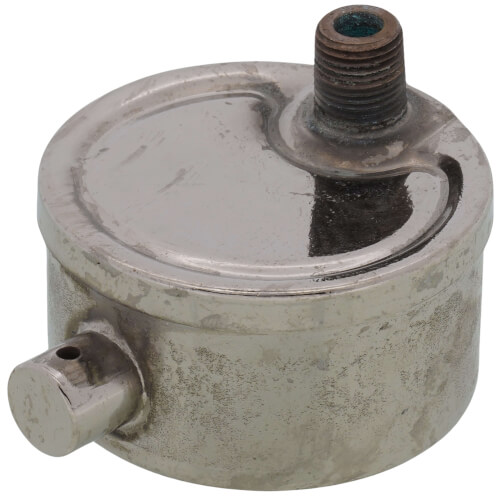
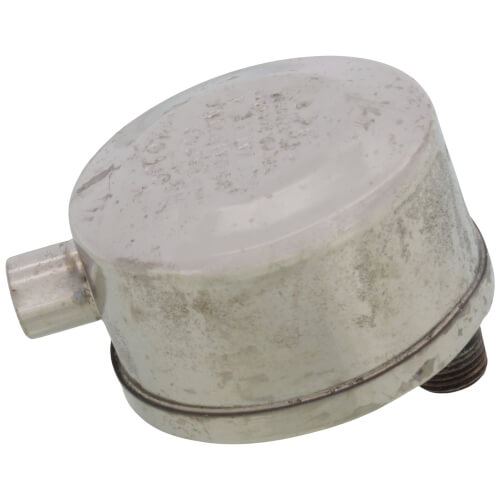
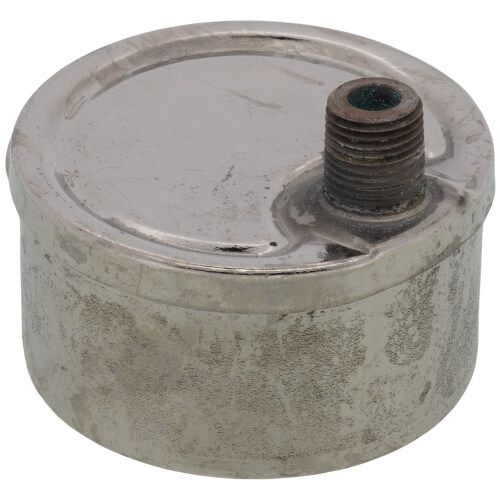
A non-adjustable 1/8" angle steam radiator vent used on steam systems to release air from radiators - typically to help balance heating and improve warm-up on radiators farther from the boiler.
Key Features:
- Application: Radiator Vent; System Type: Steam
- Size / Thread Size: 1/8"; Thread Type: Male
- Mount / Body Pattern: Angle
- Adjustability: Non-Adjustable
- Material: Steel
- Temperature range: 140°F to 240°F (max 240°F)
- Manufacturer guidance: "No. 6" is intended to be installed on radiators farther from the boiler and in colder rooms (example: second-floor radiators); venting capacity described as equal to 8 ordinary type air valves
Compatibility & Applications:
- Designed for steam radiator venting applications with a 1/8" female tapping where an angle-pattern vent is required
- Manufacturer guidance associates "No. 6" sizing with radiators farther from the boiler and in colder rooms for balancing a steam system
- Must only be used where the manufacturer specifies this exact part number: G6A
Installation & Operation Notes:
- Installation should be performed by a qualified steam/heating professional
- Reference the steam system's service/installation documentation and the manufacturer's product overview guidance for selecting vent size/location (e.g., No. 6 placement guidance for balancing)
- The sources provided do not include step-by-step installation instructions; confirm the radiator vent tapping size/pattern (1/8" male, angle mount) before installation
Maintenance & Troubleshooting:
- This part is typically replaced when a radiator vents poorly or the system is imbalanced (e.g., some rooms heat slowly while others heat quickly)
- Common field symptoms discussed in reviews/Q&A include hissing/noise, slow radiator heating, or performance/balance issues that improve after vent replacement or resizing
- If balancing issues persist after replacement, manufacturer guidance emphasizes proper main venting and using vent sizes to help radiators fill with steam at about the same time
User Reviews & Q&A Summary:
- Reviews commonly report faster venting and improved radiator balance (especially helping colder/farther radiators heat more evenly), with frequent comments that the valve is quiet or reduces hissing compared to older vents
- Installation is often described as straightforward when replacing an existing 1/8" angle radiator vent, with multiple customers noting solid build quality
- Q&A themes: SupplyHouse confirms products are sold new (not used); users are guided to size vents based on balancing goals (radiators filling with steam at the same time), and #D is described as a faster-venting option than #6
- Q&A also provides approximate dimensions: about 1-7/8" diameter and about 1-1/8" depth (excluding threads), and clarifies that the "diameter" reference applies to height/width in this case
Specs
| Application: | Radiator Vent |
|---|---|
| System Type: | Steam |
| Size: | 1/8" |
| Model: | Gorton No. 6 |
| Mount: | Angle |
| Adjustability: | Non-Adjustable |
| Material: | Steel |
| Body Pattern: | Angle |
| Thread Type: | Male |
| Min Temp (F): | 140°F |
| Temperature Range (F): | 140°F - 240°F |
| Max Temp (F): | 240°F |
| Thread Size: | 1/8" |


Questions?
You May Also Need
Product Reviews
Most Liked Positive Review
Super quick heating
Most Liked Negative Review
 --%3E %3Csvg version='1.1' id='With-RB' xmlns='http://www.w3.org/2000/svg' xmlns:xlink='http://www.w3.org/1999/xlink' x='0px' y='0px' viewBox='0 0 100 100' enable-background='new 0 0 100 100' xml:space='preserve'%3E %3Cpath fill='%23FBC8B4' d='M79.44,0.95H20.56C9.78,0.95,0.95,9.78,0.95,20.56v58.87c0,10.79,8.82,19.61,19.61,19.61h58.87 c10.79,0,19.61-8.83,19.61-19.61V20.56C99.05,9.78,90.22,0.95,79.44,0.95z M65.38,58.24l9.38,29.58L49.69,69.78L24.5,87.82 l9.34-29.6L8.8,39.6l30.73-0.17c0,0,6.98-19.61,10-28.93c0.54,1.36,9.88,29.1,9.88,29.1H91.2L65.38,58.24z'/%3E %3C/svg%3E)
No
Wish I bought these years ago!
Good alternative to Hoffman 1A
I would buy this product again
I would buy again
No
Reliable and quiet valve
radiator valve
Great air valves
Love Gorton equalizing valves, but I rely on Supply House.
Great Product - Very Reliable
Product Q&A
2 QuestionsQ: Hi - What is the difference between Gorton No. 6 and Gorton No. D vapor Equalizing values, some of my rooms have No. 6 and some rooms have No. D, can someone please let me know if these valves must match when I am replacing them. Thanks Regards
Asked by SURESH 12 years ago
Add your answer
As I understand it, the sizes of the valve determines how quickly cold air is vented from the system (and therefore how quickly steam arrives at the radiator). The goal is to have steam arrive at all radiators at the same time and is achieved by putting the largest vents on the radiators furthest from the boilers. If your system has been working well, replace with the same sizes--someone in the past worked this out for you. If not, look up a book called "We Got Steam Heat: a Homeowner's Guide to Peaceful Coexistence" by Dan Holohan. It's a great, plain language explanation of how your system works.
See product description at www.gorton-valves.com for info relevant to your question. Essentially the 6 and D have different sized vent holes, so they vent at different rates. The 6 has a smaller hole, so radiators with that number valve will vent (and warm up) more slowly than those with a D valve. One usually uses a slower vent on radiators closer to the thermostat so that the boiler doesn't shut off before the farther away radiators have a chance to get warm. If your house is heating up evenly (i.e. no rooms that are colder or hotter than others), then you should replace valves with equivalent valves (ie 6 with 6, D with D).
Have a look at this info on the Gorton's website, which explains which valves should be used where, and study where your radiators are in relation to your boiler. That should tell you what you need to know. http://www.gorton-valves.com/products
The Gorton #D air vent valve vents more quickly than a #6. Normally, you’d want to use faster vents on larger radiators and slower vents on smaller radiators, so that all radiators in the system fill with steam at about the same time. The Gorton series of valves, from slowest to fastest, are Venting according to radiator size is a bit of a rule of thumb. The crucial element is that all radiators should fill with steam, all the way across, at the same time. Sometimes, people choose vents based on the distance from the boiler (faster vents further from the boiler), especially on systems with insufficient main venting (Gorton #1 or #2). It’s normally better to assure proper main venting. Other times, people try to solve balance problems by putting a slower vent in a room that’s overheating. It’s normally better to make sure the radiators are properly-sized, and to use thermostatic valves to control overheating.
Q: Can you supply the dimensions of this product (height, width, depth excluding threading)? Thank you.
Asked by 15 years ago
Add your answer
Verified Reply- PexSupply StaffThis valve measures approximately 1-1/8" in depth and 1-7/8" in diameter (excluding threads).