




HER Heaters


 --%3E %3Csvg version='1.1' id='No-RB' xmlns='http://www.w3.org/2000/svg' xmlns:xlink='http://www.w3.org/1999/xlink' x='0px' y='0px' viewBox='0 0 100 100' enable-background='new 0 0 100 100' xml:space='preserve'%3E %3Cpath fill='%23CECECE' d='M79.44,0.95H20.56C9.78,0.95,0.95,9.78,0.95,20.56v58.87c0,10.79,8.82,19.61,19.61,19.61h58.87 c10.79,0,19.61-8.83,19.61-19.61V20.56C99.05,9.78,90.22,0.95,79.44,0.95z M65.38,58.24l9.38,29.58L49.69,69.78L24.5,87.82 l9.34-29.6L8.8,39.6l30.73-0.17c0,0,6.98-19.61,10-28.93c0.54,1.36,9.88,29.1,9.88,29.1H91.2L65.38,58.24z'/%3E %3C/svg%3E)
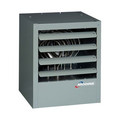

HER Heaters are electric wall and cabinet heating units used to provide supplemental or primary heat in spaces where running hydronic or forced-air ductwork is impractical. Contractors specify them in additions, basements, entryways, and mechanical rooms where a self-contained electric unit is faster to install than extending an existing heating system. Most units in this line mount directly to a wall or recess into it, drawing on standard branch circuit wiring rather than a dedicated heating loop. A built-in thermostat or connection point for a wall-mounted control lets the unit operate independently of the building's main heating zone. Because installation is largely electrical rather than mechanical, these heaters are a common choice on retrofit jobs where opening walls for new ductwork or piping is not an option.
Subcategories
- Fan-Forced Wall Heaters: Fan-forced wall heaters use an internal blower to push heated air into the room rather than relying on natural convection, which brings a space up to temperature faster than a convection-only unit. They mount recessed into a wall cavity or surface-mount with a housing kit, depending on the model. Contractors favor fan-forced units in bathrooms, entryways, and other spaces where quick, on-demand heat is more important than silent operation. Most models pair with a built-in or wall-mounted thermostat to cycle the fan and element together.
- Convection Wall Heaters: Convection wall heaters rely on natural air movement across a heated element rather than a fan, making them quieter than fan-forced models. They suit bedrooms, offices, and other occupied spaces where fan noise would be noticeable during operation. Because there is no moving fan assembly, these units also have fewer parts that can wear out or need service over the life of the heater. Sizing is based on the square footage and insulation level of the space being heated.
- Replacement Elements and Thermostats: Replacement elements and thermostats let a technician restore a heater to working condition without replacing the entire housing. Element failure is one of the most common service calls on electric wall heaters, often showing up as a unit that runs but produces little or no heat. Confirming the wattage and voltage rating on the existing element before ordering a replacement avoids a mismatch that could trip a breaker or underperform. Thermostat kits are typically sold separately from heating elements since either component can fail independently.
Buying Guide
Sizing is the first decision when specifying HER Heaters for a space, since an undersized unit will run constantly without reaching a comfortable temperature and an oversized one will short-cycle. Calculating heat load based on square footage, ceiling height, and insulation quality gives a more reliable starting point than sizing off the unit that was previously installed.
Fan-forced or convection style is the next choice. Fan-forced units heat a room faster and suit spaces with intermittent occupancy, such as bathrooms or entryways, while convection units run quieter and fit better in bedrooms or offices where fan noise would be disruptive.
Electrical requirements deserve equal attention before the unit is ordered. Confirming the available circuit voltage and breaker capacity against the heater's nameplate rating prevents a service call from turning into an electrical upgrade project. Many higher-wattage units require a dedicated 240 volt circuit rather than a shared 120 volt branch circuit.
Mounting method rounds out the decision. Recessed units need enough wall cavity depth to accommodate the housing, while surface-mounted units work better on masonry or finished walls where cutting an opening is not practical.
Frequently Asked Questions
How is an electric wall heater sized for a room?
Sizing is based on the room's square footage, ceiling height, and insulation quality, with poorly insulated or high-ceiling spaces requiring more wattage per square foot. A rough guide many contractors use is a starting point that gets adjusted up for drafty rooms or down for well-insulated additions. Consulting the manufacturer's sizing chart for the specific model avoids under- or oversizing.
Does an electric wall heater need a dedicated circuit?
Higher-wattage units, especially those running on 240 volts, typically need a dedicated circuit sized to the heater's nameplate rating. Lower-wattage 120 volt units can sometimes share a branch circuit, but checking the manufacturer's electrical requirements before installation is standard practice. Local electrical code ultimately governs what circuit configuration is required.
Why is a wall heater running but not producing heat?
A heater that runs but produces little or no heat usually points to a failed heating element, since the fan or blower can continue operating even after the element burns out. Confirming voltage at the unit and checking the element for continuity narrows down the cause quickly. A failed thermostat can also cause this symptom if it is not signaling the element to energize.
What is the difference between fan-forced and convection wall heaters?
Fan-forced heaters use a blower to actively push warm air into the room, heating a space faster but with some operating noise. Convection heaters rely on natural air movement across the heated element, running quieter but taking longer to raise room temperature. The choice usually comes down to how much occupants will notice fan noise in that particular space.
Can a wall heater thermostat be replaced separately from the heating element?
Yes, thermostats and heating elements typically fail independently and are sold as separate replacement parts. Testing the element for continuity before replacing the thermostat helps confirm which component actually failed. Replacing both at once is sometimes more efficient on older units where both parts are near the end of their service life.
