




Holby

 --%3E %3Csvg version='1.1' id='Fill' xmlns='http://www.w3.org/2000/svg' xmlns:xlink='http://www.w3.org/1999/xlink' x='0px' y='0px' viewBox='0 0 100 100' enable-background='new 0 0 100 100' xml:space='preserve'%3E %3Cpath fill='%23F15C02' d='M79.44,0.95H20.56C9.78,0.95,0.95,9.78,0.95,20.56v58.87c0,10.79,8.82,19.61,19.61,19.61h58.87 c10.79,0,19.61-8.83,19.61-19.61V20.56C99.05,9.78,90.22,0.95,79.44,0.95z M65.38,58.24l9.38,29.58L49.69,69.78L24.5,87.82 l9.34-29.6L8.8,39.6l30.73-0.17c0,0,6.98-19.61,10-28.93c0.54,1.36,9.88,29.1,9.88,29.1H91.2L65.38,58.24z'/%3E %3C/svg%3E)
 --%3E %3Csvg version='1.1' id='No-RB' xmlns='http://www.w3.org/2000/svg' xmlns:xlink='http://www.w3.org/1999/xlink' x='0px' y='0px' viewBox='0 0 100 100' enable-background='new 0 0 100 100' xml:space='preserve'%3E %3Cpath fill='%23CECECE' d='M79.44,0.95H20.56C9.78,0.95,0.95,9.78,0.95,20.56v58.87c0,10.79,8.82,19.61,19.61,19.61h58.87 c10.79,0,19.61-8.83,19.61-19.61V20.56C99.05,9.78,90.22,0.95,79.44,0.95z M65.38,58.24l9.38,29.58L49.69,69.78L24.5,87.82 l9.34-29.6L8.8,39.6l30.73-0.17c0,0,6.98-19.61,10-28.93c0.54,1.36,9.88,29.1,9.88,29.1H91.2L65.38,58.24z'/%3E %3C/svg%3E)








Holby Valve began in the 1930s as a response to a common problem in New York City apartment buildings, where steam boilers with submerged coils delivered domestic hot water at temperatures near 200 degrees with no storage tank to allow it to cool. Al Brown & Sons, a local plumbing company, worked with engineer Vernon A. Holby to design a thermostatic valve that continuously mixed cold water into that scalding supply, resulting in the original Holby Tempering Valve.
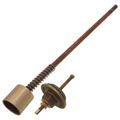
The company built its business around that single product category for decades before expanding into a network of manufacturer's representatives starting in the 1960s. Holby has now manufactured tempering and mixing valves for over nine decades, with a design built on just three internal parts.
Product Lines
Holby's product line carried by SupplyHouse centers on thermostatic tempering and mixing valves used to control domestic hot water temperature in buildings supplied by steam or high-temperature boiler systems. Hotels, multi-family residential buildings, and commercial facilities rely on these valves wherever a central heat source produces water hotter than is safe to deliver to a fixture.
Why Contractors Specify Holby
Plumbing contractors and consulting engineers specify Holby tempering valves because the design has remained intentionally simple, with only three internal parts to service over the life of the valve. Fewer parts translate into fewer callbacks for valve maintenance in buildings where the tempering valve runs continuously to protect occupants from scalding water. A long track record in hotels and multi-family housing also gives engineers confidence when specifying Holby valves into new construction or replacement projects with similar steam or boiler-fed hot water systems.
How to Choose Holby Products
Selecting the right Holby tempering valve starts with confirming the incoming hot water temperature from the boiler or steam coil and the target delivery temperature needed at the fixture or distribution system. Flow rate requirements for the building, including peak simultaneous demand in a hotel or multi-family property, determine the valve size needed to maintain consistent tempered output. Reviewing the three serviceable internal parts against the maintenance schedule already in place for a property helps plan for long-term upkeep rather than treating the valve as an install-and-forget component.
Frequently Asked Questions
What problem does a Holby tempering valve solve?
A Holby tempering valve mixes cold water into hot water supplied by a steam boiler or high-temperature coil, which often runs near 200 degrees, to deliver safer tempered water to building fixtures.
How many serviceable parts does a Holby valve have?
The Holby Tempering Valve is built around just three internal parts, a design intended to keep servicing straightforward over the life of the valve.
Where are Holby tempering valves typically used?
Holby valves are commonly specified in hotels, multi-family residential buildings, and commercial facilities that rely on steam or boiler systems for domestic hot water.
How long has Holby been manufacturing tempering valves?
Holby has manufactured tempering valves since the 1930s, when engineer Vernon A. Holby developed the original design with plumbing company Al Brown & Sons.
Why was the original Holby valve developed?
The original Holby valve was developed to address scalding hot water in New York City apartment buildings supplied by steam boilers with no separate hot water storage tank.
