




Horizontal Single Deflection Registers, MS (831 Series)


 --%3E %3Csvg version='1.1' id='No-RB' xmlns='http://www.w3.org/2000/svg' xmlns:xlink='http://www.w3.org/1999/xlink' x='0px' y='0px' viewBox='0 0 100 100' enable-background='new 0 0 100 100' xml:space='preserve'%3E %3Cpath fill='%23CECECE' d='M79.44,0.95H20.56C9.78,0.95,0.95,9.78,0.95,20.56v58.87c0,10.79,8.82,19.61,19.61,19.61h58.87 c10.79,0,19.61-8.83,19.61-19.61V20.56C99.05,9.78,90.22,0.95,79.44,0.95z M65.38,58.24l9.38,29.58L49.69,69.78L24.5,87.82 l9.34-29.6L8.8,39.6l30.73-0.17c0,0,6.98-19.61,10-28.93c0.54,1.36,9.88,29.1,9.88,29.1H91.2L65.38,58.24z'/%3E %3C/svg%3E)

 --%3E %3Csvg version='1.1' id='Fill' xmlns='http://www.w3.org/2000/svg' xmlns:xlink='http://www.w3.org/1999/xlink' x='0px' y='0px' viewBox='0 0 100 100' enable-background='new 0 0 100 100' xml:space='preserve'%3E %3Cpath fill='%23F15C02' d='M79.44,0.95H20.56C9.78,0.95,0.95,9.78,0.95,20.56v58.87c0,10.79,8.82,19.61,19.61,19.61h58.87 c10.79,0,19.61-8.83,19.61-19.61V20.56C99.05,9.78,90.22,0.95,79.44,0.95z M65.38,58.24l9.38,29.58L49.69,69.78L24.5,87.82 l9.34-29.6L8.8,39.6l30.73-0.17c0,0,6.98-19.61,10-28.93c0.54,1.36,9.88,29.1,9.88,29.1H91.2L65.38,58.24z'/%3E %3C/svg%3E)



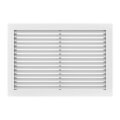
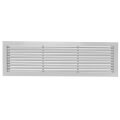
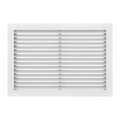
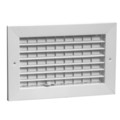

Horizontal single deflection registers, MS (831 Series) are supply air registers built with one set of fixed horizontal blades that direct airflow left and right across a room rather than up and down. Mounted on a sidewall or in a duct opening, the horizontal blade set works well for perimeter or short-throw supply locations where directing air across the occupied space matters more than throwing it a long distance. Because the blades run in a single deflection plane, these registers are simpler in construction than a double deflection register that combines both horizontal and vertical blade sets. Contractors specify the 831 Series where the duct layout and room geometry already call for side-to-side air distribution rather than a longer, more directional throw. SupplyHouse stocks the 831 Series in the sizes needed to match common duct and wall opening dimensions on residential and light commercial jobs.
Subcategories
- Fixed Blade Configurations: Fixed blade configurations in the 831 Series use horizontal blades set at a fixed deflection angle, with no adjustable damper behind them to control airflow volume. Installers pick this configuration where volume control is already handled elsewhere in the duct system, such as at a balancing damper upstream. Because there are fewer moving parts, this configuration is generally the simplest and most economical option in the series. It remains a common choice for straightforward supply air openings that do not need to be adjusted at the register itself.
- Opposed Blade Damper (OBD) Configurations: Opposed blade damper configurations add an adjustable damper behind the horizontal blade face, letting a technician throttle airflow volume directly at the register. Balancing contractors reach for the OBD option when a room is getting more or less air than the rest of the system and the fix needs to happen at the register rather than back at the duct. The damper is typically adjusted with a screwdriver slot or key from the face of the register after installation. This configuration costs more than a fixed-blade register but saves a trip back into the ductwork for volume adjustments.
- Finish and Size Options: Finish and size options in the 831 Series cover the standard duct and wall opening dimensions used on residential and light commercial jobs, along with common paintable or pre-finished color choices. Matching the register's face size to the actual duct or wall opening, rather than rounding to the nearest size, keeps the installation from needing a transition or filler piece. Painted finishes let the register blend into a wall or ceiling color scheme once installed. Contractors ordering for a full job typically standardize on one finish across all the registers in a project.
Buying Guide
Selecting horizontal single deflection registers, MS (831 Series), starts with confirming the mounting location calls for side-to-side air distribution rather than a longer, more directional throw, since a single deflection register is built for that pattern specifically. A double deflection register, which adds a vertical blade set behind the horizontal one, is the better fit where air needs to be directed both across the room and up or down.
Sizing the register to the actual duct or wall opening comes next, and rounding up or down to the nearest stock size instead of matching the exact opening dimension usually means adding a transition piece or a filler strip to make up the difference. Getting an accurate opening measurement before ordering avoids that extra step during installation.
Volume control is the last major decision. A fixed blade register works fine where the system is already balanced upstream, but an opposed blade damper version lets a technician fine-tune airflow at the register itself, which is useful in rooms that tend to run hotter or colder than the rest of the space. Finish selection, whether painted or standard mill finish, typically comes down to matching the rest of the registers already specified for the job.
Frequently Asked Questions
What does 'single deflection' mean on this register?
It means the register has one set of blades, running horizontally, that only directs air left and right rather than also up and down. A double deflection register adds a second, vertical blade set behind the first to control both directions. Single deflection registers are generally simpler and less expensive because of the reduced blade count.
Is a damper included with the 831 Series registers?
Only in the opposed blade damper configuration; the fixed blade version has no adjustable damper behind the face. Choosing the OBD configuration is necessary anywhere volume needs to be adjusted directly at the register rather than upstream in the ductwork. Both configurations use the same horizontal blade face on the front of the register.
Can this register be mounted on a ceiling instead of a sidewall?
Mounting depends on the specific application and duct layout, since a horizontal single deflection register is generally intended for sidewall or duct opening mounting where side-to-side throw fits the room layout. Ceiling applications more commonly call for a register designed for that orientation. Checking the intended mounting location against the register's typical use case before ordering avoids a mismatch.
How is the correct size determined for a replacement register?
Measuring the existing duct or wall opening directly, rather than the old register's outer frame, gives the most accurate size for a replacement. The 831 Series is available in standard sizes that match common opening dimensions used in residential and light commercial construction. Ordering a size that matches the actual opening avoids needing a transition or filler piece during installation.
What is the difference between fixed blade and opposed blade damper models?
A fixed blade model has no volume control built into the register itself, while an opposed blade damper model includes an adjustable damper that lets a technician throttle airflow at the register face. Fixed blade models cost less and have fewer moving parts. Opposed blade damper models are worth the added cost anywhere volume needs to be adjusted without going back into the ductwork.
