




Filters
SORT
Product Availability –
Size –
Review Score –
 --%3E %3Csvg version='1.1' id='Fill' xmlns='http://www.w3.org/2000/svg' xmlns:xlink='http://www.w3.org/1999/xlink' x='0px' y='0px' viewBox='0 0 100 100' enable-background='new 0 0 100 100' xml:space='preserve'%3E %3Cpath fill='%23F15C02' d='M79.44,0.95H20.56C9.78,0.95,0.95,9.78,0.95,20.56v58.87c0,10.79,8.82,19.61,19.61,19.61h58.87 c10.79,0,19.61-8.83,19.61-19.61V20.56C99.05,9.78,90.22,0.95,79.44,0.95z M65.38,58.24l9.38,29.58L49.69,69.78L24.5,87.82 l9.34-29.6L8.8,39.6l30.73-0.17c0,0,6.98-19.61,10-28.93c0.54,1.36,9.88,29.1,9.88,29.1H91.2L65.38,58.24z'/%3E %3C/svg%3E)
 --%3E %3Csvg version='1.1' id='With-RB' xmlns='http://www.w3.org/2000/svg' xmlns:xlink='http://www.w3.org/1999/xlink' x='0px' y='0px' viewBox='0 0 100 100' enable-background='new 0 0 100 100' xml:space='preserve'%3E %3Cpath fill='%23FBC8B4' d='M79.44,0.95H20.56C9.78,0.95,0.95,9.78,0.95,20.56v58.87c0,10.79,8.82,19.61,19.61,19.61h58.87 c10.79,0,19.61-8.83,19.61-19.61V20.56C99.05,9.78,90.22,0.95,79.44,0.95z M65.38,58.24l9.38,29.58L49.69,69.78L24.5,87.82 l9.34-29.6L8.8,39.6l30.73-0.17c0,0,6.98-19.61,10-28.93c0.54,1.36,9.88,29.1,9.88,29.1H91.2L65.38,58.24z'/%3E %3C/svg%3E)
Price Range –
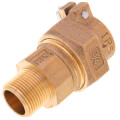
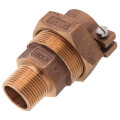
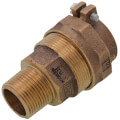
IPS x MTP Couplings


 --%3E %3Csvg version='1.1' id='No-RB' xmlns='http://www.w3.org/2000/svg' xmlns:xlink='http://www.w3.org/1999/xlink' x='0px' y='0px' viewBox='0 0 100 100' enable-background='new 0 0 100 100' xml:space='preserve'%3E %3Cpath fill='%23CECECE' d='M79.44,0.95H20.56C9.78,0.95,0.95,9.78,0.95,20.56v58.87c0,10.79,8.82,19.61,19.61,19.61h58.87 c10.79,0,19.61-8.83,19.61-19.61V20.56C99.05,9.78,90.22,0.95,79.44,0.95z M65.38,58.24l9.38,29.58L49.69,69.78L24.5,87.82 l9.34-29.6L8.8,39.6l30.73-0.17c0,0,6.98-19.61,10-28.93c0.54,1.36,9.88,29.1,9.88,29.1H91.2L65.38,58.24z'/%3E %3C/svg%3E)
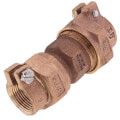
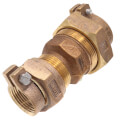
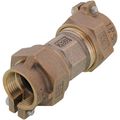


IPS x MTP couplings are transition fittings that join Iron Pipe Size polyethylene pipe to a male-threaded pipe connection, letting installers move from a fused or mechanically joined poly pipe run into a threaded valve, meter, or riser without cutting in a separate adapter. Underground gas and water distribution crews rely on this coupling style whenever a poly main or service line needs to terminate at a threaded fitting rather than continue as poly straight through. The coupling's poly end typically uses a stab-fit or compression connection so it can be installed without special fusion equipment in the field, while the threaded end accepts standard pipe thread sealant or tape. Getting the sizing right between the poly side and the threaded side matters more here than with straight poly-to-poly fittings, since a mismatch shows up only after backfill when a leak develops. Keeping a range of these couplings on hand lets a crew adapt to whatever fitting is already in the ground at a tie-in point.
Subcategories
- Compression-Style IPS x MTP Couplings: Compression style couplings use a gasket and gripper ring compressed by a nut to seal against the outside of the poly pipe, so no pipe fusion or special tooling is needed on the job site. Utility locators and plumbers favor this style for repair tie-ins where running a fusion machine into a trench isn't practical. The threaded end mates directly to a valve, riser, or meter set fitting using standard thread sealant. Because the seal relies on mechanical compression rather than fusion, it's inspected the same way as any other mechanical pipe joint before backfilling.
- Stab-Fit IPS x MTP Couplings: Stab-fit couplings let the poly pipe push directly into the fitting body, where internal grip teeth and an O-ring hold and seal the joint without a compression nut. Crews use this style when speed matters on a service line repair, since there's no torque spec to hit or nut to over-tighten. The threaded end still needs conventional pipe thread sealant for a gas- or water-tight connection. Confirming the poly pipe's outside diameter matches the fitting's rated range is important since stab-fit designs are less forgiving of oversized or undersized pipe than compression styles.
- Brass and Bronze IPS x MTP Couplings: Brass and bronze bodied couplings resist corrosion better than lower-grade alloys in wet trench conditions, which matters for underground gas and water tie-ins expected to stay buried for decades. The material also holds up to repeated makeup and breakout if a fitting ever needs to be serviced after installation. These couplings are sized to match common poly pipe outside diameters on one end and standard male pipe thread sizes on the other. Choosing a corrosion-resistant body is worth the added cost on any tie-in that won't be easily accessible again after backfill.
Buying Guide
Selecting the right coupling starts with confirming the exact outside diameter of the existing poly pipe, since IPS sizing doesn't match nominal pipe size the way most plumbers expect from copper or PVC. Measuring the pipe rather than assuming its size based on the service line's rated capacity avoids ordering a coupling that won't seat correctly. Next, match the threaded end to whatever fitting it needs to land on, whether that's a meter set riser, a shutoff valve, or a service tee, and confirm the thread is standard male pipe thread rather than a proprietary connection. For gas applications, only use couplings rated and listed for gas service; a water-rated fitting isn't automatically safe for that use even if the physical connection appears compatible. Crews doing emergency repairs in an open trench often prefer stab-fit IPS x MTP Couplings for the speed of installation, while planned new installations can use compression styles that allow more precise alignment before backfill. Material matters for anything staying buried long-term: brass or bronze bodies outlast lower-grade alloys in wet or corrosive soil. Finally, check local utility and code requirements before finalizing a tie-in method, since some jurisdictions specify approved coupling types for buried gas service that go beyond the manufacturer's general listing.
Frequently Asked Questions
What does IPS mean on a poly pipe coupling?
IPS stands for Iron Pipe Size, a sizing standard for polyethylene pipe that matches the outside diameter of old iron pipe rather than a simple nominal size. It's different from CTS (Copper Tube Size) poly pipe, so confirming which standard the existing service line uses is the first step before ordering a coupling.
Can I use an IPS x MTP coupling on a gas line?
Only if the specific coupling is rated and listed for gas service. Many compression and stab-fit couplings are sold for water applications only, and using one on gas without the proper listing violates code even if it physically fits.
Do I need special tools to install a stab-fit IPS x MTP coupling?
No special fusion or crimping tools are required for a stab-fit connection since the pipe pushes directly into the fitting body. A pipe cutter to get a clean, square end on the poly pipe is still necessary for the internal grip teeth to seat and seal properly.
How do I know if the threaded end will fit my existing valve or riser?
Confirming the threaded end is standard male pipe thread and matches the nominal size of the female connection on the valve, riser, or meter fitting is the key check. Most utility and plumbing fittings use standard pipe thread, but older or proprietary meter set hardware occasionally doesn't, so a quick thread check before ordering avoids a mismatched part.
Are compression or stab-fit couplings more reliable for a buried tie-in?
Both styles are code-compliant options when installed correctly and within their rated pipe size range. Compression couplings give more room to inspect the seal before backfilling, while stab-fit couplings install faster in an open trench repair. The choice usually comes down to job conditions rather than one style being inherently more reliable than the other.
