




Inline Blowers

 --%3E %3Csvg version='1.1' id='No-RB' xmlns='http://www.w3.org/2000/svg' xmlns:xlink='http://www.w3.org/1999/xlink' x='0px' y='0px' viewBox='0 0 100 100' enable-background='new 0 0 100 100' xml:space='preserve'%3E %3Cpath fill='%23CECECE' d='M79.44,0.95H20.56C9.78,0.95,0.95,9.78,0.95,20.56v58.87c0,10.79,8.82,19.61,19.61,19.61h58.87 c10.79,0,19.61-8.83,19.61-19.61V20.56C99.05,9.78,90.22,0.95,79.44,0.95z M65.38,58.24l9.38,29.58L49.69,69.78L24.5,87.82 l9.34-29.6L8.8,39.6l30.73-0.17c0,0,6.98-19.61,10-28.93c0.54,1.36,9.88,29.1,9.88,29.1H91.2L65.38,58.24z'/%3E %3C/svg%3E)

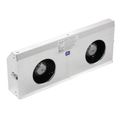

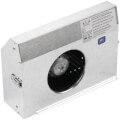
Inline Blowers mount directly in a duct run rather than at a ceiling or wall opening, moving air quietly for bathroom, kitchen, and whole-house ventilation without a fan housing taking up space at the register. Panasonic's WhisperLine series spans 120 CFM up to 440 CFM depending on model, with sound ratings as low as 1.0 sone on the smallest unit, and connects to standard 4-inch round duct with tapered adapters. Soler & Palau's TD-SILENT line reaches up to 530 CFM on a single-speed 115V motor with static pressure capability to 1 inch water gauge. Locating the blower mid-duct instead of at the vent point lets installers place the noisiest component in an attic or mechanical space away from occupied rooms. Matching CFM output to room size and duct run length keeps ventilation effective without oversizing the unit.
Subcategories
- Remote-Mount Inline Fans: Remote-mount inline fans like the Panasonic WhisperLine series connect to one or multiple room inlets through a single duct-mounted unit, ranging from 120 CFM up to 440 CFM across the lineup. Installers use these when ventilating several rooms, such as a bathroom and adjacent closet, from one fan located in an attic or crawlspace. Insulated housing on these units reduces condensation and noise transfer into the duct.
- Mixed-Flow Inline Fans: Mixed-flow inline fans, such as the Soler & Palau TD-SILENT series, use a mixed-flow impeller design to maintain airflow at higher static pressure, up to 1 inch water gauge, compared to standard axial inline fans. HVAC contractors specify this style for longer duct runs or installations with multiple elbows that would otherwise reduce a standard fan's output. A single-speed 115V motor and external connection box keep wiring straightforward.
- Low-Sone Inline Fans: Low-sone inline fans prioritize quiet operation, with the Panasonic FV-10NLF1E rated at 1.0 sone while still delivering 120 CFM. Contractors installing ventilation in bedrooms, home offices, or other noise-sensitive spaces specify these lower sone ratings to avoid a noticeable hum during operation. Duct-mounted placement already reduces perceived noise compared to a ceiling fan housing, and a low-sone unit compounds that benefit.
- High-Capacity Inline Fans: High-capacity inline fans cover larger spaces or multi-room ventilation systems, with models like the Panasonic FV-40NLF1 rated at 440 CFM and the Soler & Palau TD-200S rated at 530 CFM. Contractors ventilating larger bathrooms, basements, or combined multi-room systems specify this tier to move sufficient air across longer duct runs. Static pressure ratings become more important at this capacity since longer runs and added elbows reduce real-world airflow from the rated free-air figure.
Buying Guide
Sizing starts with square footage. The standard guideline calls for 1 CFM per square foot of floor area with a minimum of 50 CFM for rooms up to 50 square feet, though jetted tubs, steam showers, and larger rooms push that figure higher. Inline Blowers rated at the low end, such as a 120 CFM unit, suit a single standard bathroom, while higher-capacity models in the 300 to 500-plus CFM range fit combined multi-room systems or larger spaces.
Rated CFM at zero static pressure isn't what a fan delivers once installed. Duct length, diameter, and the number of elbows in a run all add resistance that reduces actual airflow below the free-air rating, so a fan should be selected with enough margin to still hit target CFM after accounting for the specific duct layout. Mixed-flow designs hold airflow better against static pressure than standard axial fans, which matters on longer runs.
Sound rating matters as much as airflow for occupied spaces. A unit's sone rating, not just its CFM, determines how noticeable it'll be during operation, and inline placement in an attic or mechanical space already reduces perceived noise compared to a ceiling-mounted fan. Confirm duct diameter compatibility, typically 4 inches for standard residential inline fans, before finalizing a model, and check whether the fan needs to serve one inlet or multiple rooms from a single unit.
Frequently Asked Questions
How is an inline blower different from a standard ceiling exhaust fan?
An inline blower mounts in the duct run itself, typically in an attic or mechanical space, rather than in a housing at the ceiling opening. That placement moves the noisiest component away from the occupied room and allows one unit to serve multiple inlets from a single fan.
What CFM rating is needed for a standard bathroom?
The standard guideline calls for 1 CFM per square foot of bathroom floor area, with a 50 CFM minimum for bathrooms up to 50 square feet. Larger bathrooms, jetted tubs, or steam showers require a higher CFM rating than that baseline.
Does rated CFM match real-world airflow after installation?
Rated CFM at zero static pressure represents free-air performance, not what a fan delivers once connected to actual ductwork. Duct length, diameter, and elbow count all add resistance that reduces real-world airflow below the free-air figure, so sizing should include margin for the specific duct layout.
What duct size do residential inline fans typically use?
Most residential inline fans use 4-inch round duct, which is preferred over 3-inch duct for lower resistance and better overall performance. Confirming duct diameter compatibility before selecting a fan avoids a mismatched connection.
Can one inline blower ventilate more than one room?
Remote-mount inline fans, such as the Panasonic WhisperLine series, are designed to ventilate multiple inlets or rooms from a single duct-mounted unit. That capability makes one higher-capacity inline fan a practical alternative to installing separate fans in each room.
