




PEX Plumbing System Installation Parts & Accessories
Installation parts include clips, supports, sleeves, and small hardware. They hold PEX or other plumbing tubing in place as it runs through framing, walls, or floors. Individually, these parts are inexpensive, but a job can stall quickly without the right clip or bracket on hand.
Properly supported tubing lasts longer and performs more reliably than a run left to sag or rub against framing members over time. Stocking a range of installation parts alongside tubing and fittings keeps a rough-in moving without a mid-job trip back to the supply house for a missing bracket or sleeve.



Subcategories
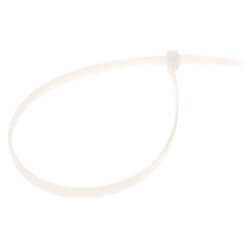
- Bundle Ties: Bundle ties gather multiple tubing runs together into a single, organized group as they travel along a joist or through a wall cavity. Keeping lines bundled reduces clutter in a mechanical space and makes future tracing or service easier for whoever works on the system next. Reusable and one-time tie styles are both common, with reusable versions preferred where a bundle may need to be reopened later.
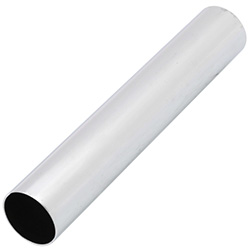
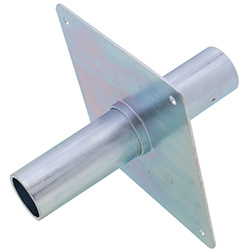
- Chrome Sleeves: Chrome sleeves cover the exposed section of tubing or pipe where it passes through a floor, wall, or cabinet base. They provide a finished look in visible areas like under a sink or at a floor penetration. Beyond appearance, a sleeve protects the tubing from abrasion at the point where it passes through a rigid surface. Sleeve diameter needs to match the tubing size closely enough to look finished without binding against the pipe.
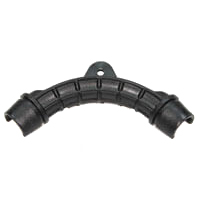
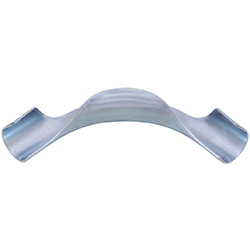
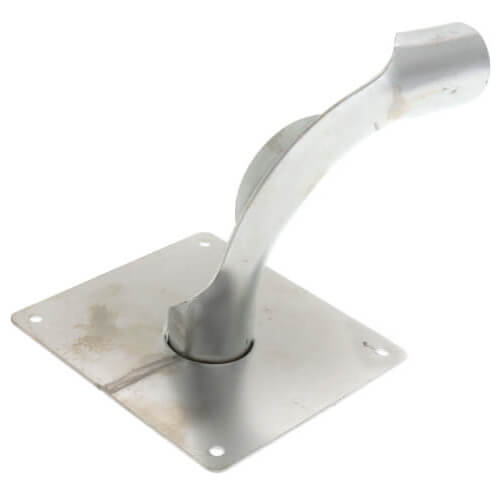
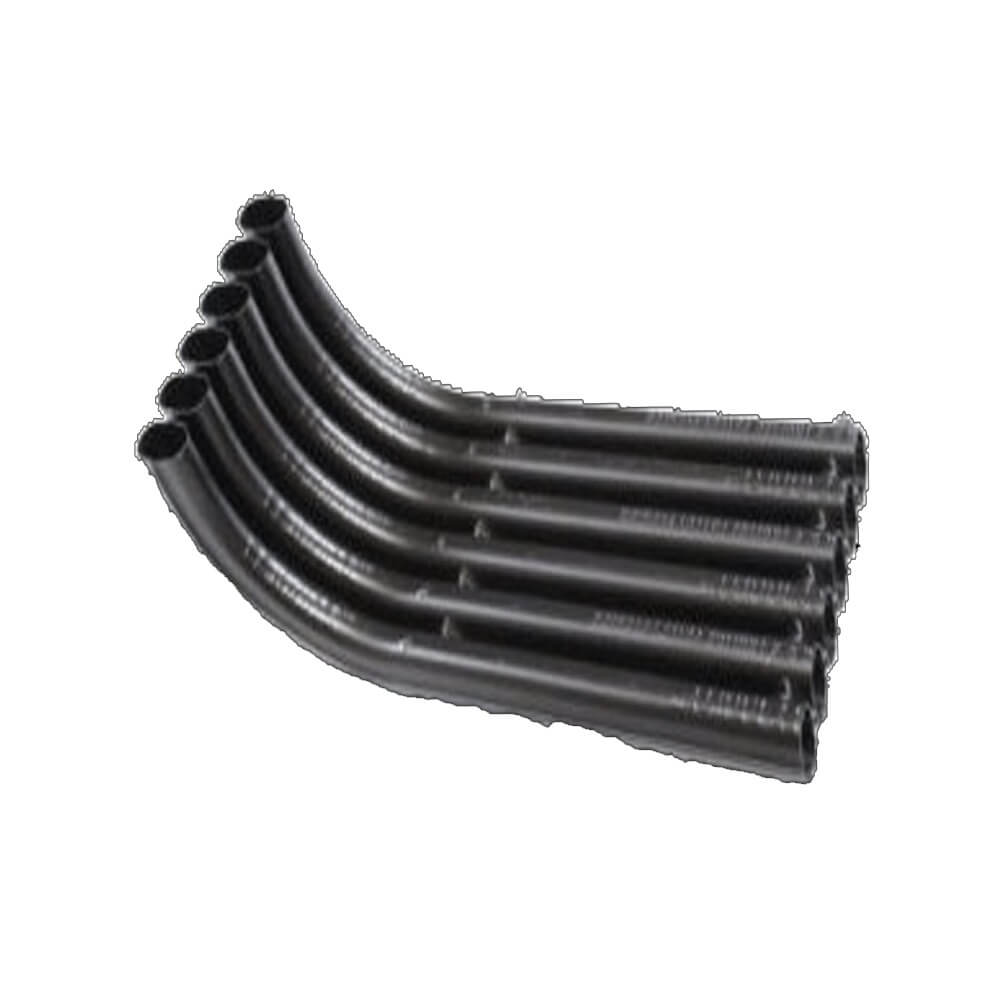
- Drop Ear Bend Supports: Drop ear bend supports reinforce a PEX or other tubing bend where it turns to meet a drop ear fitting. Typical locations include behind a shower valve or at a fixture supply. The support keeps the tubing from kinking at the bend point, which would otherwise restrict flow or weaken the tubing over time. These supports are typically secured to framing to keep the fitting rigid enough for a fixture to be mounted to it.
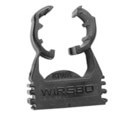
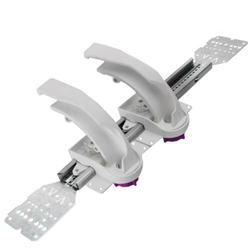
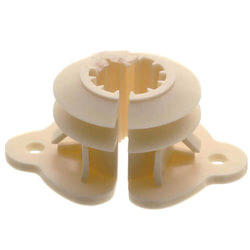
- EZ Route PEX Routing: EZ Route PEX routing systems provide a channel or guide that keeps tubing organized and properly spaced as it runs through framing on a rough-in job. Using a routing system speeds up installation on jobs with multiple parallel runs by keeping tubing straight and evenly spaced without individual clips at every stud bay. It also reduces the chance of a nail or screw puncturing a line during later finish work, since the tubing sits in a defined, protected path.
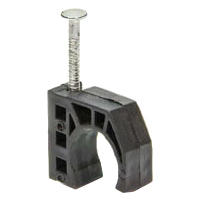
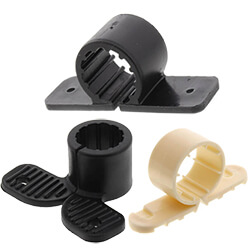
- Economy PEX Tubing Clamps: Economy PEX tubing clamps secure tubing to framing at a lower cost than some premium clamp styles. They are a practical choice for large residential jobs with long runs of tubing to support. They still provide the basic function of keeping tubing straight and properly spaced along a joist or stud. Spacing clamps at regular intervals keeps a run from sagging between support points.
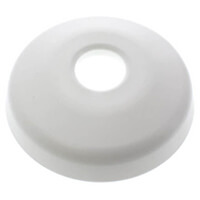
- Escutcheons for PEX: Escutcheons for PEX cover the wall or floor opening where tubing passes through. They provide a finished appearance at a visible penetration point such as behind a toilet or under a sink. Beyond looks, an escutcheon can help conceal a slightly oversized hole without requiring a wall or floor patch. Sizes are matched to the tubing diameter so the cover sits flush against the surface.
Buying Guide
Matching an installation part to the tubing diameter in use is the first step for clips, sleeves, and clamps. A part sized for the wrong diameter either binds too tightly or fails to hold the tubing securely. Installation Parts are typically labeled by the tubing size they support, so confirming that measurement before ordering avoids a mismatch discovered mid-job.
Spacing and support intervals matter for long tubing runs. Following the recommended support spacing prevents sagging between clips or clamps, which over time can stress fittings at either end of the run.
Material choice affects durability in different environments. Metal supports generally hold up better in areas exposed to more handling or weight, while plastic clips and ties are sufficient for lighter-duty runs in typical residential wall cavities.
Finished appearance becomes a factor for any installation part visible after a job is complete, such as an escutcheon or chrome sleeve at a fixture connection. Choosing a finish that matches the surrounding fixtures keeps the visible parts of the job looking intentional rather than makeshift.
Buying installation parts in bulk alongside the tubing and fittings for a job reduces the chance of running short mid-install. A rough-in that runs out of clips or bend supports partway through often means a delay waiting on a restock. Estimating quantities generously up front avoids that delay.
Frequently Asked Questions
Why does support spacing matter on long PEX tubing runs?
Proper support spacing prevents tubing from sagging between clips or clamps. Over time, a sagging run can stress the fittings at either end.
What is the purpose of a bend support?
A bend support keeps tubing from kinking or collapsing at a sharp turn, which would otherwise restrict water flow and weaken the tubing at that point. Bend supports are especially common where tubing turns to meet a drop ear fitting or other rigid connection point.
Do escutcheons serve a functional purpose beyond appearance?
Escutcheons primarily provide a finished look at a wall or floor penetration, but they can also help conceal a slightly oversized hole without requiring a patch. They do not provide structural support for the tubing itself.
Can bundle ties be reused if a line needs to be reopened later?
Reusable bundle tie styles can be released and refastened without damage, which is useful when a bundle needs to be reopened for a repair or modification. One-time tie styles need to be cut and replaced if the bundle is disturbed.
Why use a PEX routing system instead of individual clips?
A routing system keeps multiple parallel tubing runs organized and evenly spaced without individual clips at every support point. This can speed up installation on jobs with several lines running together. It also helps protect tubing from punctures during later finish work by keeping it within a defined path.
Resources
Subcategories
- Bundle Ties: Bundle ties gather multiple tubing runs together into a single, organized group as they travel along a joist or through a wall cavity. Keeping lines bundled reduces clutter in a mechanical space and makes future tracing or service easier for whoever works on the system next. Reusable and one-time tie styles are both common, with reusable versions preferred where a bundle may need to be reopened later.
- Chrome Sleeves: Chrome sleeves cover the exposed section of tubing or pipe where it passes through a floor, wall, or cabinet base. They provide a finished look in visible areas like under a sink or at a floor penetration. Beyond appearance, a sleeve protects the tubing from abrasion at the point where it passes through a rigid surface. Sleeve diameter needs to match the tubing size closely enough to look finished without binding against the pipe.
- Drop Ear Bend Supports: Drop ear bend supports reinforce a PEX or other tubing bend where it turns to meet a drop ear fitting. Typical locations include behind a shower valve or at a fixture supply. The support keeps the tubing from kinking at the bend point, which would otherwise restrict flow or weaken the tubing over time. These supports are typically secured to framing to keep the fitting rigid enough for a fixture to be mounted to it.
- EZ Route PEX Routing: EZ Route PEX routing systems provide a channel or guide that keeps tubing organized and properly spaced as it runs through framing on a rough-in job. Using a routing system speeds up installation on jobs with multiple parallel runs by keeping tubing straight and evenly spaced without individual clips at every stud bay. It also reduces the chance of a nail or screw puncturing a line during later finish work, since the tubing sits in a defined, protected path.
- Economy PEX Tubing Clamps: Economy PEX tubing clamps secure tubing to framing at a lower cost than some premium clamp styles. They are a practical choice for large residential jobs with long runs of tubing to support. They still provide the basic function of keeping tubing straight and properly spaced along a joist or stud. Spacing clamps at regular intervals keeps a run from sagging between support points.
- Escutcheons for PEX: Escutcheons for PEX cover the wall or floor opening where tubing passes through. They provide a finished appearance at a visible penetration point such as behind a toilet or under a sink. Beyond looks, an escutcheon can help conceal a slightly oversized hole without requiring a wall or floor patch. Sizes are matched to the tubing diameter so the cover sits flush against the surface.
Buying Guide
Matching an installation part to the tubing diameter in use is the first step for clips, sleeves, and clamps. A part sized for the wrong diameter either binds too tightly or fails to hold the tubing securely. Installation Parts are typically labeled by the tubing size they support, so confirming that measurement before ordering avoids a mismatch discovered mid-job.
Spacing and support intervals matter for long tubing runs. Following the recommended support spacing prevents sagging between clips or clamps, which over time can stress fittings at either end of the run.
Material choice affects durability in different environments. Metal supports generally hold up better in areas exposed to more handling or weight, while plastic clips and ties are sufficient for lighter-duty runs in typical residential wall cavities.
Finished appearance becomes a factor for any installation part visible after a job is complete, such as an escutcheon or chrome sleeve at a fixture connection. Choosing a finish that matches the surrounding fixtures keeps the visible parts of the job looking intentional rather than makeshift.
Buying installation parts in bulk alongside the tubing and fittings for a job reduces the chance of running short mid-install. A rough-in that runs out of clips or bend supports partway through often means a delay waiting on a restock. Estimating quantities generously up front avoids that delay.
Frequently Asked Questions
Why does support spacing matter on long PEX tubing runs?
Proper support spacing prevents tubing from sagging between clips or clamps. Over time, a sagging run can stress the fittings at either end.
What is the purpose of a bend support?
A bend support keeps tubing from kinking or collapsing at a sharp turn, which would otherwise restrict water flow and weaken the tubing at that point. Bend supports are especially common where tubing turns to meet a drop ear fitting or other rigid connection point.
Do escutcheons serve a functional purpose beyond appearance?
Escutcheons primarily provide a finished look at a wall or floor penetration, but they can also help conceal a slightly oversized hole without requiring a patch. They do not provide structural support for the tubing itself.
Can bundle ties be reused if a line needs to be reopened later?
Reusable bundle tie styles can be released and refastened without damage, which is useful when a bundle needs to be reopened for a repair or modification. One-time tie styles need to be cut and replaced if the bundle is disturbed.
Why use a PEX routing system instead of individual clips?
A routing system keeps multiple parallel tubing runs organized and evenly spaced without individual clips at every support point. This can speed up installation on jobs with several lines running together. It also helps protect tubing from punctures during later finish work by keeping it within a defined path.