




Filters
SORT
Product Availability –
Brand –
Application –
Review Score –
 --%3E %3Csvg version='1.1' id='Fill' xmlns='http://www.w3.org/2000/svg' xmlns:xlink='http://www.w3.org/1999/xlink' x='0px' y='0px' viewBox='0 0 100 100' enable-background='new 0 0 100 100' xml:space='preserve'%3E %3Cpath fill='%23F15C02' d='M79.44,0.95H20.56C9.78,0.95,0.95,9.78,0.95,20.56v58.87c0,10.79,8.82,19.61,19.61,19.61h58.87 c10.79,0,19.61-8.83,19.61-19.61V20.56C99.05,9.78,90.22,0.95,79.44,0.95z M65.38,58.24l9.38,29.58L49.69,69.78L24.5,87.82 l9.34-29.6L8.8,39.6l30.73-0.17c0,0,6.98-19.61,10-28.93c0.54,1.36,9.88,29.1,9.88,29.1H91.2L65.38,58.24z'/%3E %3C/svg%3E)
 --%3E %3Csvg version='1.1' id='With-RB' xmlns='http://www.w3.org/2000/svg' xmlns:xlink='http://www.w3.org/1999/xlink' x='0px' y='0px' viewBox='0 0 100 100' enable-background='new 0 0 100 100' xml:space='preserve'%3E %3Cpath fill='%23FBC8B4' d='M79.44,0.95H20.56C9.78,0.95,0.95,9.78,0.95,20.56v58.87c0,10.79,8.82,19.61,19.61,19.61h58.87 c10.79,0,19.61-8.83,19.61-19.61V20.56C99.05,9.78,90.22,0.95,79.44,0.95z M65.38,58.24l9.38,29.58L49.69,69.78L24.5,87.82 l9.34-29.6L8.8,39.6l30.73-0.17c0,0,6.98-19.61,10-28.93c0.54,1.36,9.88,29.1,9.88,29.1H91.2L65.38,58.24z'/%3E %3C/svg%3E)
Price Range –
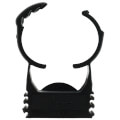
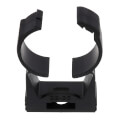
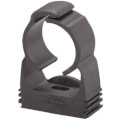
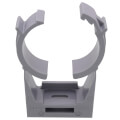
PEX Clips




 --%3E %3Csvg version='1.1' id='No-RB' xmlns='http://www.w3.org/2000/svg' xmlns:xlink='http://www.w3.org/1999/xlink' x='0px' y='0px' viewBox='0 0 100 100' enable-background='new 0 0 100 100' xml:space='preserve'%3E %3Cpath fill='%23CECECE' d='M79.44,0.95H20.56C9.78,0.95,0.95,9.78,0.95,20.56v58.87c0,10.79,8.82,19.61,19.61,19.61h58.87 c10.79,0,19.61-8.83,19.61-19.61V20.56C99.05,9.78,90.22,0.95,79.44,0.95z M65.38,58.24l9.38,29.58L49.69,69.78L24.5,87.82 l9.34-29.6L8.8,39.6l30.73-0.17c0,0,6.98-19.61,10-28.93c0.54,1.36,9.88,29.1,9.88,29.1H91.2L65.38,58.24z'/%3E %3C/svg%3E)
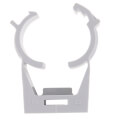
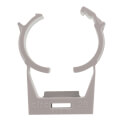

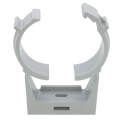
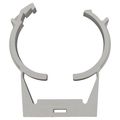

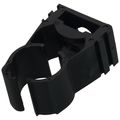
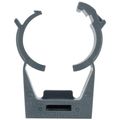
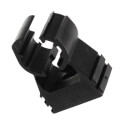
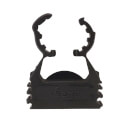
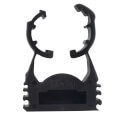
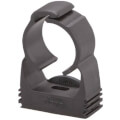
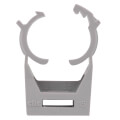
PEX Clips hold PEX tubing in place along joists, studs, and other framing members, keeping the tubing from sagging, rattling against framing, or pulling on fittings as the line runs through a building. Plumbers snap them onto the tubing at set intervals along a run rather than relying on tape or wire, which don't hold up as well over years of thermal expansion and contraction. Clip spacing generally runs every few feet along horizontal runs, tighter near fittings and direction changes where the tubing needs more support. Using the correct clip size for the tubing diameter keeps the tubing from being pinched or left loose enough to move against the framing over time.
Subcategories
- Half Inch PEX Clips: Half inch PEX clips are sized for the most common residential PEX tubing diameter, supporting supply lines running to fixtures throughout a home. Plumbers use them along joist runs and where tubing passes through wall cavities, spacing them close enough that the tubing doesn't sag between support points.
- Three Quarter Inch PEX Clips: Three quarter inch clips support the larger-diameter PEX commonly used for main distribution lines feeding multiple fixtures or a manifold system. The larger tubing carries more water volume and weight, so support spacing on these runs matters even more than on smaller branch lines.
- Insulated PEX Clips: Insulated clips add a cushioned liner inside the clip body to reduce noise from water hammer or thermal expansion rubbing tubing against the clip itself. Plumbers reach for these in finished spaces or near living areas, where an uninsulated clip's occasional tapping noise would otherwise become a callback.
- Multi-Line PEX Clips: Multi-line clips hold two or more tubing runs together at a single support point, cutting down on the number of individual clips needed along a run with several parallel lines. Manifold and mechanical room installations, where multiple PEX lines run parallel for a stretch, benefit most from consolidating support points this way.
Buying Guide
Match the clip size to the tubing's actual outside diameter rather than its nominal size, since a clip that's slightly too tight can pinch the tubing and restrict flow, while one that's too loose won't hold the line securely against framing. Checking the tubing manufacturer's outside diameter spec before ordering clips avoids a mismatch that isn't obvious until installation.
Spacing along a run affects long-term performance more than clip choice alone. Horizontal runs need support at regular intervals to prevent sagging, and spacing should tighten up near fittings, valves, and direction changes where the tubing experiences more stress from movement and thermal cycling.
PEX Clips come in insulated and uninsulated versions, and the choice depends mostly on where the run sits in the building. An uninsulated clip works fine in an unfinished basement or mechanical room, but a run passing through or near a finished living space benefits from an insulated clip that quiets the minor tapping noise thermal expansion can cause over time.
For runs with multiple parallel PEX lines, multi-line clips reduce the total number of individual clips needed while still supporting each line independently. Confirming clip material is rated for the environment, particularly in damp basements or crawl spaces, rounds out a proper installation that holds up over the life of the piping.
Frequently Asked Questions
How far apart should PEX clips be spaced along a run?
Horizontal runs generally need support at regular intervals to prevent sagging between framing members, with tighter spacing near fittings, valves, and direction changes where the tubing sees more stress. Checking local code requirements for maximum support spacing is worth doing before finalizing a run, since requirements can vary by jurisdiction.
Can PEX clips be reused if a line needs to be moved?
A clip that hasn't cracked or deformed from removal can often be reused, but repeatedly snapping tubing in and out of the same clip weakens its grip over time. Replacing a clip that shows any visible stress marks is a cheap way to avoid a line coming loose later.
What happens if a PEX clip is too small for the tubing?
A clip that's undersized for the tubing's actual outside diameter can pinch the line enough to restrict water flow at that point, even if the reduction isn't visible from outside. Checking the tubing manufacturer's outside diameter spec against the clip's rated size prevents this before installation.
Do insulated PEX clips actually reduce noise?
Insulated clips add a cushioned liner that reduces the tapping or rattling noise caused by thermal expansion and water hammer rubbing tubing against a rigid clip. The difference is most noticeable on runs near finished living space, where even minor noise becomes noticeable in a quiet room.
Can one clip hold multiple PEX lines running side by side?
Multi-line clips are built specifically to hold two or more parallel runs at a single support point, but using a standard single-line clip for multiple lines usually doesn't hold either line securely. Sizing the clip to the actual number and diameter of lines it needs to support keeps the installation solid.
