




Jig Saws & Blades

 --%3E %3Csvg version='1.1' id='No-RB' xmlns='http://www.w3.org/2000/svg' xmlns:xlink='http://www.w3.org/1999/xlink' x='0px' y='0px' viewBox='0 0 100 100' enable-background='new 0 0 100 100' xml:space='preserve'%3E %3Cpath fill='%23CECECE' d='M79.44,0.95H20.56C9.78,0.95,0.95,9.78,0.95,20.56v58.87c0,10.79,8.82,19.61,19.61,19.61h58.87 c10.79,0,19.61-8.83,19.61-19.61V20.56C99.05,9.78,90.22,0.95,79.44,0.95z M65.38,58.24l9.38,29.58L49.69,69.78L24.5,87.82 l9.34-29.6L8.8,39.6l30.73-0.17c0,0,6.98-19.61,10-28.93c0.54,1.36,9.88,29.1,9.88,29.1H91.2L65.38,58.24z'/%3E %3C/svg%3E)
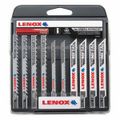

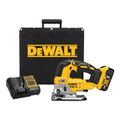
Jig Saws & Blades are the cutting tools and replacement blades that trade professionals use for curved cuts, plunge cuts, and cutouts in wood, metal, and plastic. Milwaukee's M18 FUEL D-Handle Jig Saw (2737-20) runs at 3500 strokes per minute at maximum variable speed and accepts T-Shank blades. Milwaukee's 48-42-5300 bi-metal blade pairs a 4 inch length with 6 TPI for fast cutting in metal, woods, and plastics. Installers cut openings for pipe and duct penetrations, trim panels around equipment, and notch material on site, and a jig saw handles those cuts where a circular saw can't. The saw only performs as well as the blade in it. Tooth count, blade construction, and shank style decide whether a cut comes out clean or burned and ragged. Matching the right saw and blade to the material saves time, reduces rework, and keeps crews moving from one task to the next.
Subcategories
- Cordless Jig Saws: Cordless jig saws run on a battery platform, so installers can make curve and cutout cuts without hunting for an outlet. Milwaukee's M12 FUEL Jig Saw (2545-20) delivers 3000 strokes per minute at a 7/8 inch stroke length and runs on the M12 System. Service techs and remodelers use this class of saw to cut openings and trim material on site. A variable speed dial on the 2545-20 runs from 3000 to 800 strokes per minute, which lets the operator match speed to the material.
- D-Handle Jig Saws: D-handle jig saws use a closed handle style built for controlled, precise cuts. Milwaukee's M18 FUEL D-Handle Jig Saw (2737-20) offers 4-position orbital cutting and reaches 3500 strokes per minute at maximum variable speed. Carpenters and mechanical contractors use higher-power saws like it on dense sheet goods. Milwaukee cites as many as 105 linear feet of 3/4 inch laminated particle board per charge with an M18 REDLITHIUM XC5.0 battery.
- T-Shank Jig Saw Blades: T-Shank jig saw blades use a tang style made for saws that accept T-Shank blades. Both the Milwaukee M18 FUEL 2737-20 and the M12 FUEL 2545-20 accept them. Installers should confirm a saw's shank type before buying blades in volume. Milwaukee's 48-42-5300 is a 4 inch, 6 TPI T-Shank blade supplied in a pack of 5.
- Bi-Metal Jig Saw Blades: Bi-metal blades use a two-metal construction aimed at mixed cutting jobs. Milwaukee's 48-42-5300 pairs bi-metal construction with a 6 TPI tooth pattern for fast cutting in metal, woods, and plastics. Contractors reach for this blade type on renovation work where a single cut can meet wood, plastic, and metal.
Buying Guide
Start with the material and the cut. Wood, metal, and plastic each call for a different blade, so match the tooth count and blade construction to the hardest material on the job. Milwaukee's 48-42-5300, a 4 inch, 6 TPI bi-metal blade, is built for fast cutting in metal, woods, and plastics. Generally, lower tooth counts cut faster and higher counts leave a smoother edge.
Next, confirm the shank. The Milwaukee M18 FUEL 2737-20 and M12 FUEL 2545-20 jig saws both accept T-Shank blades, so a T-Shank blade like the 48-42-5300 fits either one. Check the manual or spec sheet before stocking blades for any other saw.
Then choose the saw and battery platform. Crews already running M18 or M12 batteries can match the saw to the platform they own. The 2737-20 offers 4-position orbital cutting and 3500 strokes per minute, while the 2545-20 offers 5 orbital adjustment levels, bevel detents at 0, 15, 30, and 45 degrees, and a variable speed dial from 3000 to 800 strokes per minute.
When comparing Jig Saws & Blades, weigh the saw's speed range and orbital settings against the materials the crew cuts most often. Higher strokes per minute generally suit faster cutting, while a lower setting gives more control in plastics and thin metal. Keep spare blades in the matching shank style so a dull blade never stalls the job.
Frequently Asked Questions
How many strokes per minute do Milwaukee jig saws run?
Milwaukee's M18 FUEL D-Handle Jig Saw (2737-20) reaches 3500 strokes per minute at maximum variable speed. The M12 FUEL Jig Saw (2545-20) delivers 3000 strokes per minute at a 7/8 inch stroke length. Compare those figures when choosing between jig saws for a given material.
Do T-Shank jig saw blades fit Milwaukee jig saws?
T-Shank jig saw blades fit saws built to accept them, and both the Milwaukee 2737-20 and 2545-20 jig saws do. Milwaukee's 48-42-5300 is a 4 inch, 6 TPI T-Shank blade. Confirm the shank type on any other saw before ordering blades.
What can a bi-metal jig saw blade cut?
A bi-metal jig saw blade like Milwaukee's 48-42-5300 is built for fast cutting in metal, woods, and plastics. It has a 4 inch length and 6 TPI. Pick a blade for the hardest material in the cut, since bi-metal jig saw blades are made for mixed jobs.
Can a cordless jig saw cut bevels?
Some cordless jig saws can, and Milwaukee's M12 FUEL Jig Saw (2545-20) has an aluminum base plate with detents at 0, 15, 30, and 45 degrees. Check the base plate specs on any cordless jig saw before planning angled cuts.
How much can an M18 jig saw cut on one battery?
Milwaukee cites as many as 105 linear feet of 3/4 inch laminated particle board per charge for the M18 FUEL D-Handle Jig Saw (2737-20) with an M18 REDLITHIUM XC5.0 battery. Actual runtime for any cordless jig saw depends on the material, blade, and battery in use.
