




Filters
SORT
Product Availability –
Brand –
Size –
Review Score –
 --%3E %3Csvg version='1.1' id='Fill' xmlns='http://www.w3.org/2000/svg' xmlns:xlink='http://www.w3.org/1999/xlink' x='0px' y='0px' viewBox='0 0 100 100' enable-background='new 0 0 100 100' xml:space='preserve'%3E %3Cpath fill='%23F15C02' d='M79.44,0.95H20.56C9.78,0.95,0.95,9.78,0.95,20.56v58.87c0,10.79,8.82,19.61,19.61,19.61h58.87 c10.79,0,19.61-8.83,19.61-19.61V20.56C99.05,9.78,90.22,0.95,79.44,0.95z M65.38,58.24l9.38,29.58L49.69,69.78L24.5,87.82 l9.34-29.6L8.8,39.6l30.73-0.17c0,0,6.98-19.61,10-28.93c0.54,1.36,9.88,29.1,9.88,29.1H91.2L65.38,58.24z'/%3E %3C/svg%3E)
Price Range –
Knockout Seals

 --%3E %3Csvg version='1.1' id='No-RB' xmlns='http://www.w3.org/2000/svg' xmlns:xlink='http://www.w3.org/1999/xlink' x='0px' y='0px' viewBox='0 0 100 100' enable-background='new 0 0 100 100' xml:space='preserve'%3E %3Cpath fill='%23CECECE' d='M79.44,0.95H20.56C9.78,0.95,0.95,9.78,0.95,20.56v58.87c0,10.79,8.82,19.61,19.61,19.61h58.87 c10.79,0,19.61-8.83,19.61-19.61V20.56C99.05,9.78,90.22,0.95,79.44,0.95z M65.38,58.24l9.38,29.58L49.69,69.78L24.5,87.82 l9.34-29.6L8.8,39.6l30.73-0.17c0,0,6.98-19.61,10-28.93c0.54,1.36,9.88,29.1,9.88,29.1H91.2L65.38,58.24z'/%3E %3C/svg%3E)

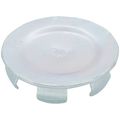


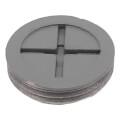


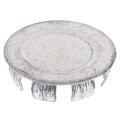



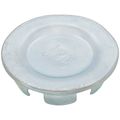
Knockout seals are the plugs and grommets that close off unused knockout openings in electrical boxes, panels, and enclosures once a conduit or cable run is removed or was never needed. Electricians reach for them any time a box has more knockouts punched than it has actual entries in use, which is common on multi-gang boxes and panels sized for a larger service than what's installed.
Leaving a knockout open exposes the interior of the box to dust, moisture, and pests, and it fails inspection in most jurisdictions since code requires every unused opening to be closed. A properly sized seal restores the box's rated enclosure integrity without needing a full cover replacement, which makes this a quick fix during a rough-in walkthrough or a service upgrade.
Subcategories
- Snap-In Knockout Seals: Plastic or metal seals that snap into a standard knockout hole from one side without tools. These are the fastest option for closing off a single unused knockout on a panel or box during a service call. They're sized to match standard trade knockout diameters, most commonly half-inch and three-quarter-inch.
- Threaded Knockout Plugs: Plugs with a threaded body that screw into a tapped knockout opening, typically used on metal enclosures where a snap-in seal wouldn't seat as tightly. These give a more secure, vibration-resistant closure for outdoor or industrial enclosures. They're common on panels that see regular access or physical movement.
- Sealed Knockout Plugs for Wet Locations: Plugs with an integrated gasket used on enclosures rated for outdoor or wash-down environments, where a standard plug wouldn't meet the enclosure's moisture rating. These maintain the box's weatherproof rating on the unused knockout the same way a proper conduit fitting would on an active one. They're the right call any time the enclosure itself carries a wet-location listing.
Buying Guide
Match the seal to the knockout size first. Standard electrical knockouts are punched in fixed trade sizes, most commonly a half-inch and three-quarter-inch, and a seal that's slightly undersized will pop out rather than hold a secure fit.
Next, consider the enclosure type. A seal for a standard indoor panel doesn't need a gasket, but any enclosure rated for outdoor use, a wash-down area, or damp locations needs a knockout seal with the same environmental rating as the box itself, otherwise the unused opening becomes the weak point in an otherwise sealed enclosure.
For knockout seals going into metal enclosures that see regular access, a threaded plug holds up better over time than a snap-in style, since repeated door swings or nearby vibration can work a snap-in seal loose. On boxes that are rarely opened again after rough-in, a snap-in seal is faster to install and sufficient for the application.
Buy a few extra when doing a panel change or service upgrade. It's common to discover additional unused knockouts once the old equipment is removed, and having spares on the truck avoids a second trip for a five-dollar part.
Frequently Asked Questions
Is it actually a code violation to leave a knockout open?
Yes, in most jurisdictions an open, unused knockout fails inspection because it breaks the enclosure's rated integrity and leaves the interior exposed. Always close any knockout that isn't being used for a conduit or cable entry.
Can I use a snap-in seal on an outdoor panel?
Only if it's rated for wet locations. A standard indoor snap-in seal won't hold the same moisture rating as the enclosure and can let water track in around the unused opening.
What's the difference between a knockout seal and a knockout plug?
The terms are often used interchangeably in the trade, but a plug typically refers to a solid closure while a seal implies some form of gasket or weatherproofing. Check the specific listing to confirm which environment it's rated for.
Do knockout seals come in metal as well as plastic?
Yes, both are available. Metal seals are generally used on enclosures where a metallic, grounded closure matters, while plastic snap-ins are common on standard indoor panels and boxes.
How do I know what size knockout I have?
Measure the diameter of the punched opening and compare it to standard trade sizes, most commonly a half-inch and three-quarter-inch. If a seal doesn't seat snugly without forcing it, it's the wrong size.
