




LCL DeSuperheating Thermal Expansion Valves

 --%3E %3Csvg version='1.1' id='No-RB' xmlns='http://www.w3.org/2000/svg' xmlns:xlink='http://www.w3.org/1999/xlink' x='0px' y='0px' viewBox='0 0 100 100' enable-background='new 0 0 100 100' xml:space='preserve'%3E %3Cpath fill='%23CECECE' d='M79.44,0.95H20.56C9.78,0.95,0.95,9.78,0.95,20.56v58.87c0,10.79,8.82,19.61,19.61,19.61h58.87 c10.79,0,19.61-8.83,19.61-19.61V20.56C99.05,9.78,90.22,0.95,79.44,0.95z M65.38,58.24l9.38,29.58L49.69,69.78L24.5,87.82 l9.34-29.6L8.8,39.6l30.73-0.17c0,0,6.98-19.61,10-28.93c0.54,1.36,9.88,29.1,9.88,29.1H91.2L65.38,58.24z'/%3E %3C/svg%3E)

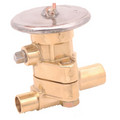
LCL DeSuperheating Thermal Expansion Valves are take-apart style expansion valves from Emerson Flow Controls, built for desuperheating duty in refrigeration and air conditioning systems. The lineup includes the LCL Series and the LCLE Series, with the LCLE variant adding an external equalizer connection rather than an internal one. Both the 022005 LCL model and the 022003 LCLE model use a 1/4 inch SAE connection size, making them a common fit for smaller desuperheating circuits rather than main-line liquid feed applications. Take-apart construction lets a technician service the valve's internal cage without removing the entire body from the refrigerant line, which cuts downtime on a system that needs a quick cage swap rather than a full valve replacement. Refrigeration contractors specify this valve type when a system needs to manage superheat specifically at a desuperheating point, separate from the primary metering device feeding the evaporator.
Subcategories
- LCL Series (Internal Equalizer): The LCL Series, such as SKU 022005, uses a standard internal equalizer connection rather than a separate external equalizer line. Refrigeration technicians select this version when the system's desuperheating circuit doesn't need a remote pressure-sensing connection back to the suction line. The valve carries a 1/4 inch SAE connection size, sized for smaller desuperheating flow rates rather than a main liquid feed line. Take-apart body construction lets a technician access the internal cage for service without removing the valve from the line set.
- LCLE Series (External Equalizer): The LCLE Series, such as SKU 022003, adds an external equalizer port in addition to the standard valve body, letting the superheat-sensing signal get taken from a point downstream of the valve rather than internally. Technicians specify this version when the application calls for a pressure reading taken closer to the actual sensing bulb location. Like the LCL version, the LCLE model uses a 1/4 inch SAE connection size. Both series share the same take-apart body design for field servicing.
- Take-Apart Valve Construction: Take-apart construction, the design used across the LCL and LCLE lineup, separates the valve's internal cage assembly from the body so a technician can service or swap internal parts without unsweating the valve from the refrigerant line. Downtime concerns drive the choice for this construction style, since a cage-level repair takes less time than cutting out and resweating an entire new valve body. Both the LCL and LCLE series share this body style, differing only in equalizer connection type. Technicians working on systems already fitted with a take-apart style valve stay consistent with that body style when ordering a replacement.
Buying Guide
Equalizer type is the main decision when specifying LCL DeSuperheating Thermal Expansion Valves, since the LCL and LCLE series differ specifically in how the valve senses pressure for superheat control. An internal equalizer, used on the standard LCL model, works when the pressure drop across the valve itself stays low enough that an internal reading reflects actual suction conditions accurately. An external equalizer, used on the LCLE model, becomes the better choice once pressure drop across the valve or a downstream component would throw off an internal reading, since the equalizer line taps pressure closer to the sensing bulb location instead. Connection size for LCL DeSuperheating Thermal Expansion Valves matters next: both models in this category use a 1/4 inch SAE fitting, which fits smaller desuperheating circuits rather than a system's main liquid feed line, so confirming the application is actually a desuperheating duty, not primary metering, avoids ordering the wrong valve type entirely. Take-apart body construction is worth factoring into a service plan beyond the initial purchase, since a technician can later service the internal cage without cutting the valve out of the line set, which shortens downtime on a repeat service call. Matching the replacement valve to the existing equalizer type on a failed unit is the safest way to avoid a superheat control problem after the swap, since mixing an internal-equalizer valve into a system built around an external equalizer line changes how the valve reads suction pressure.
Frequently Asked Questions
What's the difference between the LCL and LCLE take-apart valves?
The LCL model uses a standard internal equalizer connection, while the LCLE model adds an external equalizer port for sensing pressure closer to the bulb location. Both share the same 1/4 inch SAE connection size and take-apart body construction. Choosing between them comes down to how much pressure drop exists across the valve in the specific system.
What does take-apart construction mean on a thermal expansion valve?
Take-apart construction separates the valve's internal cage from its body, so a technician can service or replace internal components without cutting the valve out of the refrigerant line. The LCL and LCLE series both use this construction style. Systems needing a faster repair turnaround benefit from this design compared to a solid, sweat-only valve body.
What connection size do the LCL and LCLE desuperheating valves use?
Both the LCL and LCLE models in this category use a 1/4 inch SAE connection. The smaller size fits desuperheating flow circuits rather than a system's primary liquid feed line. Confirming the application is actually a desuperheating function, not main-line metering, is worth checking before ordering.
When would a desuperheating valve need an external equalizer instead of an internal one?
An external equalizer becomes necessary when pressure drop across the valve or a downstream component would distort an internal pressure reading. Routing the equalizer line to a point closer to the sensing bulb keeps the superheat reading accurate in that situation. Systems with a longer line run or additional downstream restrictions are more likely to need the external equalizer version.
Can an LCLE valve replace an LCL valve in an existing system?
Swapping an LCLE valve into a system built around an internal-equalizer LCL valve changes how the replacement valve reads suction pressure, since the external equalizer line needs its own connection point. Matching the replacement valve's equalizer type to the original unit avoids introducing a new superheat control problem. Confirming the existing piping and equalizer line setup before ordering is the safer approach.
