



Filters
SORT
Product Availability –
Review Score –
 --%3E %3Csvg version='1.1' id='Fill' xmlns='http://www.w3.org/2000/svg' xmlns:xlink='http://www.w3.org/1999/xlink' x='0px' y='0px' viewBox='0 0 100 100' enable-background='new 0 0 100 100' xml:space='preserve'%3E %3Cpath fill='%23F15C02' d='M79.44,0.95H20.56C9.78,0.95,0.95,9.78,0.95,20.56v58.87c0,10.79,8.82,19.61,19.61,19.61h58.87 c10.79,0,19.61-8.83,19.61-19.61V20.56C99.05,9.78,90.22,0.95,79.44,0.95z M65.38,58.24l9.38,29.58L49.69,69.78L24.5,87.82 l9.34-29.6L8.8,39.6l30.73-0.17c0,0,6.98-19.61,10-28.93c0.54,1.36,9.88,29.1,9.88,29.1H91.2L65.38,58.24z'/%3E %3C/svg%3E)
 --%3E %3Csvg version='1.1' id='With-RB' xmlns='http://www.w3.org/2000/svg' xmlns:xlink='http://www.w3.org/1999/xlink' x='0px' y='0px' viewBox='0 0 100 100' enable-background='new 0 0 100 100' xml:space='preserve'%3E %3Cpath fill='%23FBC8B4' d='M79.44,0.95H20.56C9.78,0.95,0.95,9.78,0.95,20.56v58.87c0,10.79,8.82,19.61,19.61,19.61h58.87 c10.79,0,19.61-8.83,19.61-19.61V20.56C99.05,9.78,90.22,0.95,79.44,0.95z M65.38,58.24l9.38,29.58L49.69,69.78L24.5,87.82 l9.34-29.6L8.8,39.6l30.73-0.17c0,0,6.98-19.61,10-28.93c0.54,1.36,9.88,29.1,9.88,29.1H91.2L65.38,58.24z'/%3E %3C/svg%3E)
Price Range –
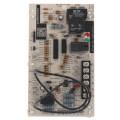
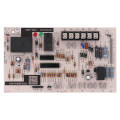
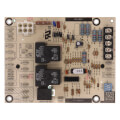
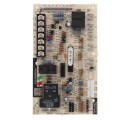
Lennox Circuit Boards


 --%3E %3Csvg version='1.1' id='Half' xmlns='http://www.w3.org/2000/svg' xmlns:xlink='http://www.w3.org/1999/xlink' x='0px' y='0px' viewBox='0 0 100 100' enable-background='new 0 0 100 100' xml:space='preserve'%3E %3Cg%3E %3Cpath fill='%23F15C02' d='M30.05,70.23l3.79-12.01L8.8,39.6l30.73-0.17c0,0,6.98-19.61,10-28.93c0.54,1.36,9.88,29.1,9.88,29.1h1.58 L93.71,7.18c-3.58-3.82-8.66-6.23-14.28-6.23H20.56C9.78,0.95,0.95,9.78,0.95,20.56v58.87c0,5.41,2.22,10.32,5.79,13.88 L30.05,70.23z'/%3E %3C/g%3E %3Cpath fill='%23FBC8B4' d='M93.71,7.18L60.98,39.6H91.2L65.38,58.24l9.38,29.58L49.69,69.78L24.5,87.82l5.55-17.59L6.75,93.32 c3.55,3.54,8.44,5.73,13.82,5.73h58.87c10.79,0,19.61-8.83,19.61-19.61V20.56C99.05,15.4,97.01,10.69,93.71,7.18z'/%3E %3C/svg%3E)
 --%3E %3Csvg version='1.1' id='No-RB' xmlns='http://www.w3.org/2000/svg' xmlns:xlink='http://www.w3.org/1999/xlink' x='0px' y='0px' viewBox='0 0 100 100' enable-background='new 0 0 100 100' xml:space='preserve'%3E %3Cpath fill='%23CECECE' d='M79.44,0.95H20.56C9.78,0.95,0.95,9.78,0.95,20.56v58.87c0,10.79,8.82,19.61,19.61,19.61h58.87 c10.79,0,19.61-8.83,19.61-19.61V20.56C99.05,9.78,90.22,0.95,79.44,0.95z M65.38,58.24l9.38,29.58L49.69,69.78L24.5,87.82 l9.34-29.6L8.8,39.6l30.73-0.17c0,0,6.98-19.61,10-28.93c0.54,1.36,9.88,29.1,9.88,29.1H91.2L65.38,58.24z'/%3E %3C/svg%3E)
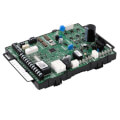
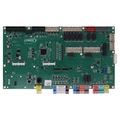
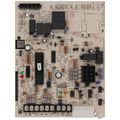
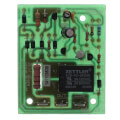
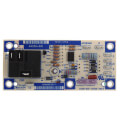
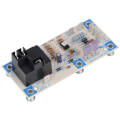
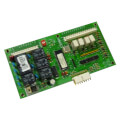
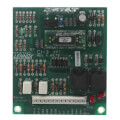
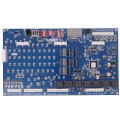

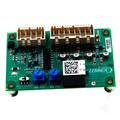
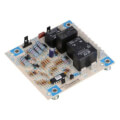
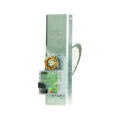
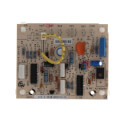
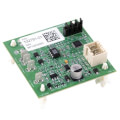

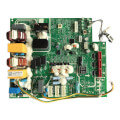
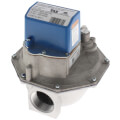
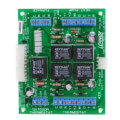
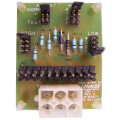
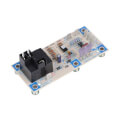
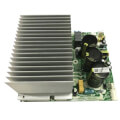

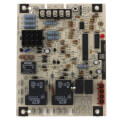
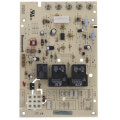
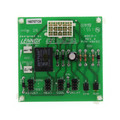
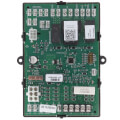
Circuit boards are the electronic control centers that manage ignition timing, blower staging, and safety shutdowns inside Lennox furnaces, air handlers, and packaged units. Each board reads input from limit switches, pressure switches, and the thermostat, then directs power to the igniter, inducer motor, and blower in the correct order. A failed board commonly shows up as a furnace that will not ignite, a blower that runs continuously, or a diagnostic light pattern with no matching fault at the burner or blower compartment. Lennox has used several board designs across furnace generations and cabinet styles, so matching the replacement to the exact unit model keeps the wiring harness and connector layout correct. Techs who stock the boards tied to common Lennox furnace lines can close out a no-heat call on the first trip instead of waiting on a special order.
Subcategories
- Furnace Control Boards: Integrated furnace controls manage the full ignition sequence, from inducer prove-out through igniter warm-up to gas valve activation. They also run the blower off-delay after the burner shuts down. Techs use them for full-board swaps on units with a confirmed control failure rather than a single failed component.
- Fan/Blower Control Boards: These boards handle blower motor speed and timing separately from the primary furnace control, often on multi-speed or variable-speed systems. A bad fan board can leave the blower stuck on one speed or unresponsive to thermostat calls. They are common replacements on air handlers paired with heat pumps.
- Defrost Control Boards: Defrost boards on heat pump outdoor units track coil temperature and run time to decide when to initiate a defrost cycle. A failing board can cause a unit to ice over or defrost too frequently, cutting heating capacity. Replacement boards need to match the outdoor unit's sensor and reversing valve wiring.
- Ignition Control Modules: Standalone ignition modules handle hot surface or intermittent pilot ignition timing on furnaces that use a separate module rather than an integrated board. They control igniter warm-up, flame sense timing, and retry attempts before locking out. Swapping the module alone is often cheaper than replacing an entire integrated control.
Buying Guide
Start with the furnace or air handler's model and serial number rather than the physical shape of the failed board, since Lennox has reused similar-looking boards across different control logic revisions. Pull the model number from the unit's rating plate and cross-reference it against the board part number rather than assuming visual similarity means compatibility.
Next, confirm which control function actually failed. A furnace that fails to ignite points to the integrated furnace control or a standalone ignition module, while a blower that will not respond to thermostat calls points to a fan control board instead. Diagnostic flash codes at the board's LED, when present, narrow this down before ordering a part.
Circuit boards themselves come in a handful of physical formats: plug-in integrated controls, modular ignition boxes, and defrost boards with dedicated sensor harnesses. Confirm connector count and harness style against the failed board before ordering, since a board with the right function but a different connector layout will not seat correctly.
Voltage and staging also matter. Single-stage, two-stage, and variable-speed Lennox equipment each use control logic matched to that staging, and a board built for one staging type generally will not run a different staging type correctly even if it physically fits.
Finally, factor in lead time. Stocking common failure-prone boards for the Lennox furnace and air handler lines a contractor services most often avoids emergency freight charges and lets a no-heat call get resolved same day instead of on a return visit.
Frequently Asked Questions
How do I know if a Lennox furnace control board has failed versus a wiring issue?
Check for continuity and proper voltage at the board's connectors first. If power is present at the board but it is not sending output to the igniter, inducer, or blower relay, the board itself is the likely failure point rather than the wiring.
Can I use a universal replacement board instead of an exact Lennox match?
A universal board can work on some systems, but Lennox's proprietary ignition sequencing and safety lockout logic often requires an exact or Lennox-approved match. Check the equipment's documentation before substituting.
Why does my furnace flash a code with no board fault showing?
Flash codes reflect what the board is sensing, not necessarily a board defect. A pressure switch, limit switch, or flame sensor problem can trigger a lockout code even when the board itself is functioning correctly.
Do defrost control boards differ between heat pump models?
Yes. Defrost boards are matched to a specific outdoor unit's sensor placement, timing logic, and reversing valve control, so a board from a different model line typically will not defrost correctly even if it physically fits the mounting holes.
Is it worth replacing just the ignition module instead of the full control board?
When the furnace uses a separate ignition module rather than one integrated board, replacing only the module is usually less expensive and faster than swapping the entire control, provided the rest of the board's functions are still testing correctly.
