




Filters
SORT
Product Availability –
Review Score –
 --%3E %3Csvg version='1.1' id='Fill' xmlns='http://www.w3.org/2000/svg' xmlns:xlink='http://www.w3.org/1999/xlink' x='0px' y='0px' viewBox='0 0 100 100' enable-background='new 0 0 100 100' xml:space='preserve'%3E %3Cpath fill='%23F15C02' d='M79.44,0.95H20.56C9.78,0.95,0.95,9.78,0.95,20.56v58.87c0,10.79,8.82,19.61,19.61,19.61h58.87 c10.79,0,19.61-8.83,19.61-19.61V20.56C99.05,9.78,90.22,0.95,79.44,0.95z M65.38,58.24l9.38,29.58L49.69,69.78L24.5,87.82 l9.34-29.6L8.8,39.6l30.73-0.17c0,0,6.98-19.61,10-28.93c0.54,1.36,9.88,29.1,9.88,29.1H91.2L65.38,58.24z'/%3E %3C/svg%3E)
Price Range –
Limit Controls

 --%3E %3Csvg version='1.1' id='No-RB' xmlns='http://www.w3.org/2000/svg' xmlns:xlink='http://www.w3.org/1999/xlink' x='0px' y='0px' viewBox='0 0 100 100' enable-background='new 0 0 100 100' xml:space='preserve'%3E %3Cpath fill='%23CECECE' d='M79.44,0.95H20.56C9.78,0.95,0.95,9.78,0.95,20.56v58.87c0,10.79,8.82,19.61,19.61,19.61h58.87 c10.79,0,19.61-8.83,19.61-19.61V20.56C99.05,9.78,90.22,0.95,79.44,0.95z M65.38,58.24l9.38,29.58L49.69,69.78L24.5,87.82 l9.34-29.6L8.8,39.6l30.73-0.17c0,0,6.98-19.61,10-28.93c0.54,1.36,9.88,29.1,9.88,29.1H91.2L65.38,58.24z'/%3E %3C/svg%3E)
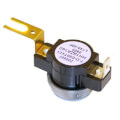
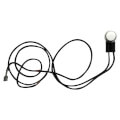
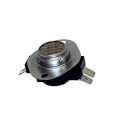
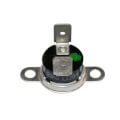
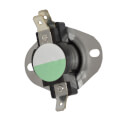
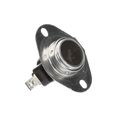

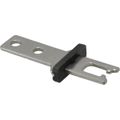
Limit Controls are safety switches that monitor plenum or supply-air temperature inside gas and oil furnaces and interrupt burner operation before the heat exchanger overheats. Carrier limit switches, the primary line stocked in this category, close near 130°F to start the blower fan and open again once air temperature drops to a safe level, a function confirmed on Carrier's own furnace resources. Technicians replace these switches when a furnace short-cycles, the blower runs continuously, or the burner refuses to fire after a trip. Because the switch sits directly in the primary safety circuit, a worn or miscalibrated unit can mask a bigger airflow or heat-exchanger problem, so matching the correct part number to the furnace model matters more than swapping in a generic substitute. Stocking the right limit control keeps service calls short and keeps a furnace operating within the temperature range the manufacturer designed it for.
Subcategories
- Fan & Limit Switches: Fan and limit switches combine two functions in a single control: starting and stopping the blower motor and tripping if plenum temperature climbs too high. On many Carrier furnaces this combination switch closes near 130°F to engage the blower and reopens once the plenum cools to roughly 100°F. Contractors pick this type when replacing an original combination control rather than splitting the function across two separate parts. It remains one of the most commonly replaced parts in older furnace cabinets because the switch cycles with every heating call.
- High Limit Switches: High limit switches perform a single safety function: they open the burner circuit if plenum air temperature exceeds the factory-set threshold, shutting the furnace down before the heat exchanger is damaged. Installers use this type on furnaces that already have a separate fan control, so the limit switch only has to watch for an overheat condition. Replacement is usually triggered by a furnace that locks out on a safety fault rather than a blower problem. Matching the switch's temperature rating to the original part keeps the safety circuit calibrated correctly.
- Disc Limit Switches: Disc limit switches use a bimetallic snap-disc element that flexes open at a fixed temperature and resets automatically once the furnace cools, rather than requiring a manual reset button. Technicians favor this design in older Carrier units where the factory wiring expects a self-resetting disc rather than a manual-reset switch. Installation is simple because the disc mounts directly to the plenum wall with two screws and a pair of spade terminals. Choosing the correct disc temperature rating prevents nuisance trips on furnaces that run warmer by design.
- Manual Reset Limit Switches: Manual reset limit switches require pressing a physical reset button on the switch body before the burner can fire again after a high-temperature trip. Carrier includes this design within its limit control lineup for rollout and flame-sensing applications that call for a visual inspection before the furnace restarts. Specifying a manual reset switch instead of an auto-reset version is often a code requirement on these applications. Field technicians keep spares on hand because a tripped manual reset switch will not clear itself even after the furnace cools.
Buying Guide
Start a limit control replacement by confirming the furnace model and matching the exact part number stamped on the failed switch; limit switches are not interchangeable across manufacturers even when the physical shape looks similar. Pull the old switch and check for a model number before ordering, since Carrier, Bryant, and Payne share many parts but not all of them. Decide whether the furnace uses a single-function high limit, a combination fan and limit switch, or a manual reset rollout switch, because wiring a replacement from the wrong family will either fail to protect the system or cause nuisance shutdowns. Limit Controls that trip repeatedly often point to a restricted airflow problem such as a dirty filter or blocked duct rather than a failed switch, so diagnose airflow before condemning the part. Check the reset style too: a disc-type switch resets on its own once the plenum cools, while a manual reset switch needs a button press, and installing the wrong type can leave a furnace locked out or, worse, remove a required safety step. Verify voltage and amperage ratings against the furnace's control board specifications, since an undersized switch can fail prematurely under load. Keep the manufacturer's wiring diagram on hand during replacement, since terminal layouts vary between single-function and combination switches even within the same product family. Ordering a verified cross-reference part number protects against a mismatch that could compromise the safety circuit.
Frequently Asked Questions
What is the difference between a high limit switch and a fan and limit switch?
A high limit switch performs one job: it opens the burner circuit if plenum temperature exceeds the safety threshold. A fan and limit switch combines that safety function with blower start and stop control in a single part, closing near a set temperature to trigger the fan and opening again once the plenum cools. Furnaces built around a separate fan control pair a high limit switch with it, while older designs often use the combination part instead.
Why does a furnace keep tripping on high limit?
Repeated high-limit trips usually point to restricted airflow rather than a failed switch, since the system is overheating because the blower cannot move enough air. A dirty filter, closed supply register, or undersized return duct are common root causes. Clearing the airflow restriction first keeps a new limit switch from tripping again right after installation.
Are Carrier limit switches interchangeable with Bryant or Payne parts?
Carrier, Bryant, and Payne share a parent company and many limit switches cross over between the brands because the furnace platforms are related. Matching the exact part number stamped on the original switch remains the safest way to confirm compatibility, since not every model crosses over despite the shared manufacturing. A wiring diagram check during replacement confirms the terminal layout matches as well.
What does a manual reset limit switch do that an automatic one does not?
A manual reset limit switch stays open after a high-temperature trip until a technician presses a physical reset button, forcing an inspection before the burner restarts. An automatic or disc-type switch recloses on its own once the plenum cools back down. Rollout and flame-sensing circuits typically specify the manual reset style because a self-clearing switch would skip the required inspection step.
How often should limit controls be replaced?
Limit controls do not follow a fixed replacement schedule and typically last for the life of the furnace unless they trip repeatedly or test outside their rated range with a multimeter. A switch that no longer closes or opens at its stamped temperature should be replaced immediately, since it is part of the primary safety circuit. Routine furnace maintenance visits are a practical time to test limit switch continuity and cycling.
