




Filters
SORT
Product Availability –
Product Type –
Valve Type –
Review Score –
 --%3E %3Csvg version='1.1' id='Fill' xmlns='http://www.w3.org/2000/svg' xmlns:xlink='http://www.w3.org/1999/xlink' x='0px' y='0px' viewBox='0 0 100 100' enable-background='new 0 0 100 100' xml:space='preserve'%3E %3Cpath fill='%23F15C02' d='M79.44,0.95H20.56C9.78,0.95,0.95,9.78,0.95,20.56v58.87c0,10.79,8.82,19.61,19.61,19.61h58.87 c10.79,0,19.61-8.83,19.61-19.61V20.56C99.05,9.78,90.22,0.95,79.44,0.95z M65.38,58.24l9.38,29.58L49.69,69.78L24.5,87.82 l9.34-29.6L8.8,39.6l30.73-0.17c0,0,6.98-19.61,10-28.93c0.54,1.36,9.88,29.1,9.88,29.1H91.2L65.38,58.24z'/%3E %3C/svg%3E)
Log Lighters


 --%3E %3Csvg version='1.1' id='No-RB' xmlns='http://www.w3.org/2000/svg' xmlns:xlink='http://www.w3.org/1999/xlink' x='0px' y='0px' viewBox='0 0 100 100' enable-background='new 0 0 100 100' xml:space='preserve'%3E %3Cpath fill='%23CECECE' d='M79.44,0.95H20.56C9.78,0.95,0.95,9.78,0.95,20.56v58.87c0,10.79,8.82,19.61,19.61,19.61h58.87 c10.79,0,19.61-8.83,19.61-19.61V20.56C99.05,9.78,90.22,0.95,79.44,0.95z M65.38,58.24l9.38,29.58L49.69,69.78L24.5,87.82 l9.34-29.6L8.8,39.6l30.73-0.17c0,0,6.98-19.61,10-28.93c0.54,1.36,9.88,29.1,9.88,29.1H91.2L65.38,58.24z'/%3E %3C/svg%3E)
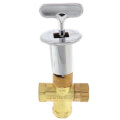
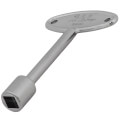

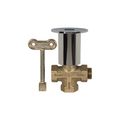
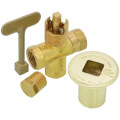

Log Lighters are gas-fed ignition devices installed inside a wood-burning fireplace to ignite logs quickly and consistently without kindling or extended use of matches. Most residential units connect to a 1/2 inch gas line and terminate at a 1/2 inch NPT fitting, sealed with approved pipe sealant or tape rated for gas service. Installation falls under the National Fuel Gas Code (ANSI Z223.1) or the applicable local code, and units must carry CSA testing and listing before they go into a firebox. A straight pipe, T-shaped burner, or key-operated valve each route gas differently depending on the fireplace layout and desired flame pattern. Because these fittings sit inside a combustion chamber and tie directly into a home's gas supply, a licensed gas technician typically handles the connection and leak check. Getting the fitting size, valve type, and code compliance right from the start keeps the installation safe and keeps inspectors satisfied on the first visit.
Subcategories
- Straight Log Lighters: A straight log lighter routes gas through a single straight pipe with holes drilled along the top, producing an even flame line across the length of the log bed. Contractors use this style in masonry fireboxes where the burner sits flat against the firebrick and doesn't need to wrap around andirons. The pipe terminates in a 1/2 inch NPT fitting that ties into the supply line below the firebox floor. It's a straightforward option for straight-line wood stacks and standard rectangular fireboxes.
- T-Shaped Log Lighters: A T-shaped log lighter splits gas flow into two directions from a center feed, so flames spread across a wider firebox floor than a straight pipe allows. Installers pick this configuration for larger or square fireboxes where a single straight line would leave cold spots at the edges. Like other configurations, the burner connects to the gas supply through a 1/2 inch NPT fitting. The shape works well under a log grate that spans more than one row of logs.
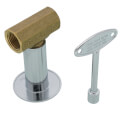
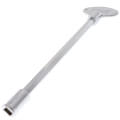
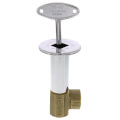
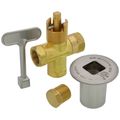
- Log Lighter Valves & Keys: A log lighter valve controls gas flow to the burner from outside the firebox, usually mounted in a floor plate or wall flange within reach of the fireplace opening. Some valves operate with a removable key that shuts off gas access when pulled, which building departments often require in homes with children. Installation and connection sizing follow the same 1/2 inch NPT standard used throughout residential log lighter systems. Valve placement and key access get reviewed during inspection under National Fuel Gas Code requirements.
- Log Lighter Installation Kits: A log lighter installation kit bundles the burner pipe, shutoff valve, key, flange, and connecting nipples needed for a complete hookup in one package. Kits save a technician from sourcing individual fittings separately and help keep thread sizes consistent across the run. Every component in a residential kit is sized around the 1/2 inch NPT connection standard for gas log lighter systems. Choosing a kit that matches the firebox width and desired burner style simplifies a wood burning fireplace conversion.
Buying Guide
Choosing the right Log Lighters setup starts with confirming the gas line size feeding the fireplace opening. Most residential systems run on a 1/2 inch line that terminates at a 1/2 inch NPT connection, so any burner, valve, or kit selected needs to match that thread standard. Firebox shape drives the next decision: a straight burner suits a narrow rectangular firebox, while a T-shaped burner spreads flame across a wider or square opening. Homes with young children or rental units often call for a valve with a removable key, since pulling the key cuts gas access entirely rather than relying on a simple on-off handle. Local code adoption matters just as much as the hardware. Installation must conform to the National Fuel Gas Code (ANSI Z223.1) or the amended local code, and the log lighter itself needs CSA testing and listing before an inspector will sign off. Because the fitting sits inside a combustion chamber and ties directly into a home's gas supply, sealing every joint with approved pipe sealant and running a proper leak check after installation isn't optional. Many jurisdictions also require a licensed gas technician to complete the hookup rather than allowing a general contractor to make the connection. Confirming permit requirements with the local building department before ordering hardware avoids a mismatched fitting or a failed inspection later in the job.
Frequently Asked Questions
What size gas line does a log lighter need?
Most residential log lighter installations run on a 1/2 inch gas line that terminates at a 1/2 inch NPT fitting inside or below the firebox. Confirming that thread size before ordering a burner, valve, or kit keeps every connection compatible. Undersized lines can starve the burner and produce a weak or uneven flame.
Can a homeowner install a log lighter without a permit?
Gas log lighter installation falls under the National Fuel Gas Code (ANSI Z223.1) or the locally adopted fuel gas code, both of which typically require a permit and inspection. Skipping the permit step risks a failed inspection later and potential safety issues from an unchecked gas connection. Most jurisdictions also expect a licensed gas technician to make the final tie-in.
What's the difference between a straight and a T-shaped log lighter?
A straight log lighter runs gas through a single pipe with holes along the top, producing an even flame line suited to narrow rectangular fireboxes. A T-shaped version splits gas flow in two directions from a center feed, spreading flame across a wider or square firebox floor. Firebox width and shape typically decide which configuration fits best.
Why do some log lighter valves come with a removable key?
A key-operated valve shuts off gas access completely when the key is pulled, which many building departments require in homes with children or in rental properties. Standard on-off handles stay in place and don't offer that same level of tamper resistance. Choosing a keyed valve is often less about preference and more about meeting local code.
Does a log lighter need to be CSA tested?
Residential gas log lighters need CSA testing and listing before installation in a wood-burning fireplace, along with the fireplace manufacturer's approval for the specific model. Skipping this step can void a fireplace warranty and fail inspection outright. Checking the listing label against the fireplace manufacturer's approved log lighter models before purchase avoids a mismatch.
