




Filters
SORT
Product Availability –
Brand –
Size –
Review Score –
 --%3E %3Csvg version='1.1' id='Fill' xmlns='http://www.w3.org/2000/svg' xmlns:xlink='http://www.w3.org/1999/xlink' x='0px' y='0px' viewBox='0 0 100 100' enable-background='new 0 0 100 100' xml:space='preserve'%3E %3Cpath fill='%23F15C02' d='M79.44,0.95H20.56C9.78,0.95,0.95,9.78,0.95,20.56v58.87c0,10.79,8.82,19.61,19.61,19.61h58.87 c10.79,0,19.61-8.83,19.61-19.61V20.56C99.05,9.78,90.22,0.95,79.44,0.95z M65.38,58.24l9.38,29.58L49.69,69.78L24.5,87.82 l9.34-29.6L8.8,39.6l30.73-0.17c0,0,6.98-19.61,10-28.93c0.54,1.36,9.88,29.1,9.88,29.1H91.2L65.38,58.24z'/%3E %3C/svg%3E)
Price Range –
Malleable Iron Liquid Tight Straight Connectors (Insulated)


 --%3E %3Csvg version='1.1' id='No-RB' xmlns='http://www.w3.org/2000/svg' xmlns:xlink='http://www.w3.org/1999/xlink' x='0px' y='0px' viewBox='0 0 100 100' enable-background='new 0 0 100 100' xml:space='preserve'%3E %3Cpath fill='%23CECECE' d='M79.44,0.95H20.56C9.78,0.95,0.95,9.78,0.95,20.56v58.87c0,10.79,8.82,19.61,19.61,19.61h58.87 c10.79,0,19.61-8.83,19.61-19.61V20.56C99.05,9.78,90.22,0.95,79.44,0.95z M65.38,58.24l9.38,29.58L49.69,69.78L24.5,87.82 l9.34-29.6L8.8,39.6l30.73-0.17c0,0,6.98-19.61,10-28.93c0.54,1.36,9.88,29.1,9.88,29.1H91.2L65.38,58.24z'/%3E %3C/svg%3E)

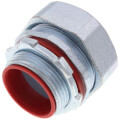


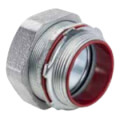

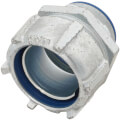

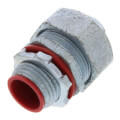
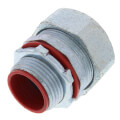
Malleable Iron Liquid Tight Straight Connectors (Insulated) are fittings that join liquid tight flexible conduit to electrical boxes, panels, and enclosures while keeping moisture and oil out of the raceway. Each connector uses a malleable iron body with a zinc-plated finish and a compression nut that grips the conduit jacket, and the insulated throat adds a nonmetallic sleeve that shields conductor insulation from the sharp edge of the threaded hub during pulls and vibration. Sizes commonly range from 1/2 inch up to 3-1/2 inch trade size, covering everything from a single-circuit whip to a larger feeder run. Connectors in this family carry UL 514B listing and CSA certification, so electricians can specify them for wet locations, outdoor equipment pads, and machinery connections without swapping fitting families between indoor and outdoor runs. For crews wiring HVAC equipment, pumps, or any motor load exposed to washdown or weather, picking the correct trade size and throat style keeps a job code-compliant and reduces callbacks tied to chafed conductors.
Subcategories
- 1/2 Inch to 3/4 Inch Connectors: Smaller trade sizes serve single-circuit whips feeding thermostats, control transformers, and light-duty disconnects near HVAC equipment. Electricians reach for this range when landing liquid tight conduit on a junction box or a small motor connection outdoors. Zinc-plated malleable iron bodies and an insulated throat protect the conductor jacket at every size in the line. UL 514B listing covers these connectors alongside the larger trade sizes, so crews can mix sizes on one job without changing fitting families.
- 1 Inch to 1-1/2 Inch Connectors: Mid-range trade sizes handle multi-conductor whips running to rooftop units, condensing units, and packaged equipment disconnects. Installers pick this size when a circuit carries more conductors or heavier gauge wire than a basic control whip. The insulated throat still shields conductor insulation from the threaded hub edge, matching the protection built into every size. Malleable iron construction with a zinc-plated finish resists the corrosion that outdoor equipment pads expose fittings to.
- 2 Inch to 2-1/2 Inch Connectors: Larger trade sizes connect feeder-size liquid tight conduit to panelboards, motor control centers, and larger packaged units. Crews wiring three-phase equipment or combined circuits often need this range to match conduit sized for higher ampacity. CSA certification and UL 514B listing apply across the series, giving specifiers one compliant fitting family for an entire feeder run. The compression nut and insulated throat scale up with the trade size to keep the same sealing method consistent.
- 3 Inch to 3-1/2 Inch Connectors: Largest trade sizes in the line serve heavy feeder runs into switchgear, large motor control centers, and main distribution equipment. Contractors on commercial and industrial jobs specify this range when conduit fill and ampacity call for the biggest liquid tight connection available in the series. Malleable iron construction at this size still carries the zinc-plated finish and insulated throat found on every smaller connector. Tapered NPT threading on the hub keeps the connection liquid tight even at the largest trade sizes.
Buying Guide
Picking the right connector starts with matching trade size to the liquid tight conduit already run or specified on the print, since an undersized connector won't seat the compression nut properly, while an oversized one leaves gaps around the conduit jacket. Confirm the application is wet, outdoor, or subject to washdown before specifying insulated throat connectors instead of standard versions, since the extra protection targets wiring that could abrade against a bare threaded hub. Check the hub thread, since most malleable iron connectors use tapered NPT threading, and verify the box or enclosure knockout matches before ordering fittings for a job. Zinc-plated malleable iron resists corrosion better than plain steel in exposed outdoor locations, which matters on equipment pads and rooftop units exposed to weather. Malleable Iron Liquid Tight Straight Connectors (Insulated) are listed to UL 514B and certified by CSA, so verifying those markings on the box keeps an installation inspection-ready. Count conductors and wire gauge in the whip before choosing a size, since the trade size needs to accommodate conduit fill without forcing wires through a tight hub. For jobs mixing several trade sizes, ordering from one manufacturer line keeps thread pitch and nut style consistent, which speeds up installation and cuts down on mismatched parts showing up in a toolbox. Angle matters too, since straight connectors work best when conduit runs directly into a knockout, while 90-degree or 45-degree versions suit tighter enclosures where a direct run isn't possible.
Frequently Asked Questions
What does the insulated throat on a malleable iron liquid tight connector actually protect?
The insulated throat lines the inside edge of the connector with a nonmetallic sleeve, so the cut threads of the hub never touch conductor insulation directly. Malleable Iron Liquid Tight Straight Connectors (Insulated) use this feature to prevent nicks and chafing as wires get pulled through during installation or vibrate over years of equipment operation. Skipping the insulated version on an outdoor or vibrating connection raises the risk of a conductor fault down the road.
What trade sizes are available in this connector line?
Sizes typically run from 1/2 inch trade size up to 3-1/2 inch, covering small control whips through large feeder connections. Matching the trade size to the conduit already specified on a job keeps the compression nut sealing correctly. Mixing sizes from the same connector line also keeps thread pitch and nut style consistent across a job.
Are these connectors rated for outdoor or wet locations?
Malleable Iron Liquid Tight Straight Connectors (Insulated) carry UL 514B listing and CSA certification, which covers wet location and liquid tight applications. Zinc-plated malleable iron construction resists corrosion on outdoor equipment pads and rooftop installations. Verifying the listing markings on the packaging confirms a connector is rated for the exposure a job requires.
What thread type connects these fittings to a box or enclosure?
Most malleable iron liquid tight connectors use a tapered NPT male hub that threads directly into a box, panel, or enclosure knockout. Confirming the knockout size matches the connector's trade size before ordering avoids a mismatched fitting on site. The compression nut on the conduit side seals independently of the hub thread.
When should a straight connector get used instead of a 90-degree or 45-degree version?
Straight connectors work best when liquid tight conduit runs directly into a knockout without obstruction nearby. Angled versions suit tighter enclosures where conduit needs to turn before reaching the connection point. Choosing the correct angle keeps conduit from kinking or stressing the connector joint over time.
