




Mini Split Air Conditioners
Mini Split Air Conditioners are zoned cooling and, on heat pump models, heating systems that operate without the ductwork required by a central system. They are a common choice for additions, garages, and buildings where extending ductwork isn't practical. Systems in this category range from single-zone units serving one room to multi-zone configurations that connect several indoor units to a single outdoor condenser.
Contractors select a mini split system based on the space's cooling and heating load, the number of zones needed, and the layout constraints of the building. Line set length and elevation differences between indoor and outdoor units also affect performance. Manufacturers in this category range from established global brands to SupplyHouse's own Bluefin line, each offering distinct model lineups and specifications.




Subcategories
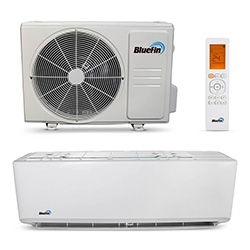
- Bluefin Mini Split Systems: Bluefin mini split systems are SupplyHouse's private-label ductless line, offered in single-zone and multi-zone configurations across a range of cooling and heating capacities. Units are designed for standard residential and light commercial installations. They include the indoor and outdoor components, line sets, and mounting hardware needed for a complete system. Contractors specify Bluefin systems for new installations and replacement projects where a direct-fit ductless solution is needed.
- Comfort-Aire Mini Split Systems: Comfort-Aire mini split systems are ductless units built for single-zone residential and light commercial cooling and heating applications. The lineup includes wall-mounted indoor units paired with matched outdoor condensers across a range of capacities. Contractors specify Comfort-Aire systems for straightforward single-zone installations where a compact footprint is a priority.
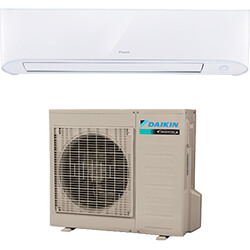
- Daikin Mini Split Systems: Daikin mini split systems cover single-zone and multi-zone ductless configurations, including models designed for both standard and cold-climate heat pump operation. The lineup spans wall-mounted, ceiling cassette, and floor-mounted indoor unit styles paired with compatible outdoor condensers. Contractors specify Daikin systems for installations requiring a wider range of indoor unit styles or multi-zone flexibility.
- Friedrich Ductless Mini Split Systems: Friedrich ductless mini split systems are single-zone and multi-zone units. They are built for residential and light commercial cooling and heating. The lineup includes wall-mounted indoor units matched to outdoor condensers rated across a range of capacities. Contractors specify Friedrich systems for installations where a specific capacity match to the space's load calculation is a priority.
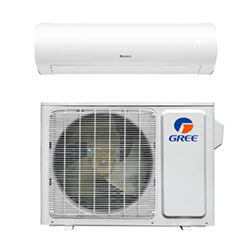
- GREE Ductless Mini Split Systems: GREE ductless mini split systems include single-zone and multi-zone configurations with both standard and cold-climate heat pump options. The lineup covers wall-mounted and other indoor unit styles paired with outdoor condensers across a range of capacities. Contractors specify GREE systems for installations that call for cold-climate heating performance alongside standard cooling.
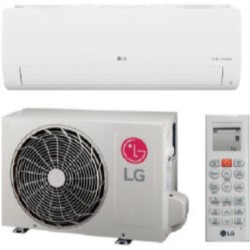
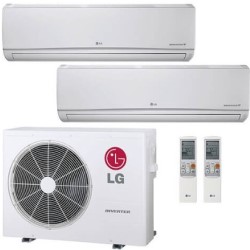
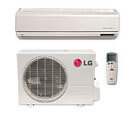
- LG Ductless Mini Split Systems: LG ductless mini split systems span single-zone and multi-zone configurations, including models built for cold-climate heat pump operation. The lineup includes wall-mounted, ceiling cassette, and other indoor unit styles matched to compatible outdoor condensers. Contractors specify LG systems for installations requiring a broad range of indoor unit styles or multi-zone configurations.
Buying Guide
Selecting a mini split system starts with an accurate room-by-room load calculation. An oversized unit short cycles and struggles to control humidity, while an undersized unit runs continuously without reaching setpoint. Square footage alone isn't a reliable substitute for a proper load calculation, which accounts for insulation, window area, and local climate.
Single-zone systems pair one indoor unit with one outdoor condenser. They work well for a single room or open space. Multi-zone systems connect multiple indoor units, often at different capacities, to a single outdoor condenser for whole-area coverage. Multi-zone systems require careful capacity matching between the outdoor unit and the combined load of all connected indoor units.
Cold-climate heat pump models maintain heating capacity at lower outdoor temperatures than standard heat pump models. This matters for installations in regions with extended winter seasons, where the mini split serves as a primary heat source rather than supplemental heating.
Line set length and the elevation difference between indoor and outdoor units both affect system performance. Both must stay within the manufacturer's specified limits for the model being installed. Installations that exceed these limits can experience reduced capacity or efficiency losses even when every other component is correctly sized.
Indoor unit style (wall-mounted, ceiling cassette, or floor-mounted) depends on the room's layout and where airflow needs to be directed. Outdoor unit placement should account for clearance requirements and noise considerations near windows or property lines.
Frequently Asked Questions
What's the difference between a single-zone and multi-zone mini split system?
A single-zone system connects one indoor unit to one outdoor condenser and serves a single room or open area. A multi-zone system connects multiple indoor units, which can be different capacities, to a single outdoor condenser, allowing independent temperature control across several rooms.
Do mini split systems need ductwork?
No. Mini split systems distribute conditioned air directly from wall-mounted, ceiling, or floor-mounted indoor units without requiring ducts. This is why they're a common choice for additions, garages, and buildings without existing ductwork.
What is a cold-climate heat pump mini split?
A cold-climate heat pump model is designed to maintain heating capacity at outdoor temperatures well below freezing, unlike standard heat pump models that lose significant capacity in cold weather. Contractors specify these models when the mini split serves as a primary heat source in colder regions.
Does line set length affect mini split performance?
Yes. Line set length and the elevation difference between indoor and outdoor units both affect system performance. Exceeding the manufacturer's specified limits for the model can reduce capacity and efficiency.
What maintenance do mini split systems require?
Routine maintenance includes cleaning or replacing the indoor unit's air filter, clearing debris from the outdoor condenser, and checking the condensate drain line for clogs. Refrigerant charge and electrical connections are typically checked during a technician's seasonal maintenance visit.
Resources

 --%3E %3C!DOCTYPE svg PUBLIC '-//W3C//DTD SVG 1.1//EN' 'http://www.w3.org/Graphics/SVG/1.1/DTD/svg11.dtd'%3E %3Csvg version='1.1' id='Layer_1' xmlns='http://www.w3.org/2000/svg' xmlns:xlink='http://www.w3.org/1999/xlink' x='0px' y='0px' width='90px' height='90px' viewBox='0 0 90 90' enable-background='new 0 0 90 90' xml:space='preserve'%3E %3Crect x='27' y='23' fill='%23FFFFFF' width='43' height='44'/%3E %3Cg%3E %3Cdefs%3E %3Crect id='SVGID_1_' width='90' height='90'/%3E %3C/defs%3E %3CclipPath id='SVGID_2_'%3E %3Cuse xlink:href='%23SVGID_1_' overflow='visible'/%3E %3C/clipPath%3E %3Cpath clip-path='url(%23SVGID_2_)' fill='%234186AD' d='M45,0C20.1,0,0,20.1,0,45c0,24.9,20.1,45,45,45c24.9,0,45-20.1,45-45 C90,20.1,69.9,0,45,0'/%3E %3C/g%3E %3Cpath fill='%23FFFFFF' d='M60.6,47.4l-22.5,14c-0.5,0.3-1,0.399-1.5,0.399s-0.9-0.1-1.4-0.399c-0.9-0.5-1.4-1.4-1.4-2.5v-28 c0-1,0.6-2,1.4-2.5c0.9-0.5,2-0.5,2.9,0.1l22.5,14.1C61.4,43.1,61.9,44,61.9,45S61.4,46.9,60.6,47.4'/%3E %3C/svg%3E)

Other Resources
Subcategories
- Bluefin Mini Split Systems: Bluefin mini split systems are SupplyHouse's private-label ductless line, offered in single-zone and multi-zone configurations across a range of cooling and heating capacities. Units are designed for standard residential and light commercial installations. They include the indoor and outdoor components, line sets, and mounting hardware needed for a complete system. Contractors specify Bluefin systems for new installations and replacement projects where a direct-fit ductless solution is needed.
- Comfort-Aire Mini Split Systems: Comfort-Aire mini split systems are ductless units built for single-zone residential and light commercial cooling and heating applications. The lineup includes wall-mounted indoor units paired with matched outdoor condensers across a range of capacities. Contractors specify Comfort-Aire systems for straightforward single-zone installations where a compact footprint is a priority.
- Daikin Mini Split Systems: Daikin mini split systems cover single-zone and multi-zone ductless configurations, including models designed for both standard and cold-climate heat pump operation. The lineup spans wall-mounted, ceiling cassette, and floor-mounted indoor unit styles paired with compatible outdoor condensers. Contractors specify Daikin systems for installations requiring a wider range of indoor unit styles or multi-zone flexibility.
- Friedrich Ductless Mini Split Systems: Friedrich ductless mini split systems are single-zone and multi-zone units. They are built for residential and light commercial cooling and heating. The lineup includes wall-mounted indoor units matched to outdoor condensers rated across a range of capacities. Contractors specify Friedrich systems for installations where a specific capacity match to the space's load calculation is a priority.
- GREE Ductless Mini Split Systems: GREE ductless mini split systems include single-zone and multi-zone configurations with both standard and cold-climate heat pump options. The lineup covers wall-mounted and other indoor unit styles paired with outdoor condensers across a range of capacities. Contractors specify GREE systems for installations that call for cold-climate heating performance alongside standard cooling.
- LG Ductless Mini Split Systems: LG ductless mini split systems span single-zone and multi-zone configurations, including models built for cold-climate heat pump operation. The lineup includes wall-mounted, ceiling cassette, and other indoor unit styles matched to compatible outdoor condensers. Contractors specify LG systems for installations requiring a broad range of indoor unit styles or multi-zone configurations.
Buying Guide
Selecting a mini split system starts with an accurate room-by-room load calculation. An oversized unit short cycles and struggles to control humidity, while an undersized unit runs continuously without reaching setpoint. Square footage alone isn't a reliable substitute for a proper load calculation, which accounts for insulation, window area, and local climate.
Single-zone systems pair one indoor unit with one outdoor condenser. They work well for a single room or open space. Multi-zone systems connect multiple indoor units, often at different capacities, to a single outdoor condenser for whole-area coverage. Multi-zone systems require careful capacity matching between the outdoor unit and the combined load of all connected indoor units.
Cold-climate heat pump models maintain heating capacity at lower outdoor temperatures than standard heat pump models. This matters for installations in regions with extended winter seasons, where the mini split serves as a primary heat source rather than supplemental heating.
Line set length and the elevation difference between indoor and outdoor units both affect system performance. Both must stay within the manufacturer's specified limits for the model being installed. Installations that exceed these limits can experience reduced capacity or efficiency losses even when every other component is correctly sized.
Indoor unit style (wall-mounted, ceiling cassette, or floor-mounted) depends on the room's layout and where airflow needs to be directed. Outdoor unit placement should account for clearance requirements and noise considerations near windows or property lines.
Frequently Asked Questions
What's the difference between a single-zone and multi-zone mini split system?
A single-zone system connects one indoor unit to one outdoor condenser and serves a single room or open area. A multi-zone system connects multiple indoor units, which can be different capacities, to a single outdoor condenser, allowing independent temperature control across several rooms.
Do mini split systems need ductwork?
No. Mini split systems distribute conditioned air directly from wall-mounted, ceiling, or floor-mounted indoor units without requiring ducts. This is why they're a common choice for additions, garages, and buildings without existing ductwork.
What is a cold-climate heat pump mini split?
A cold-climate heat pump model is designed to maintain heating capacity at outdoor temperatures well below freezing, unlike standard heat pump models that lose significant capacity in cold weather. Contractors specify these models when the mini split serves as a primary heat source in colder regions.
Does line set length affect mini split performance?
Yes. Line set length and the elevation difference between indoor and outdoor units both affect system performance. Exceeding the manufacturer's specified limits for the model can reduce capacity and efficiency.
What maintenance do mini split systems require?
Routine maintenance includes cleaning or replacing the indoor unit's air filter, clearing debris from the outdoor condenser, and checking the condensate drain line for clogs. Refrigerant charge and electrical connections are typically checked during a technician's seasonal maintenance visit.