




No-Hub Fitting Restraints

 --%3E %3Csvg version='1.1' id='No-RB' xmlns='http://www.w3.org/2000/svg' xmlns:xlink='http://www.w3.org/1999/xlink' x='0px' y='0px' viewBox='0 0 100 100' enable-background='new 0 0 100 100' xml:space='preserve'%3E %3Cpath fill='%23CECECE' d='M79.44,0.95H20.56C9.78,0.95,0.95,9.78,0.95,20.56v58.87c0,10.79,8.82,19.61,19.61,19.61h58.87 c10.79,0,19.61-8.83,19.61-19.61V20.56C99.05,9.78,90.22,0.95,79.44,0.95z M65.38,58.24l9.38,29.58L49.69,69.78L24.5,87.82 l9.34-29.6L8.8,39.6l30.73-0.17c0,0,6.98-19.61,10-28.93c0.54,1.36,9.88,29.1,9.88,29.1H91.2L65.38,58.24z'/%3E %3C/svg%3E)
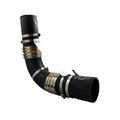
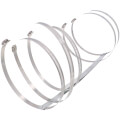

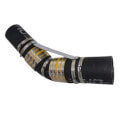
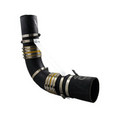
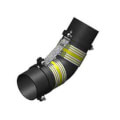
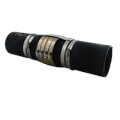
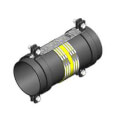


No-hub fitting restraints keep cast iron no-hub couplings from separating under thrust force created by water hammer, pressure surges, or changes in pipe direction. Plumbing code requires restraint at specific points on larger cast iron soil pipe runs, including changes in direction, branch connections, and reductions in pipe diameter beyond a certain size. Restraints typically take the form of a brace, block, or rodding system installed alongside the coupling itself rather than replacing it, adding mechanical support without altering the joint's seal. Larger diameter cast iron systems carry more thrust force at each fitting, which is why code attention focuses on pipe sizes above four inches rather than smaller residential branch lines. Contractors installing cast iron DWV systems in commercial or multi-family buildings should plan for restraint hardware at every qualifying location rather than adding it after an inspector flags a gap.
Subcategories
- Braces and Blocks: Brace and block-style restraints anchor a no-hub coupling to an adjacent structural element, resisting the thrust force that would otherwise push the joint apart during a pressure surge. Installation typically happens at the same time as the coupling itself, since retrofitting a restraint after the pipe is fully supported and enclosed is far more difficult. Commercial and multi-family cast iron installations rely on this style most often for straight runs and larger fittings.
- Rodding Systems: Rodding restraints use a threaded rod system tying a fitting back to a fixed anchor point, an approach that works well in tight spaces where a bulkier brace or block won't fit. Contractors choose rodding over a brace-style restraint when the surrounding structure doesn't offer an easy anchor point close to the fitting. Both approaches satisfy the same code requirement, so the choice usually comes down to available space and existing structural anchor points.
- Restraint Locations and Code Requirements: Restraint requirements focus on changes in direction, branch openings, and reductions in pipe diameter greater than two pipe sizes, specifically on cast iron soil pipe larger than four inches. Straight runs of pipe without a direction change, branch, or size reduction generally don't require additional restraint hardware beyond standard hangers. Checking the local code adoption is still worth doing, since some jurisdictions layer additional requirements on top of the base model code language.
- Sizes and Compatibility: Restraint hardware is sized to match the coupling and pipe diameter it's paired with, commonly covering four-inch through eight-inch cast iron no-hub systems. Mixing a restraint from one coupling manufacturer with a different brand's coupling isn't always a safe assumption, since fit and rated thrust capacity can vary between manufacturers. Confirming compatibility with the coupling manufacturer's own restraint line is the safer approach on a job requiring code-mandated restraint.
Buying Guide
Planning No-Hub Fitting Restraints into a cast iron DWV installation starts with identifying every code-mandated location before the pipe goes in, since retrofitting a restraint after the system is supported and enclosed costs far more time than installing it alongside the coupling. Changes in direction, branch connections, and diameter reductions greater than two pipe sizes on runs larger than four inches are the locations code attention focuses on most.
Choosing between a brace, block, or rodding-style restraint usually comes down to available space rather than a strict performance difference, since both approaches satisfy the same thrust-resistance requirement when installed correctly. Tight mechanical rooms or chases with limited access to a fixed anchor point often favor a rodding system over a bulkier brace, while open runs with a nearby wall or structural member work fine with a standard brace or block.
Matching restraint hardware to the coupling manufacturer is worth confirming before ordering, since rated thrust capacity and physical fit can vary between brands even on fittings that look similar. Contractors working on multi-family or commercial cast iron systems should build restraint hardware into the original material order rather than treating it as an add-on, since a missed location found during rough-in inspection means reopening finished work to add it later.
Frequently Asked Questions
When does plumbing code require a no-hub fitting restraint?
Code requires restraint on cast iron soil pipe larger than four inches at changes in direction, branch openings, and reductions in pipe diameter greater than two pipe sizes. Straight runs without those conditions generally don't need additional restraint hardware beyond standard hangers. Local code adoptions can add requirements on top of the base model code, so checking the local jurisdiction is still worth the extra step.
What's the difference between a brace-style and rodding-style restraint?
A brace or block anchors the coupling directly to a nearby structural element, while a rodding system uses a threaded rod tying the fitting back to a fixed anchor point, which works better in tight spaces without an easy nearby anchor. Both satisfy the same code requirement when installed correctly. The choice generally comes down to available space rather than a performance difference between the two.
Can restraint hardware from one coupling manufacturer be used with a different brand's coupling?
Restraint hardware from a different manufacturer than the coupling isn't always a safe match, since fit and rated thrust capacity can vary between brands even on similar-looking parts. Confirming compatibility with the coupling manufacturer's own restraint line avoids a mismatch that might not show up until the system is under real pressure. Matching brands is the more reliable approach on any code-mandated installation.
Is restraint hardware needed on smaller residential branch lines?
Code attention on this topic focuses on cast iron soil pipe larger than four inches, so most smaller residential branch lines fall outside the specific restraint requirement. Larger commercial and multi-family systems carry more thrust force at each fitting, which is why the size threshold exists. Checking local code adoption is still worth confirming, since requirements can vary by jurisdiction.
Can a restraint be added after the pipe system is already installed and enclosed?
It's possible but far more difficult and costly than installing the restraint alongside the original coupling, since enclosed pipe usually means removing finished surfaces to reach the fitting. Planning for every code-mandated location during the original material order avoids that problem. A missed location found during inspection is the most common reason a restraint ends up being retrofitted.
