




PEX Clamp Rings


 --%3E %3Csvg version='1.1' id='Fill' xmlns='http://www.w3.org/2000/svg' xmlns:xlink='http://www.w3.org/1999/xlink' x='0px' y='0px' viewBox='0 0 100 100' enable-background='new 0 0 100 100' xml:space='preserve'%3E %3Cpath fill='%23F15C02' d='M79.44,0.95H20.56C9.78,0.95,0.95,9.78,0.95,20.56v58.87c0,10.79,8.82,19.61,19.61,19.61h58.87 c10.79,0,19.61-8.83,19.61-19.61V20.56C99.05,9.78,90.22,0.95,79.44,0.95z M65.38,58.24l9.38,29.58L49.69,69.78L24.5,87.82 l9.34-29.6L8.8,39.6l30.73-0.17c0,0,6.98-19.61,10-28.93c0.54,1.36,9.88,29.1,9.88,29.1H91.2L65.38,58.24z'/%3E %3C/svg%3E)
 --%3E %3Csvg version='1.1' id='Half' xmlns='http://www.w3.org/2000/svg' xmlns:xlink='http://www.w3.org/1999/xlink' x='0px' y='0px' viewBox='0 0 100 100' enable-background='new 0 0 100 100' xml:space='preserve'%3E %3Cg%3E %3Cpath fill='%23F15C02' d='M30.05,70.23l3.79-12.01L8.8,39.6l30.73-0.17c0,0,6.98-19.61,10-28.93c0.54,1.36,9.88,29.1,9.88,29.1h1.58 L93.71,7.18c-3.58-3.82-8.66-6.23-14.28-6.23H20.56C9.78,0.95,0.95,9.78,0.95,20.56v58.87c0,5.41,2.22,10.32,5.79,13.88 L30.05,70.23z'/%3E %3C/g%3E %3Cpath fill='%23FBC8B4' d='M93.71,7.18L60.98,39.6H91.2L65.38,58.24l9.38,29.58L49.69,69.78L24.5,87.82l5.55-17.59L6.75,93.32 c3.55,3.54,8.44,5.73,13.82,5.73h58.87c10.79,0,19.61-8.83,19.61-19.61V20.56C99.05,15.4,97.01,10.69,93.71,7.18z'/%3E %3C/svg%3E)



 --%3E %3Csvg version='1.1' id='No-RB' xmlns='http://www.w3.org/2000/svg' xmlns:xlink='http://www.w3.org/1999/xlink' x='0px' y='0px' viewBox='0 0 100 100' enable-background='new 0 0 100 100' xml:space='preserve'%3E %3Cpath fill='%23CECECE' d='M79.44,0.95H20.56C9.78,0.95,0.95,9.78,0.95,20.56v58.87c0,10.79,8.82,19.61,19.61,19.61h58.87 c10.79,0,19.61-8.83,19.61-19.61V20.56C99.05,9.78,90.22,0.95,79.44,0.95z M65.38,58.24l9.38,29.58L49.69,69.78L24.5,87.82 l9.34-29.6L8.8,39.6l30.73-0.17c0,0,6.98-19.61,10-28.93c0.54,1.36,9.88,29.1,9.88,29.1H91.2L65.38,58.24z'/%3E %3C/svg%3E)

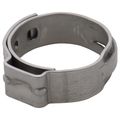
PEX Clamp Rings are stainless steel bands used to secure PEX tubing onto crimp fittings, creating a tight mechanical seal between pipe and fitting. Installers press the pinch clamp over the tubing and fitting with a cinch tool, and the ring locks in place around the barbed connection. Common sizes run from 3/8 inch through 1 inch, matching standard PEX tubing diameters used in residential and light commercial plumbing. Manufacturers build these rings from 304 stainless steel so they resist corrosion, rust, and mineral buildup inside walls, floors, and crawlspaces where connections stay hidden for years. Properly installed rings meet ASTM F2098 requirements and hold up under sustained water pressure without loosening. Plumbers favor clamp rings on repipes, radiant heat installs, and manifold hookups because the cinch method works fast and doesn't require open flame near finished walls or wood framing. Choosing the right ring size and gauge keeps every joint leak-free for the life of the system.
Subcategories
- 3/8 Inch Clamp Rings: 3/8 inch clamp rings fit the smallest common PEX tubing size, typically used for individual fixture supply lines running to sinks, toilets, and faucets. Installers reach for this size on short branch lines where full flow isn't a priority. Made from 304 stainless steel, the ring cinches down over 3/8 inch barbed fittings to lock the joint. Plumbers stock this size heavily since it covers most point-of-use connections in a home.
- 1/2 Inch Clamp Rings: 1/2 inch clamp rings cover the most widely used PEX tubing diameter in residential plumbing, running hot and cold water branch lines throughout a house. Contractors use this size for everything from bathroom groups to kitchen runs. The 304 stainless steel construction meets ASTM F2098 for cinch connections. Crews often buy this size in bulk packs since it makes up the bulk of a typical repipe.
- 3/4 Inch Clamp Rings: 3/4 inch clamp rings handle trunk lines and main distribution runs that feed multiple branch lines from a manifold or water heater. Installers pick this size when a system needs higher flow volume to multiple fixtures at once. The larger ring still uses 304 stainless steel for corrosion resistance behind walls. Radiant heating installers also rely on this size for supply and return loops.
- 1 Inch Clamp Rings: 1 inch clamp rings serve main water service lines and large-volume distribution runs in bigger homes or light commercial buildings. Plumbers select this size where the main line carries water to a whole building before splitting into smaller branches. Stainless steel construction keeps the ring intact under sustained pressure over decades of service. Fewer fittings need this size, but every main line install depends on getting it right.
Buying Guide
Picking the right clamp ring starts with matching ring size to the PEX tubing already run or specified for the job. A ring that doesn't match tubing diameter won't seat correctly and can leak under pressure, so confirming nominal size before ordering matters. Next, check ring gauge and confirm the batch meets ASTM F2098, since some low cost rings skip that standard and fail cinch tool crimp checks or don't seal reliably over time.
PEX Clamp Rings pair with a specific cinch tool, and tool jaws vary by manufacturer, so confirming compatibility between the ring brand and the crimp tool on the truck before buying in bulk avoids a costly mismatch. Crews running mixed brands on a job often standardize on one system to avoid carrying multiple tools.
Material matters too. Stainless steel rings resist the corrosion that comes from moisture trapped inside walls, crawlspaces, and slab penetrations, and outlast cheaper galvanized alternatives in most climates. Buying in bulk packs of 25, 50, or 100 makes sense for repipe jobs and new construction where a single size gets used repeatedly.
Finally, consider whether the job calls for cinch rings or copper crimp rings, since the two systems use different tools and aren't interchangeable. Confirming size, standard compliance, and tool compatibility upfront avoids callbacks for leaking joints months after the drywall goes up.
Frequently Asked Questions
What size clamp ring do I need for 1/2 inch PEX?
1/2 inch PEX tubing requires a 1/2 inch clamp ring sized to match the barbed fitting underneath. Using the wrong size ring won't create a watertight seal and can lead to blowouts under pressure. Stainless steel rings in this size are the most common item stocked for residential branch lines. Confirming tubing OD before ordering a bulk pack avoids a mismatch.
Are stainless steel clamp rings better than copper crimp rings?
Stainless steel clamp rings and copper crimp rings both create secure PEX connections, but they use different installation tools and aren't interchangeable. Cinch clamps use a cinch tool that squeezes the stainless ring closed, while copper rings need a separate crimp tool. Many contractors pick one system and standardize their toolbox around it. Both methods meet ASTM F2098 when installed correctly.
How often does a cinch tool need calibration?
Cinch tools need periodic calibration checks since worn jaws can under crimp or over crimp a ring over time. Manufacturers typically recommend a go/no-go gauge check at set intervals or after heavy daily use. A miscalibrated tool creates joints that look finished but fail months later. Keeping a gauge on the truck catches drift before it becomes a callback.
Can clamp rings be reused after removal?
Clamp rings are single-use fittings and should never be reused once cut off or removed from a joint. Reinstalling a used ring risks an incomplete seal since the metal has already deformed to its first crimp shape. A new ring from a sealed pack takes seconds to install compared to reworking a leak behind a finished wall. Replacing the ring anytime a fitting gets disconnected is standard practice.
Do clamp rings work with PE-RT tubing?
Clamp rings work with both PEX and PE-RT tubing since the two materials share compatible outer diameters at each nominal size. Installers use the same cinch tool and ring for either tubing type without extra parts. Manufacturers confirm cross-compatibility between PEX-a, PEX-b, and PE-RT systems using matching rings. Checking tubing spec against ring rating before mixing systems on one job is still worth doing.
