




PEX Press Valves
PEX press valves combine a ball or stop valve body with press-style PEX connections on one or both ends. The valve seats to the tubing with the same press tool used on PEX press fittings.
Viega's lead-free bronze press valves are rated for a maximum of 200 psi and 250 degrees Fahrenheit, with Cv ratings up to 6.0 depending on size, and they're approved for potable water plumbing. Full-port, quarter-turn ball valves shut off branch lines quickly. Angle and straight stop valves connect PEX supply lines to faucets and toilets. Sillcocks bring an outdoor hose bib onto a PEX system, often with a frost-proof design that keeps the shutoff point inside the heated space. The press connection lets a plumber add a shutoff mid-run without soldering, crimping, or gluing a fitting.


Subcategories
- PEX Press Ball Valves: PEX press ball valves are full-port, quarter-turn valves with a lead-free bronze body and press connections on both ends, rated for up to 200 psi and 250 degrees Fahrenheit. Plumbers use them as branch shutoffs on domestic water lines so a fixture or section of a system can be isolated for repair without cutting into the main run.
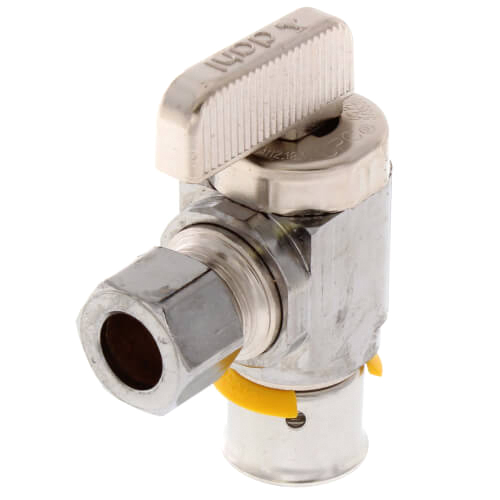
- PEX Press Stop Valves: PEX press stop valves connect a PEX supply line on one end to a compression outlet on the other. They give a straight or angle shutoff at a sink, toilet, or other fixture. A quarter-turn handle offers a full-port shutoff. The press end goes in with the same tool used on PEX press fittings, which saves a step compared to compression or crimp-only valves.
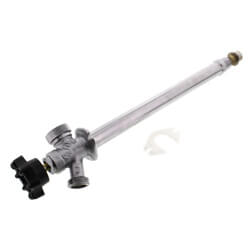
- PEX Press Sillcocks: PEX press sillcocks bring a PEX supply line out to an exterior hose bib, often using a ball-valve-style quarter-turn handle. A frost-proof design places a long tubular extension through the wall. The actual shutoff point sits inside the heated space, reducing the chance of a frozen or split valve body over winter.
Buying Guide
Pick the valve type by function. A ball valve works well as an in-line branch shutoff. A stop valve is built for a single fixture supply. A sillcock is meant for an exterior hose bib rather than an indoor branch line.
Confirm pressure and temperature ratings match the system. Most press valves top out around 200 psi and 250 degrees Fahrenheit. That covers domestic water and most hydronic branch applications. Check a specific product's Cv rating against the flow the branch needs to deliver.
Check for a frost-proof sillcock design on any exterior installation. A long stem that keeps the actual shutoff seat inside conditioned space cuts down on freeze failures compared to a valve seated at the exterior wall.
Plan for tool access before choosing press-style valves. A press tool with the correct jaw size needs to fit the valve body. Tight framing bays or crawlspace corners can make some valve profiles easier to press than others.
Verify lead-free and NSF listings for any valve going on a potable water line. Heating-only valves and plumbing-rated valves aren't always interchangeable, even when the connection style looks the same.
Frequently Asked Questions
What's the difference between a PEX press ball valve and a PEX press stop valve?
A ball valve typically has press connections on both ends and works as an in-line branch shutoff. A stop valve has a press connection on one end and a compression or threaded outlet on the other, for connecting directly to a fixture supply line.
Can PEX press valves be installed with the same tool as PEX press fittings?
Yes, in most cases. The same press tool and jaw set used for PEX press fittings will also press the valve's PEX connection, as long as the jaw size matches the valve's connection size.
Are PEX press sillcocks frost-proof?
Many PEX press sillcocks use a frost-proof design with a long tubular extension. This places the actual shutoff valve inside the heated space rather than at the exterior wall, reducing the risk of freezing.
What pressure rating do PEX press valves carry?
Lead-free bronze press valves are commonly rated up to 200 psi and 250 degrees Fahrenheit. The exact rating depends on the size and manufacturer, so check the product listing for the specific model.
Are PEX press valves approved for potable water systems?
Lead-free press valves listed to NSF standards are approved for potable water plumbing.
Resources
Subcategories
- PEX Press Ball Valves: PEX press ball valves are full-port, quarter-turn valves with a lead-free bronze body and press connections on both ends, rated for up to 200 psi and 250 degrees Fahrenheit. Plumbers use them as branch shutoffs on domestic water lines so a fixture or section of a system can be isolated for repair without cutting into the main run.
- PEX Press Stop Valves: PEX press stop valves connect a PEX supply line on one end to a compression outlet on the other. They give a straight or angle shutoff at a sink, toilet, or other fixture. A quarter-turn handle offers a full-port shutoff. The press end goes in with the same tool used on PEX press fittings, which saves a step compared to compression or crimp-only valves.
- PEX Press Sillcocks: PEX press sillcocks bring a PEX supply line out to an exterior hose bib, often using a ball-valve-style quarter-turn handle. A frost-proof design places a long tubular extension through the wall. The actual shutoff point sits inside the heated space, reducing the chance of a frozen or split valve body over winter.
Buying Guide
Pick the valve type by function. A ball valve works well as an in-line branch shutoff. A stop valve is built for a single fixture supply. A sillcock is meant for an exterior hose bib rather than an indoor branch line.
Confirm pressure and temperature ratings match the system. Most press valves top out around 200 psi and 250 degrees Fahrenheit. That covers domestic water and most hydronic branch applications. Check a specific product's Cv rating against the flow the branch needs to deliver.
Check for a frost-proof sillcock design on any exterior installation. A long stem that keeps the actual shutoff seat inside conditioned space cuts down on freeze failures compared to a valve seated at the exterior wall.
Plan for tool access before choosing press-style valves. A press tool with the correct jaw size needs to fit the valve body. Tight framing bays or crawlspace corners can make some valve profiles easier to press than others.
Verify lead-free and NSF listings for any valve going on a potable water line. Heating-only valves and plumbing-rated valves aren't always interchangeable, even when the connection style looks the same.
Frequently Asked Questions
What's the difference between a PEX press ball valve and a PEX press stop valve?
A ball valve typically has press connections on both ends and works as an in-line branch shutoff. A stop valve has a press connection on one end and a compression or threaded outlet on the other, for connecting directly to a fixture supply line.
Can PEX press valves be installed with the same tool as PEX press fittings?
Yes, in most cases. The same press tool and jaw set used for PEX press fittings will also press the valve's PEX connection, as long as the jaw size matches the valve's connection size.
Are PEX press sillcocks frost-proof?
Many PEX press sillcocks use a frost-proof design with a long tubular extension. This places the actual shutoff valve inside the heated space rather than at the exterior wall, reducing the risk of freezing.
What pressure rating do PEX press valves carry?
Lead-free bronze press valves are commonly rated up to 200 psi and 250 degrees Fahrenheit. The exact rating depends on the size and manufacturer, so check the product listing for the specific model.
Are PEX press valves approved for potable water systems?
Lead-free press valves listed to NSF standards are approved for potable water plumbing.