




PVC ENT Couplings


 --%3E %3Csvg version='1.1' id='No-RB' xmlns='http://www.w3.org/2000/svg' xmlns:xlink='http://www.w3.org/1999/xlink' x='0px' y='0px' viewBox='0 0 100 100' enable-background='new 0 0 100 100' xml:space='preserve'%3E %3Cpath fill='%23CECECE' d='M79.44,0.95H20.56C9.78,0.95,0.95,9.78,0.95,20.56v58.87c0,10.79,8.82,19.61,19.61,19.61h58.87 c10.79,0,19.61-8.83,19.61-19.61V20.56C99.05,9.78,90.22,0.95,79.44,0.95z M65.38,58.24l9.38,29.58L49.69,69.78L24.5,87.82 l9.34-29.6L8.8,39.6l30.73-0.17c0,0,6.98-19.61,10-28.93c0.54,1.36,9.88,29.1,9.88,29.1H91.2L65.38,58.24z'/%3E %3C/svg%3E)

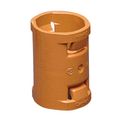

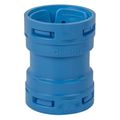

PVC ENT couplings join sections of electrical nonmetallic tubing, the corrugated, flexible conduit electricians run in concealed dry locations such as poured concrete slabs and behind noncombustible walls. ENT, sometimes called smurf tube on the jobsite, is lightweight and bends by hand without a separate bending tool, which speeds up rough-in work in slab and wall applications where rigid conduit would be harder to route. Couplings connect two lengths of ENT end to end, and most designs use a belled or expanded end on one side that the adjoining tube slides into, sometimes secured with solvent cement depending on the coupling style and local code requirements. Electricians reach for these couplings whenever a conduit run needs to extend beyond a single length of tubing or tie into a junction box fitting.
Subcategories
- Standard Straight Couplings: Standard straight couplings join two lengths of ENT in a simple in-line connection, typically with a belled end that accepts the next section of tubing. These are the most frequently used coupling on a straightforward slab or wall run.
- Cemented Couplings: Cemented couplings are designed to be solvent-welded rather than friction-fit, giving a more permanent, rigid joint where code or job conditions call for it. Techs use these when a connection needs to resist being pulled apart during concrete pour or wall closure.
- Snap-Together Couplings: Snap-together couplings let installers join ENT sections quickly by hand without cement, which speeds up rough-in on large slab jobs with many conduit runs. They're a common choice when the schedule favors speed over a solvent-welded connection.
- ENT-to-Box Adapters: These adapters transition ENT tubing into a standard electrical box or fitting, since ENT itself doesn't terminate directly into most box knockouts without an adapter. They're used at the end of a conduit run where wiring exits into a device or junction box.
Buying Guide
Choosing the right PVC ENT coupling starts with confirming the tubing diameter, since couplings are sized to match standard ENT trade sizes and won't seal properly on a mismatched tube. Checking the size stamped on the tubing itself against the coupling packaging avoids a mismatch discovered mid-install.
The next decision is coupling style. A cemented, solvent-welded coupling creates the more permanent connection and is often specified where a run will be encased in concrete and needs to withstand the stress of the pour without separating. A snap-together or friction-fit coupling speeds up installation on runs where code allows it and schedule is the bigger constraint, particularly on large slab jobs with many conduit runs to close out before pour day.
Because ENT is limited to concealed dry locations under most electrical codes, confirming the run is going into a slab, wall cavity, or other approved concealed space, rather than an exposed or wet location, matters before the coupling and conduit type are even selected. Local code amendments can also restrict ENT use in certain occupancies, so it's worth a quick check against the job's governing code before ordering a full run of tubing and couplings.
Frequently Asked Questions
What is PVC ENT tubing used for?
ENT, or electrical nonmetallic tubing, is a flexible, corrugated conduit run in concealed dry locations like concrete slabs and behind noncombustible walls. It bends by hand, which speeds up rough-in compared to rigid conduit.
Do all ENT couplings need solvent cement?
No. Some couplings are designed to be solvent-welded for a permanent connection, while snap-together styles join sections by hand without cement. The right choice depends on the job's code requirements and installation timeline.
Can ENT couplings connect tubing directly into an electrical box?
Not directly. ENT tubing typically needs an ENT-to-box adapter to transition into a standard electrical box or device fitting at the end of a conduit run.
Where is ENT tubing allowed to be installed?
ENT is generally limited to concealed dry locations, such as within poured concrete slabs or inside noncombustible wall cavities. It isn't rated for exposed or wet locations, and some local code amendments further restrict where it can be used.
Why would a cemented coupling be preferred over a snap-together one?
Cemented couplings create a more permanent, solvent-welded joint that resists separating under the stress of a concrete pour or wall closure, which matters on runs that will be fully encased and inaccessible afterward.
