




Filters
SORT
Product Availability –
Category –
Application –
Refrigerant Type –
Inlet Size –
Outlet Size –
Ton –
Connection Type –
Equalizer –
Review Score –
 --%3E %3Csvg version='1.1' id='Fill' xmlns='http://www.w3.org/2000/svg' xmlns:xlink='http://www.w3.org/1999/xlink' x='0px' y='0px' viewBox='0 0 100 100' enable-background='new 0 0 100 100' xml:space='preserve'%3E %3Cpath fill='%23F15C02' d='M79.44,0.95H20.56C9.78,0.95,0.95,9.78,0.95,20.56v58.87c0,10.79,8.82,19.61,19.61,19.61h58.87 c10.79,0,19.61-8.83,19.61-19.61V20.56C99.05,9.78,90.22,0.95,79.44,0.95z M65.38,58.24l9.38,29.58L49.69,69.78L24.5,87.82 l9.34-29.6L8.8,39.6l30.73-0.17c0,0,6.98-19.61,10-28.93c0.54,1.36,9.88,29.1,9.88,29.1H91.2L65.38,58.24z'/%3E %3C/svg%3E)
Price Range –
Parker Hannifin Thermal Expansion Valves

 --%3E %3Csvg version='1.1' id='No-RB' xmlns='http://www.w3.org/2000/svg' xmlns:xlink='http://www.w3.org/1999/xlink' x='0px' y='0px' viewBox='0 0 100 100' enable-background='new 0 0 100 100' xml:space='preserve'%3E %3Cpath fill='%23CECECE' d='M79.44,0.95H20.56C9.78,0.95,0.95,9.78,0.95,20.56v58.87c0,10.79,8.82,19.61,19.61,19.61h58.87 c10.79,0,19.61-8.83,19.61-19.61V20.56C99.05,9.78,90.22,0.95,79.44,0.95z M65.38,58.24l9.38,29.58L49.69,69.78L24.5,87.82 l9.34-29.6L8.8,39.6l30.73-0.17c0,0,6.98-19.61,10-28.93c0.54,1.36,9.88,29.1,9.88,29.1H91.2L65.38,58.24z'/%3E %3C/svg%3E)



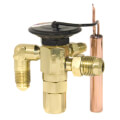
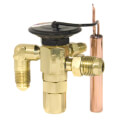
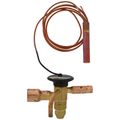

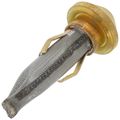
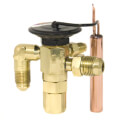
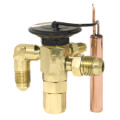
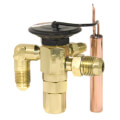
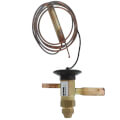
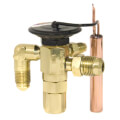
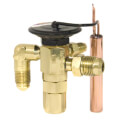
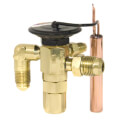
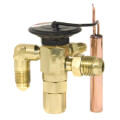


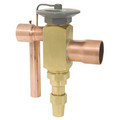
Parker Hannifin thermal expansion valves are metering devices that control the flow of liquid refrigerant into the evaporator coil of an air conditioning, heat pump, or refrigeration system. Field techs install a TXV in the liquid line ahead of the evaporator, where it reacts to superheat at the coil outlet and adjusts refrigerant flow to match the system's cooling load. Parker builds its C(E) series to cover systems from 1/6 ton up to 8 tons, which spans most residential and light commercial equipment, while the larger OE series extends coverage up to 70 tons for chillers and bigger commercial jobs. Getting the capacity match right matters because an undersized valve starves the coil and an oversized valve floods it, and either mistake shows up as poor cooling performance or compressor damage down the line. Techs replacing a failed valve or converting a system to a different refrigerant reach for Parker's lineup because it covers such a wide range of tonnage and refrigerant types in one brand.
Subcategories
- C(E) Series Expansion Valves: C(E) series valves cover systems from 1/6 ton up to 8 tons, making them the most common Parker TXV for residential split systems and light commercial rooftop units. Balanced port construction reduces the valve's sensitivity to pressure fluctuations across the range, which keeps refrigerant metering steady as head pressure changes with outdoor conditions. Installers pick this series for standard AC and heat pump replacements where tonnage falls within a typical residential range. Refrigeration and supermarket applications in the same capacity range use the same series.
- OE Series Expansion Valves: OE series valves scale up to handle 15 to 70 tons, putting them in commercial chillers, large rooftop units, and bigger refrigeration racks. Techs working on commercial mechanical rooms specify OE valves when a job's tonnage exceeds what a residential-class C(E) valve can handle. Sizing still follows the same superheat-based control logic as the smaller series, just at a larger port capacity. Commercial service contractors keep OE valves on hand for chiller and large air handler service calls.
- Refrigerant-Specific Valves: Parker builds separate valve lines for R-22/R-407C, R-410A, R-404A/R-507, and R-134a because each refrigerant has different pressure and temperature characteristics that change how the valve needs to be calibrated. Installing the wrong refrigerant-rated valve on a system causes incorrect superheat control even if the tonnage matches. Techs converting an older R-22 system or servicing newer R-410A equipment need to confirm the valve's refrigerant rating against the system's charge before ordering. Matching refrigerant type to the valve is as important as matching tonnage.
- Externally Equalized Valves: Externally equalized valves sense evaporator outlet pressure through a separate equalizer line rather than through the valve body itself, which gives more accurate superheat control on systems with a pressure drop across the evaporator coil. Field adjustable superheat lets a technician fine-tune the valve's setting on site instead of swapping the valve for a different factory setting. Systems with longer evaporator coils or coils with higher pressure drop typically call for the externally equalized design over an internally equalized valve. Heat pump systems often pair this valve type with a built-in check valve to handle flow reversal during defrost.
Buying Guide
Matching a Parker thermal expansion valve to a system starts with the unit's tonnage. Checking the nameplate for total cooling capacity narrows the choice to either the C(E) series, which covers 1/6 ton up to 8 tons, or the OE series for larger 15 to 70 ton commercial equipment. Refrigerant type comes next, since Parker Hannifin Thermal Expansion Valves are built and calibrated for a specific refrigerant such as R-410A, R-22/R-407C, R-404A/R-507, or R-134a, and a valve rated for the wrong refrigerant will meter incorrectly even on a properly sized system. Equalization type is the third decision: internally equalized valves work fine on shorter, low-pressure-drop evaporator coils, while externally equalized valves handle systems with more pressure drop across the coil and give more accurate superheat control as a result. Heat pump installations add one more consideration, since a valve without a built-in check valve won't handle the reversed refrigerant flow during defrost cycles, so heat pump jobs need the check valve variant. Inlet and outlet connection sizes need to match the existing line set or the new coil's stub-outs to avoid additional fittings and brazing joints. Field adjustable superheat gives some flexibility to fine-tune performance after installation, but starting with the correct tonnage, refrigerant, and equalization type up front avoids most callbacks.
Frequently Asked Questions
What size Parker TXV fits a given system?
Total system tonnage from the equipment nameplate determines whether a C(E) series valve, covering 1/6 ton up to 8 tons, or an OE series valve, covering 15 to 70 tons, fits the job. Undersized valves starve the evaporator coil and oversized valves flood it, so matching tonnage closely matters more than rounding up for margin. Checking both the indoor coil and outdoor unit tonnage together confirms the right valve size when the two don't match exactly.
Does the refrigerant type matter when picking a TXV?
Refrigerant type changes the pressure and temperature relationship the valve is calibrated around, so a valve built for R-22/R-407C won't meter correctly on an R-410A system even at the same tonnage. Confirming the system's refrigerant charge against the valve's rated refrigerant before ordering avoids an improper superheat reading after installation. Parker offers separate valve lines for R-22/R-407C, R-410A, R-404A/R-507, and R-134a systems.
What's the difference between internally and externally equalized valves?
Internally equalized valves sense pressure at the valve body and work well on shorter evaporator coils with minimal pressure drop. Externally equalized valves sense pressure through a separate line run to the evaporator outlet, which gives more accurate control on coils with a larger pressure drop across them. Coil length and design typically dictate which equalization type the original equipment used.
Why do heat pump systems need a different TXV than straight AC systems?
Heat pumps reverse refrigerant flow during defrost cycles, and a standard expansion valve without a built-in check valve can't handle that reversed flow correctly. Valves built for heat pump use include a check valve that lets refrigerant bypass the metering device in the reverse direction. Installing a straight AC valve on a heat pump system causes poor defrost performance and potential valve damage.
Can field adjustable superheat fix a valve that's metering incorrectly?
Field adjustable superheat allows on-site fine-tuning of the valve's setting without swapping the valve for a different factory calibration. Adjustment only helps within a normal range though, and it won't correct a valve that's the wrong tonnage or refrigerant rating for the system. Checking system charge, tonnage match, and refrigerant rating first rules out bigger problems before adjusting superheat.
