




PEX Press Fire Sprinkler Fittings

 --%3E %3Csvg version='1.1' id='No-RB' xmlns='http://www.w3.org/2000/svg' xmlns:xlink='http://www.w3.org/1999/xlink' x='0px' y='0px' viewBox='0 0 100 100' enable-background='new 0 0 100 100' xml:space='preserve'%3E %3Cpath fill='%23CECECE' d='M79.44,0.95H20.56C9.78,0.95,0.95,9.78,0.95,20.56v58.87c0,10.79,8.82,19.61,19.61,19.61h58.87 c10.79,0,19.61-8.83,19.61-19.61V20.56C99.05,9.78,90.22,0.95,79.44,0.95z M65.38,58.24l9.38,29.58L49.69,69.78L24.5,87.82 l9.34-29.6L8.8,39.6l30.73-0.17c0,0,6.98-19.61,10-28.93c0.54,1.36,9.88,29.1,9.88,29.1H91.2L65.38,58.24z'/%3E %3C/svg%3E)


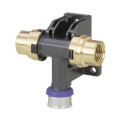
PEX press fire sprinkler fittings are the connectors used to join PEX tubing in residential and light-commercial fire suppression systems, using a press-style crimp connection rather than a threaded or soldered joint. A fire protection installer reaches for this category when running or repairing sprinkler branch lines in a building where PEX has been approved for the fire suppression system, which requires listed fittings rather than standard plumbing-grade PEX components. Press-style fittings let an installer make a permanent, code-listed joint quickly with a single pressing tool, without the open flame required for sweated metal connections. Because these fittings are part of a life-safety system, they carry specific listings and approvals that standard PEX plumbing fittings don't need.
Fire sprinkler systems have to perform reliably for the life of the building, so every fitting in the system needs to hold its rated pressure indefinitely, not just at initial installation and testing. Installers who keep a full range of tees, elbows, and couplings on hand can complete branch line runs without switching systems mid-job, which keeps the installation consistent and easier to inspect.
Subcategories
- Press Tees and Elbows: Tees and elbows are the most common fittings in a sprinkler branch line, used to change direction or split a line to feed a sprinkler head drop. These fittings are sized to match the tubing diameter used throughout the run, and mixing sizes requires a transition fitting rather than forcing an undersized connection. A press tool specific to the fitting brand is required to make the joint.
- Couplings and Reducers: Couplings join two lengths of PEX tubing in a straight run, while reducers step down from a larger branch line to a smaller line feeding an individual sprinkler head. Both are common wherever a system transitions from a main feed to individual head drops. Reducing couplings need to match the exact tubing sizes on both ends.
- Sprinkler Head Adapters: Head adapters transition from PEX tubing to the threaded connection required by a sprinkler head itself. These adapters are a critical connection point in the system, since the sprinkler head is the component that actually discharges water during a fire event. Getting the adapter's thread type and size correct is essential for a proper, code-compliant head installation.
- Press Tool Jaws and Accessories: Press tool jaws are the interchangeable heads that fit a battery-powered press tool to the specific fitting size and brand being installed. Installers running multiple tubing sizes on a job need the matching jaw for each size, since a mismatched jaw won't form a proper crimp. Keeping jaws in good condition matters directly to joint reliability, since a worn jaw can produce an incomplete press.
Buying Guide
Confirm that PEX is approved for the specific fire suppression system design before ordering fittings, since not every jurisdiction or system type permits PEX in fire sprinkler applications. The system's engineered plans should specify whether PEX press fittings are part of the approved design, and substituting them into a system designed around a different piping material is not an acceptable field decision.
Match the fitting brand to the press tool and jaw already in use on the job, since press-style fittings generally require a tool and jaw from the same manufacturer to form a proper, listed connection. Mixing a fitting from one brand with a press tool built for another brand's fittings can produce a joint that looks complete but doesn't meet the pressing specification the listing is based on.
Size fittings to the tubing diameter specified in the system design rather than assuming a single size runs through the whole branch line. Fire sprinkler branch lines commonly step down in diameter as they move from the main feed toward individual head drops, so a job typically needs a mix of couplings, reducers, and standard-size tees and elbows.
Because these fittings are part of a life-safety system, only use fittings and press tools that carry the listing required for fire sprinkler service, which is a different and more rigorous approval than fittings rated only for potable water plumbing. Confirming listings before ordering avoids installing a system that fails inspection or, worse, doesn't perform as designed in an actual fire event.
Frequently Asked Questions
Can plumbing-grade PEX press fittings be used in a fire sprinkler system?
No. Fire sprinkler systems require fittings specifically listed for fire suppression service, which carry different testing and approval requirements than standard plumbing-grade PEX fittings. Using unlisted fittings in a sprinkler system doesn't meet code and can compromise system performance.
Do I need a specific press tool for fire sprinkler fittings?
Yes, typically a press tool and jaw matched to the specific fitting manufacturer, since the listing for a press-style fire sprinkler fitting is based on testing with that manufacturer's tool and jaw combination. Using a mismatched tool can produce a joint that isn't code-compliant even if it appears complete.
Can different sizes of PEX tubing be joined directly with a standard coupling?
No, joining two different tubing sizes requires a reducing coupling sized for both diameters. A standard same-size coupling won't form a proper seal between mismatched tubing diameters.
How do I know if PEX is approved for a specific fire sprinkler installation?
The system's engineered design plans specify the approved piping material, and that approval should be confirmed against the local jurisdiction's adopted fire code before starting the installation. This isn't a decision to make in the field without checking the approved plans.
What's the difference between a sprinkler head adapter and a standard fitting?
A sprinkler head adapter transitions from PEX tubing to the threaded connection the sprinkler head itself requires, making it the final connection point before the head. Standard fittings like tees and couplings only join tubing to other tubing, not to the head itself.
