




Filters
SORT
Product Availability –
Size –
Review Score –
 --%3E %3Csvg version='1.1' id='Fill' xmlns='http://www.w3.org/2000/svg' xmlns:xlink='http://www.w3.org/1999/xlink' x='0px' y='0px' viewBox='0 0 100 100' enable-background='new 0 0 100 100' xml:space='preserve'%3E %3Cpath fill='%23F15C02' d='M79.44,0.95H20.56C9.78,0.95,0.95,9.78,0.95,20.56v58.87c0,10.79,8.82,19.61,19.61,19.61h58.87 c10.79,0,19.61-8.83,19.61-19.61V20.56C99.05,9.78,90.22,0.95,79.44,0.95z M65.38,58.24l9.38,29.58L49.69,69.78L24.5,87.82 l9.34-29.6L8.8,39.6l30.73-0.17c0,0,6.98-19.61,10-28.93c0.54,1.36,9.88,29.1,9.88,29.1H91.2L65.38,58.24z'/%3E %3C/svg%3E)
Polypropylene Reducers


 --%3E %3Csvg version='1.1' id='No-RB' xmlns='http://www.w3.org/2000/svg' xmlns:xlink='http://www.w3.org/1999/xlink' x='0px' y='0px' viewBox='0 0 100 100' enable-background='new 0 0 100 100' xml:space='preserve'%3E %3Cpath fill='%23CECECE' d='M79.44,0.95H20.56C9.78,0.95,0.95,9.78,0.95,20.56v58.87c0,10.79,8.82,19.61,19.61,19.61h58.87 c10.79,0,19.61-8.83,19.61-19.61V20.56C99.05,9.78,90.22,0.95,79.44,0.95z M65.38,58.24l9.38,29.58L49.69,69.78L24.5,87.82 l9.34-29.6L8.8,39.6l30.73-0.17c0,0,6.98-19.61,10-28.93c0.54,1.36,9.88,29.1,9.88,29.1H91.2L65.38,58.24z'/%3E %3C/svg%3E)
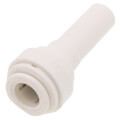

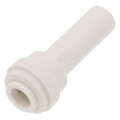
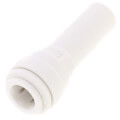
Polypropylene Reducers are push-fit fittings that step tubing from one size to another, and the John Guest models in the catalog are made from polypropylene. The sample includes a 3/8-inch stem by 1/4-inch OD reducer, a 1/2-inch by 3/8-inch reducer and a 3/8-inch by 5/16-inch reducer, so the size step is the first spec to match. The 3/8-inch stem by 1/4-inch OD reducer is listed for plumbing and can be used on plastic or soft copper tubing. The catalog lists push-fit technology on all three sample models, and two of them also note quick disconnection without the need for tools. The 1/2-inch by 3/8-inch and 3/8-inch by 5/16-inch records also list high chemical resistance and suitability for potable liquids and pure water applications. Both records note the fittings are not suitable for compressed air and vacuum applications. Knowing the limits matters because a reducer that does not suit the medium or the tube size leads to a callback.
Subcategories
- 3/8-Inch Stem by 1/4-Inch OD Reducers: The 3/8-inch stem by 1/4-inch OD reducer is a John Guest push-to-connect fitting made from white polypropylene with EPDM O-rings. Installers use it in plumbing work to join plastic or soft copper tubing of two sizes. Tubing is pushed in by hand, and the collet locking system holds it in place.
- 1/2-Inch by 3/8-Inch Reducers: The 1/2-inch by 3/8-inch reducer is a polypropylene John Guest fitting with push-fit technology. Contractors use it to connect a 1/2-inch size to a 3/8-inch size in potable liquid and pure water applications. The record lists high chemical resistance and quick disconnection without the need for tools. It is not suitable for compressed air and vacuum applications.
- 3/8-Inch by 5/16-Inch Reducers: The 3/8-inch by 5/16-inch reducer is a polypropylene John Guest fitting with push-fit technology. Installers use it to connect a 3/8-inch size to a 5/16-inch size in potable liquid and pure water applications. The record lists food quality and high chemical resistance. It is not suitable for compressed air and vacuum applications.
Buying Guide
Start with the medium. The 1/2-inch by 3/8-inch and 3/8-inch by 5/16-inch records list suitability for potable liquids and pure water applications and note that the fittings are not suitable for compressed air and vacuum applications. If the line carries compressed air or is a vacuum line, a different product is needed.
Second, match the sizes. When selecting Polypropylene Reducers, read both sizes in the product name, since the catalog sample includes 3/8-inch stem by 1/4-inch OD, 1/2-inch by 3/8-inch and 3/8-inch by 5/16-inch options. The 3/8-inch stem by 1/4-inch OD model names a stem size and an OD size, so confirm which end type the existing connection uses.
Then check the tubing. The 3/8-inch stem by 1/4-inch OD reducer is described as usable on plastic or soft copper tubing. Confirm the tubing type for the job against the product page before ordering.
Consider materials and seals. The sample records describe polypropylene material, and the 3/8-inch stem by 1/4-inch OD reducer is listed with EPDM O-rings and white polypropylene construction. Match those details to the job requirements.
Finally, think about service. The records note quick disconnection without the need for tools on the 1/2-inch by 3/8-inch and 3/8-inch by 5/16-inch models, which helps when a line may need to be opened later. Verify each model's details on its own product page, because the three sample models do not share every spec.
Frequently Asked Questions
What are polypropylene reducers used for?
Polypropylene Reducers connect tubing or fittings of two different sizes using push-fit technology. The John Guest models in the sample come in 3/8-inch stem by 1/4-inch OD, 1/2-inch by 3/8-inch and 3/8-inch by 5/16-inch sizes. Check the product page for the exact size before ordering.
Can polypropylene reducers be used on compressed air or vacuum lines?
The 1/2-inch by 3/8-inch and 3/8-inch by 5/16-inch John Guest polypropylene reducers are listed as not suitable for compressed air and vacuum applications. A product made for those services is needed instead. Check each model's product page for its own limits.
Are John Guest polypropylene reducers okay for potable water?
The 1/2-inch by 3/8-inch and 3/8-inch by 5/16-inch polypropylene reducers are listed as food quality and suitable for potable liquids and pure water applications. Confirm the model's product page and local requirements before installing. Polypropylene Reducers vary by model, so verify each one.
What tubing works with a John Guest push-to-connect polypropylene reducer?
The 3/8-inch stem by 1/4-inch OD reducer is described as usable on plastic or soft copper tubing. Tubing is pushed in by hand, and a collet locking system holds it in place. Verify tubing compatibility for other polypropylene reducers on their product pages.
Do polypropylene reducers need tools to disconnect?
The 1/2-inch by 3/8-inch and 3/8-inch by 5/16-inch records list quick disconnection without the need for tools. Both polypropylene reducers use push-fit technology. Confirm the details for other models on their product pages.
