



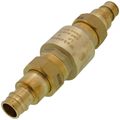
ProPEX Expansion Check Valves

 --%3E %3Csvg version='1.1' id='Fill' xmlns='http://www.w3.org/2000/svg' xmlns:xlink='http://www.w3.org/1999/xlink' x='0px' y='0px' viewBox='0 0 100 100' enable-background='new 0 0 100 100' xml:space='preserve'%3E %3Cpath fill='%23F15C02' d='M79.44,0.95H20.56C9.78,0.95,0.95,9.78,0.95,20.56v58.87c0,10.79,8.82,19.61,19.61,19.61h58.87 c10.79,0,19.61-8.83,19.61-19.61V20.56C99.05,9.78,90.22,0.95,79.44,0.95z M65.38,58.24l9.38,29.58L49.69,69.78L24.5,87.82 l9.34-29.6L8.8,39.6l30.73-0.17c0,0,6.98-19.61,10-28.93c0.54,1.36,9.88,29.1,9.88,29.1H91.2L65.38,58.24z'/%3E %3C/svg%3E)


ProPEX Expansion Check Valves are one-way valves designed for Uponor's PEX plumbing systems, using the ProPEX expansion connection method instead of crimp rings or solder. Plumbers use check valves to prevent backflow in applications like recirculation loops, well systems, and multi-source water heating setups, keeping water moving in a single direction through the line. Because the fitting expands directly onto PEX tubing with a cone-shaped ring, installation doesn't require a torch, crimp tool, or press tool beyond the ProPEX expansion tool itself. A single-tool approach speeds up installation on jobs already using ProPEX fittings throughout the system. Matching the check valve's port size to the tubing diameter and confirming the system's flow direction before installation prevents callbacks for a valve installed backward. Proper support and access for future service also matter, since check valves occasionally need inspection if debris affects the seal.
Subcategories
- ProPEX Expansion Fittings: Expansion fittings connect PEX tubing without crimp rings, using a cone-shaped ring that stretches the tubing over the fitting and lets it shrink back for a tight, gap-free seal. Plumbers favor the method for its consistent results across different installers, since there's no crimp gauge to check afterward. The fittings cover elbows, tees, couplings, and adapters in addition to check valves. Compatibility between the fitting brand and the expansion tool used matters, so confirming that pairing before a job starts avoids mismatched connections.
- PEX Tubing for ProPEX Systems: PEX tubing rated for expansion fittings needs to meet the memory characteristics the ProPEX method relies on, since the tubing must shrink back around the fitting after expansion. Oxygen barrier and non-barrier tubing both work with ProPEX fittings, with the choice depending on whether the line serves a hydronic heating loop or a domestic water system. Diameter selection affects both flow capacity and which size expansion tool head is needed. Keeping tubing away from UV exposure during storage and installation preserves its expansion properties.
- ProPEX Expansion Tools: The expansion tool stretches the PEX tubing and ring together before the technician slides them onto the fitting, and it's the one tool required across the entire ProPEX system regardless of fitting type. Battery-powered expansion tools speed up repetitive connections on larger jobs compared to manual ratchet-style tools. Regular inspection of the tool's expander head catches wear before it produces an inconsistent expansion and a weak connection. Technicians working across multiple tubing sizes need the corresponding head for each diameter.
- Manifolds and Valves: Manifolds distribute water from a single supply line to multiple fixtures or heating zones, and ProPEX-compatible manifolds connect directly to expansion-fitted tubing without an adapter. Ball valves and check valves integrated into the manifold layout let a plumber isolate individual zones for service without shutting down the whole system. Labeling each port during installation saves time on future troubleshooting. Manifold cabinets keep the assembly organized and protected in finished spaces.
- Rings and Accessories: Expansion rings slide over the PEX tubing before it's stretched onto the fitting, and matching the ring size exactly to the tubing diameter is what makes the ProPEX connection reliable. Reinforcing rings differ by tubing size and by whether the application is potable water or hydronic heating. Deburring and chamfering tools prep the tubing end before expansion, reducing the chance of an uneven seal. Keeping a range of ring sizes stocked prevents a mid-job supply run.
Buying Guide
Selecting the right check valve for a PEX plumbing system starts with identifying where backflow prevention is actually needed, since not every branch of a system requires one. Recirculation loops, well pump discharge lines, and systems with multiple water sources feeding into a shared line are the most common applications.
ProPEX Expansion Check Valves fit into a system already using the ProPEX expansion method, so confirming that the rest of the job's fittings and tubing are ProPEX-compatible avoids mixing connection types unnecessarily. Port size needs to match the tubing diameter at that point in the system, and flow direction should be confirmed against the piping diagram before the valve goes in, since a backward check valve blocks flow entirely.
Pressure rating and temperature range matter most in hydronic heating applications, where the valve sees different operating conditions than a domestic water line. Reviewing the manufacturer's specifications against the system's design temperature and pressure prevents a valve from underperforming or failing prematurely.
Access for future inspection deserves consideration during layout, since check valves occasionally need service if debris affects the seal. Installing the valve somewhere reachable, rather than buried behind finished walls or ceilings, saves time on any future service call.
Frequently Asked Questions
Where are check valves typically needed in a PEX plumbing system?
Check valves show up most often in recirculation loops, well pump discharge lines, and systems where multiple water sources feed into a shared line. They keep water moving in one direction and prevent backflow that could contaminate a supply line or damage a pump. Not every branch of a system needs one, so identifying the specific risk point during design matters.
Do ProPEX Expansion Check Valves require a special tool to install?
They install with the same ProPEX expansion tool used for any other fitting in the system, so no additional tool is needed if the job already uses ProPEX fittings. The tool expands the tubing and ring together before sliding them onto the valve's barbed end. No torch, crimp tool, or press tool is required.
How do I confirm a check valve is installed in the right direction?
Most check valves have a flow direction arrow printed or stamped on the body, and confirming that arrow matches the intended flow path before installation prevents a callback. Reviewing the piping diagram alongside the valve's marking catches mistakes before the tubing is expanded onto the fitting. A valve installed backward will block flow entirely rather than just restrict it.
Can ProPEX Expansion Check Valves be used in hydronic heating systems?
Yes, provided the valve's pressure and temperature ratings match the system's design conditions, since hydronic loops often run at different temperatures than domestic water lines. Checking the manufacturer's specifications against the specific application avoids selecting a valve rated only for potable water use. Oxygen barrier tubing is typically paired with these valves in closed heating loops.
How often do PEX check valves need to be inspected?
There's no fixed schedule, but check valves benefit from inspection whenever a system shows signs of reduced flow or unexpected pressure changes, since debris can occasionally affect the seal. Installing the valve in an accessible location makes that inspection straightforward rather than requiring wall or ceiling access. Routine system flushing also reduces the debris that could interfere with the valve's seat.
