




Pulsation Dampeners and Mufflers

 --%3E %3Csvg version='1.1' id='No-RB' xmlns='http://www.w3.org/2000/svg' xmlns:xlink='http://www.w3.org/1999/xlink' x='0px' y='0px' viewBox='0 0 100 100' enable-background='new 0 0 100 100' xml:space='preserve'%3E %3Cpath fill='%23CECECE' d='M79.44,0.95H20.56C9.78,0.95,0.95,9.78,0.95,20.56v58.87c0,10.79,8.82,19.61,19.61,19.61h58.87 c10.79,0,19.61-8.83,19.61-19.61V20.56C99.05,9.78,90.22,0.95,79.44,0.95z M65.38,58.24l9.38,29.58L49.69,69.78L24.5,87.82 l9.34-29.6L8.8,39.6l30.73-0.17c0,0,6.98-19.61,10-28.93c0.54,1.36,9.88,29.1,9.88,29.1H91.2L65.38,58.24z'/%3E %3C/svg%3E)


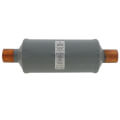
Pulsation dampeners and mufflers are inline devices installed on well pump and water system piping to smooth out pressure pulses and reduce the noise created by a pump cycling on and off. Contractors add these components to residential and light commercial well systems where pressure fluctuation causes banging pipes, vibrating fixtures, or audible pump noise inside the building. A dampener typically uses an internal air chamber or diaphragm to absorb sudden pressure changes, while a muffler focuses more specifically on reducing the sound transmitted through the piping. Both device types install inline on the discharge side of a pump or pressure tank system, usually close to where the noise or pulsation problem is most noticeable. Because pressure pulsation can also accelerate wear on fittings, gauges, and other system protectors over time, addressing it with the correct dampener or muffler protects the rest of the plumbing system in addition to solving the noise complaint.
Subcategories
- Air Chamber Dampeners: Air chamber dampeners use a sealed pocket of air to absorb sudden pressure spikes as a pump cycles, smoothing out the pressure delivered to the rest of the plumbing system. Contractors install these on well systems where pressure swings cause banging pipes or fixture chatter. Some designs require periodic recharging of the air chamber, while diaphragm-style versions maintain separation between air and water indefinitely. Correct sizing depends on the system's flow rate and pressure tank setup.
- Diaphragm-Style Dampeners: Diaphragm-style dampeners separate the air charge from system water using a flexible diaphragm, which keeps the air charge from being absorbed into the water over time. Contractors often prefer these for wells with iron or sediment content, since the diaphragm keeps the air chamber from fouling. Maintenance is generally lower than an open-chamber design, since there is no waterlogging to correct. Installation position close to the pump or pressure tank gives the best pulsation control.
- Noise-Reducing Mufflers: Noise-reducing mufflers target the audible sound of a pump cycling rather than the pressure pulsation itself, making them a common addition where a well pump or booster pump is located near living space. Contractors specify these for finished basements, additions built over a mechanical room, or any job where a customer specifically complains about pump noise rather than banging pipes. Mufflers install inline on the discharge piping, typically as close to the pump as practical. Combining a muffler with a pulsation dampener addresses both noise and pressure fluctuation on the same system.
- Replacement Parts and Accessories: Replacement parts for pulsation dampeners and mufflers include diaphragms, air valves, and mounting hardware needed to service an existing unit rather than replace it outright. Contractors performing well system maintenance often check dampener condition when troubleshooting a pressure or noise complaint on an older system. Confirming the original manufacturer and model before ordering parts avoids a mismatched component. A failed diaphragm is a common reason a previously quiet system starts banging again.
Buying Guide
Choosing between a pulsation dampener and a muffler starts with identifying the actual complaint: banging pipes and pressure fluctuation point toward a dampener, while audible pump noise transmitted through a building's structure points toward a muffler, and some jobs benefit from both installed together. Sizing a dampener correctly depends on the well system's flow rate and the pressure tank's operating range, since an undersized unit will not absorb enough of the pressure spike to solve the complaint. Contractors working wells with iron, sediment, or other water quality issues generally get better long-term performance from a diaphragm-style dampener, since separating the air charge from the water prevents the chamber from fouling the way an open air-chamber design can over time. Installation location matters as much as device selection: placing pulsation dampeners and mufflers as close as practical to the pump or pressure tank generally gives the best result, since pressure pulses and pump noise both attenuate somewhat as they travel further down the piping. For occupied spaces near the mechanical room, such as a finished basement or an addition built over a well pump location, prioritizing noise reduction alongside pressure smoothing avoids a return call about pump sound even after the original pressure complaint is resolved. Reviewing the well pump's rated flow and the existing pressure tank size before ordering keeps the selected dampener or muffler correctly matched to the system it needs to protect.
Frequently Asked Questions
What is the difference between a pulsation dampener and a muffler?
A pulsation dampener absorbs pressure spikes as a pump cycles, smoothing out fluctuations that cause banging pipes or fixture chatter. A muffler focuses more specifically on reducing the audible sound of the pump itself. Some systems benefit from installing both together when a job has both a noise complaint and a pressure fluctuation problem.
Where should a pulsation dampener be installed?
Installing it as close as practical to the pump or pressure tank generally gives the best result, since pressure pulses attenuate somewhat as they travel further through the piping. Following the manufacturer's recommended installation position and orientation keeps the dampener working as intended. Confirming available space near the pump during the site visit helps plan the installation before ordering parts.
Why does a well system develop banging pipes over time?
Banging pipes are often caused by pressure pulsation as a pump cycles on and off, especially if an existing dampener has failed or was never installed. A failed diaphragm inside an existing dampener is a common cause of a previously quiet system starting to bang again. Replacing the diaphragm or the entire unit typically resolves the issue without further plumbing changes.
Do all well systems need a pulsation dampener?
Not necessarily. Some pressure tank and pump combinations naturally smooth out pulsation well enough that banging pipes or noticeable noise never becomes a complaint. Systems with certain pump types, longer piping runs, or specific pressure tank sizes are more prone to noticeable pulsation and benefit more from adding a dampener.
Can a dampener or muffler be added to an existing well system without major plumbing changes?
Yes, most pulsation dampeners and mufflers install inline on existing discharge piping using standard threaded or sweat fittings, without requiring a full re-plumb of the system. Confirming available straight pipe length near the pump or tank before the job helps plan the installation. Choosing a unit sized correctly for the system's flow rate keeps the fix effective rather than just adding an unnecessary part.
