




Refrigeration Supplies
Refrigeration supplies cover the controls, fittings, hoses, and parts used to service and maintain refrigeration equipment, including pressure switches and thermostatic expansion valves from Danfoss and Johnson Controls. Refrigeration fittings and hoses complete the connections needed for both permanent piping and service charging.
Refrigeration controls manage the timing of functions like defrost cycles and compressor protection, and matching a replacement control to the exact application keeps the system's safety and efficiency logic intact. Technicians servicing commercial refrigeration equipment rely on this category for both routine maintenance parts and larger control replacements.

Subcategories
- Danfoss Refrigeration Controls: Danfoss refrigeration controls include pressure switches, thermostatic expansion valves, and electronic controllers used across commercial refrigeration and light air conditioning systems. Techs reach for these parts on jobs that call for precise superheat or pressure control rather than a basic on-off switch.
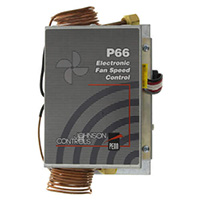
- Johnson Controls Refrigeration Controls: Johnson Controls refrigeration controls cover pressure and temperature switches built for walk-in coolers, freezers, and packaged refrigeration units. Many designs are field-adjustable, which lets a technician set cut-in and cut-out points to match the specific case or box being serviced.
- Refrigeration Controls: Refrigeration controls as a category include the broader mix of defrost timers, low- and high-pressure switches, and oil safety controls used to protect compressors and manage cycling. Stocking a range of setpoints and voltage ratings covers most commercial refrigeration service calls.
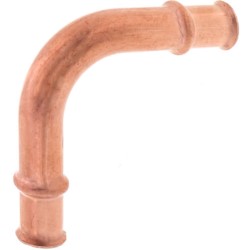
- Refrigeration Fittings: Refrigeration fittings include the flare, compression, and copper press connections used to join line sets, connect gauges, and tie in accessories on a refrigeration circuit. Choosing the correct fitting size and type is critical to holding system pressure and preventing refrigerant leaks at the joint.
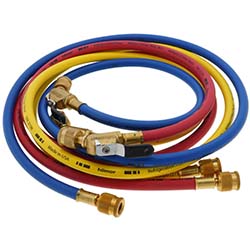
- Refrigeration Hoses: Refrigeration hoses are the charging and service hoses rated for the pressures and refrigerants used in commercial and residential systems. Hose length, fitting size, and refrigerant compatibility all need to match the gauge set and system being serviced.
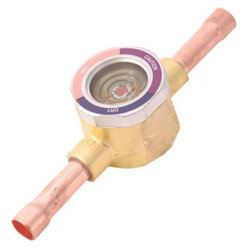
- Refrigeration Parts: Refrigeration parts is the general category for compressor components, fan motors, and other OEM replacement hardware that keeps refrigeration equipment running. Cross-referencing the original part number against the unit's data plate is the most reliable way to confirm fit before ordering.
Buying Guide
Refrigeration parts are rarely universal, so the buying decision usually starts with the equipment manufacturer, model number, and refrigerant type rather than the part's general description. Pulling the data plate off the condensing unit or case before ordering avoids a mismatched control or fitting.
Pressure and temperature controls need to match both the refrigerant used in the system and the operating range of the box or case. A control rated for the wrong refrigerant or pressure range can cause short cycling or fail to protect the compressor from an overpressure condition.
Fitting and hose selection depends on the line size already in the system and the service being performed. Charging hoses need to be rated for the refrigerant in use, and adapters should only bridge fitting types the manufacturer explicitly supports.
For OEM replacement parts like fan motors and compressor components, checking voltage, horsepower, and mounting configuration against the original part prevents a return trip for a part that technically fits but performs differently under load.
Keeping a core stock of common controls, fittings, and hoses covers routine service calls, while OEM-specific parts are usually best ordered after confirming the exact equipment model, since refrigeration hardware varies more between brands than most other HVAC categories.
Frequently Asked Questions
Are refrigeration controls interchangeable between brands?
Rarely without an adapter or a control specifically rated for the same pressure range and refrigerant. Matching the original control's specifications, not just its physical size, is the safer approach.
What refrigerant types do standard refrigeration hoses support?
Most modern service hoses are rated for common HFC and HFO refrigerants, but the specific rating is printed on the hose and should be checked against the system being charged. Using a hose rated for the wrong refrigerant can degrade the hose material over time.
How do I identify the correct replacement fitting size?
Measuring the existing line or fitting outer diameter is the most reliable method, since nominal sizing can vary slightly between flare and compression fittings. Keeping the old fitting on hand when ordering helps confirm an exact match.
Do I need OEM parts for compressor and fan motor replacements?
OEM parts are the safest choice for warranty coverage and guaranteed fit, though compatible aftermarket parts are available for many common models. Checking voltage, horsepower, and mounting dimensions matters more than the manufacturer name on a compatible replacement.
What causes a refrigeration control to fail prematurely?
Voltage spikes, incorrect pressure or temperature ratings for the application, and contamination inside the control housing are common causes. Selecting a control rated for the system's actual operating conditions reduces the chance of an early failure.
Resources
Subcategories
- Danfoss Refrigeration Controls: Danfoss refrigeration controls include pressure switches, thermostatic expansion valves, and electronic controllers used across commercial refrigeration and light air conditioning systems. Techs reach for these parts on jobs that call for precise superheat or pressure control rather than a basic on-off switch.
- Johnson Controls Refrigeration Controls: Johnson Controls refrigeration controls cover pressure and temperature switches built for walk-in coolers, freezers, and packaged refrigeration units. Many designs are field-adjustable, which lets a technician set cut-in and cut-out points to match the specific case or box being serviced.
- Refrigeration Controls: Refrigeration controls as a category include the broader mix of defrost timers, low- and high-pressure switches, and oil safety controls used to protect compressors and manage cycling. Stocking a range of setpoints and voltage ratings covers most commercial refrigeration service calls.
- Refrigeration Fittings: Refrigeration fittings include the flare, compression, and copper press connections used to join line sets, connect gauges, and tie in accessories on a refrigeration circuit. Choosing the correct fitting size and type is critical to holding system pressure and preventing refrigerant leaks at the joint.
- Refrigeration Hoses: Refrigeration hoses are the charging and service hoses rated for the pressures and refrigerants used in commercial and residential systems. Hose length, fitting size, and refrigerant compatibility all need to match the gauge set and system being serviced.
- Refrigeration Parts: Refrigeration parts is the general category for compressor components, fan motors, and other OEM replacement hardware that keeps refrigeration equipment running. Cross-referencing the original part number against the unit's data plate is the most reliable way to confirm fit before ordering.
Buying Guide
Refrigeration parts are rarely universal, so the buying decision usually starts with the equipment manufacturer, model number, and refrigerant type rather than the part's general description. Pulling the data plate off the condensing unit or case before ordering avoids a mismatched control or fitting.
Pressure and temperature controls need to match both the refrigerant used in the system and the operating range of the box or case. A control rated for the wrong refrigerant or pressure range can cause short cycling or fail to protect the compressor from an overpressure condition.
Fitting and hose selection depends on the line size already in the system and the service being performed. Charging hoses need to be rated for the refrigerant in use, and adapters should only bridge fitting types the manufacturer explicitly supports.
For OEM replacement parts like fan motors and compressor components, checking voltage, horsepower, and mounting configuration against the original part prevents a return trip for a part that technically fits but performs differently under load.
Keeping a core stock of common controls, fittings, and hoses covers routine service calls, while OEM-specific parts are usually best ordered after confirming the exact equipment model, since refrigeration hardware varies more between brands than most other HVAC categories.
Frequently Asked Questions
Are refrigeration controls interchangeable between brands?
Rarely without an adapter or a control specifically rated for the same pressure range and refrigerant. Matching the original control's specifications, not just its physical size, is the safer approach.
What refrigerant types do standard refrigeration hoses support?
Most modern service hoses are rated for common HFC and HFO refrigerants, but the specific rating is printed on the hose and should be checked against the system being charged. Using a hose rated for the wrong refrigerant can degrade the hose material over time.
How do I identify the correct replacement fitting size?
Measuring the existing line or fitting outer diameter is the most reliable method, since nominal sizing can vary slightly between flare and compression fittings. Keeping the old fitting on hand when ordering helps confirm an exact match.
Do I need OEM parts for compressor and fan motor replacements?
OEM parts are the safest choice for warranty coverage and guaranteed fit, though compatible aftermarket parts are available for many common models. Checking voltage, horsepower, and mounting dimensions matters more than the manufacturer name on a compatible replacement.
What causes a refrigeration control to fail prematurely?
Voltage spikes, incorrect pressure or temperature ratings for the application, and contamination inside the control housing are common causes. Selecting a control rated for the system's actual operating conditions reduces the chance of an early failure.