




Filters
SORT
Product Availability –
Max Temp (F) –
Min Temp (F) –
Review Score –
 --%3E %3Csvg version='1.1' id='Fill' xmlns='http://www.w3.org/2000/svg' xmlns:xlink='http://www.w3.org/1999/xlink' x='0px' y='0px' viewBox='0 0 100 100' enable-background='new 0 0 100 100' xml:space='preserve'%3E %3Cpath fill='%23F15C02' d='M79.44,0.95H20.56C9.78,0.95,0.95,9.78,0.95,20.56v58.87c0,10.79,8.82,19.61,19.61,19.61h58.87 c10.79,0,19.61-8.83,19.61-19.61V20.56C99.05,9.78,90.22,0.95,79.44,0.95z M65.38,58.24l9.38,29.58L49.69,69.78L24.5,87.82 l9.34-29.6L8.8,39.6l30.73-0.17c0,0,6.98-19.61,10-28.93c0.54,1.36,9.88,29.1,9.88,29.1H91.2L65.38,58.24z'/%3E %3C/svg%3E)
Price Range –
Johnson Controls Refrigeration Controls


 --%3E %3Csvg version='1.1' id='No-RB' xmlns='http://www.w3.org/2000/svg' xmlns:xlink='http://www.w3.org/1999/xlink' x='0px' y='0px' viewBox='0 0 100 100' enable-background='new 0 0 100 100' xml:space='preserve'%3E %3Cpath fill='%23CECECE' d='M79.44,0.95H20.56C9.78,0.95,0.95,9.78,0.95,20.56v58.87c0,10.79,8.82,19.61,19.61,19.61h58.87 c10.79,0,19.61-8.83,19.61-19.61V20.56C99.05,9.78,90.22,0.95,79.44,0.95z M65.38,58.24l9.38,29.58L49.69,69.78L24.5,87.82 l9.34-29.6L8.8,39.6l30.73-0.17c0,0,6.98-19.61,10-28.93c0.54,1.36,9.88,29.1,9.88,29.1H91.2L65.38,58.24z'/%3E %3C/svg%3E)

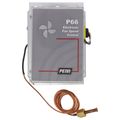









Johnson Controls Refrigeration Controls are pressure and temperature switches that protect and cycle compressors, condensers, and fans on commercial refrigeration and air conditioning equipment. The P70, P72, and P170 series form the core of the lineup, covering high-pressure cut-out, head-pressure control, and condenser fan cycling duty across a range of pressure settings. Enclosures come in NEMA 1 configurations with galvanized steel cases for indoor equipment rooms, or NEMA 3R configurations for outdoor rooftop units exposed to weather. Switch options include single-pole models with automatic reset or manual reset lockout, plus double-pole versions on select P72 models for circuits that need two contacts switched together. Most models work with common refrigerants and can also handle air, water, and other non-corrosive fluids. For contractors servicing rooftop condensing units or walk-in refrigeration racks, matching the series and enclosure rating to the installation keeps the control protected from weather while hitting the exact cut-out point the compressor manufacturer specifies.
Subcategories
- High-Pressure Cut-Out Controls: High-pressure cut-out controls shut a compressor down before discharge pressure climbs high enough to damage the unit, protecting equipment during a dirty condenser coil or a fan failure. Refrigeration techs install these on both commercial refrigeration racks and rooftop condensing units as a safety backstop. P70 and P170 models are available with automatic reset or manual reset lockout, so a tech can choose whether the control restarts on its own once pressure drops or requires a manual reset after a fault. Manual reset lockout is common on equipment where an unattended restart could mask a bigger problem.
- Condenser Fan Cycling Controls: Condenser fan cycling controls turn outdoor condenser fans on and off based on head pressure, keeping a system running efficiently in cold weather when full fan speed would overcool the refrigerant. Installers use these on rooftop and outdoor condensing units that see wide seasonal temperature swings. The P70 and P170 series both support fan cycling duty with pressure ranges suited to common refrigerants. Matching the switch range to the refrigerant's pressure curve keeps the fan cycling at the right head pressure.
- Dual and Low-Pressure Controls: Dual-pressure controls combine a high-pressure cut-out and a low-pressure cut-out in a single housing, giving compressor protection on both ends of the pressure range from one control. Techs reach for these on package units and smaller refrigeration systems where panel space is tight. Low-pressure applications also cover loss-of-charge and low ambient lockout duty. Ammonia-compatible versions are available with stainless steel connections for industrial ammonia refrigeration systems.
- Enclosures & Connection Types: Enclosures and connection types determine where a control can be installed and how it ties into the refrigerant line. NEMA 1 enclosures use galvanized steel cases suited to indoor mechanical rooms, while NEMA 3R enclosures add weather protection for outdoor and rooftop installations. Standard connections include 1/4 inch SAE male flare fittings, while ammonia-compatible models use 1/4 inch stainless steel female NPT connections to resist ammonia's corrosive effect on brass. Picking the right enclosure and connection avoids a return trip for the wrong fitting.
Buying Guide
Start by identifying the job the control needs to do: a high-pressure cut-out protects the compressor from excessive discharge pressure, a low-pressure control guards against loss of charge or low ambient conditions, and a fan cycling control manages head pressure by switching condenser fans. Many jobs call for a dual-pressure control that handles both cut-out functions from a single housing, which saves panel space on tighter equipment. Next, confirm the pressure range matches the refrigerant in the system, since Johnson Controls Refrigeration Controls cover several pressure ranges built around specific common refrigerants, and a mismatched range either trips too early or fails to protect the compressor at all. For ammonia systems, only ammonia-compatible models with stainless steel NPT connections hold up against the refrigerant's corrosive properties, so standard brass-connection models are the wrong pick there. Reset behavior matters too: automatic reset lets the system restart on its own once pressure normalizes, which suits routine cycling duty, while manual reset lockout forces a technician to inspect the equipment before restart, which is the safer choice for a fault that could indicate a bigger mechanical problem. Finally, match the enclosure to the install location. NEMA 1 galvanized steel cases suit indoor mechanical rooms, while NEMA 3R enclosures with plated and painted steel protect outdoor and rooftop equipment from rain and snow load. Getting the enclosure rating right the first time avoids a control that corrodes or fails prematurely outdoors.
Frequently Asked Questions
What's the difference between the P70, P72, and P170 series?
All three series cover high, low, and dual-pressure control duty for refrigeration and air conditioning equipment, with the main differences in switch configuration and connection options. P72 models add double-pole switch options for circuits that need two contacts switched together, which the standard P70 does not offer. Series selection typically comes down to the specific switch configuration and connection type a job calls for.
When does a job need manual reset lockout instead of automatic reset?
Manual reset lockout fits equipment where an automatic restart could hide a developing problem, such as a compressor that keeps tripping on high pressure due to a failing condenser fan. Automatic reset suits routine cycling duty where pressure swings are normal and expected. Choosing lockout forces a technician to diagnose the fault before the system runs again.
Can these controls handle ammonia refrigeration systems?
Ammonia-compatible models are available with 1/4 inch stainless steel female NPT connections instead of the standard brass flare fittings. Stainless steel resists the corrosive effect ammonia has on standard brass components. Standard models built for common refrigerants aren't rated for ammonia service.
What enclosure rating fits a rooftop condensing unit?
Rooftop and other outdoor installations call for a NEMA 3R enclosure, built with plated and painted steel cases and covers to shed rain and snow. Indoor equipment rooms are better served by a NEMA 1 enclosure with a galvanized steel case. Matching the enclosure to the environment keeps the switch from corroding prematurely.
Do these controls work with fluids other than refrigerant?
Most models are rated for air, water, and other non-corrosive fluids in addition to common refrigerants. The added rating lets a single control serve secondary applications, such as a water pressure switch, on the same job. Confirm the specific model's fluid compatibility before installing it outside straight refrigerant duty.
