




Filters
SORT
Product Availability –
Product Type –
Review Score –
 --%3E %3Csvg version='1.1' id='Fill' xmlns='http://www.w3.org/2000/svg' xmlns:xlink='http://www.w3.org/1999/xlink' x='0px' y='0px' viewBox='0 0 100 100' enable-background='new 0 0 100 100' xml:space='preserve'%3E %3Cpath fill='%23F15C02' d='M79.44,0.95H20.56C9.78,0.95,0.95,9.78,0.95,20.56v58.87c0,10.79,8.82,19.61,19.61,19.61h58.87 c10.79,0,19.61-8.83,19.61-19.61V20.56C99.05,9.78,90.22,0.95,79.44,0.95z M65.38,58.24l9.38,29.58L49.69,69.78L24.5,87.82 l9.34-29.6L8.8,39.6l30.73-0.17c0,0,6.98-19.61,10-28.93c0.54,1.36,9.88,29.1,9.88,29.1H91.2L65.38,58.24z'/%3E %3C/svg%3E)
Price Range –
Riello Burners & Parts


 --%3E %3Csvg version='1.1' id='No-RB' xmlns='http://www.w3.org/2000/svg' xmlns:xlink='http://www.w3.org/1999/xlink' x='0px' y='0px' viewBox='0 0 100 100' enable-background='new 0 0 100 100' xml:space='preserve'%3E %3Cpath fill='%23CECECE' d='M79.44,0.95H20.56C9.78,0.95,0.95,9.78,0.95,20.56v58.87c0,10.79,8.82,19.61,19.61,19.61h58.87 c10.79,0,19.61-8.83,19.61-19.61V20.56C99.05,9.78,90.22,0.95,79.44,0.95z M65.38,58.24l9.38,29.58L49.69,69.78L24.5,87.82 l9.34-29.6L8.8,39.6l30.73-0.17c0,0,6.98-19.61,10-28.93c0.54,1.36,9.88,29.1,9.88,29.1H91.2L65.38,58.24z'/%3E %3C/svg%3E)








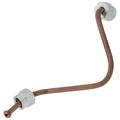



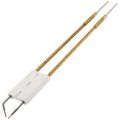


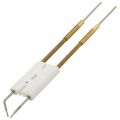


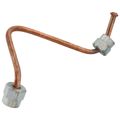


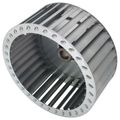


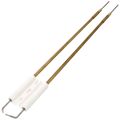







Riello burners and parts cover the oil and gas combustion equipment and replacement components Riello manufactures for residential and commercial heating systems, including boilers, furnaces, and water heaters that rely on a separate burner assembly rather than an integrated gas valve. Riello has manufactured burners for more than 100 years, and its 40 Series line of oil-fired burners is compatible with B100 biofuel, reflecting a broader industry shift toward biodiesel blends in oil heat applications. A burner assembly combines an ignition transformer, fuel pump or gas valve train, air damper, and nozzle or orifice into one unit that mounts to the boiler or furnace's combustion chamber, and replacement parts for these components are ordered individually as they wear rather than replacing the entire burner. Matching parts to the exact burner model, rather than the boiler or furnace it is installed on, is the starting point for ordering the correct component.
Subcategories
- Riello Oil Burners: Complete burner assemblies for oil-fired boilers and furnaces, including the 40 Series line built for residential and light commercial applications. These burners pair a fuel pump, ignition transformer, and nozzle assembly to atomize and ignite fuel oil inside the combustion chamber.
- Riello Gas Burners: Burner assemblies configured for natural gas or propane, used primarily in commercial and industrial boiler applications rather than typical residential furnaces. These units use a gas valve train and modulating air damper instead of the fuel pump found on oil burner models.
- Riello Burner Replacement Parts: Individual components such as nozzles, electrodes, ignition transformers, fuel pumps, and air tubes sold separately from the complete burner assembly. Replacing worn parts individually is standard practice for routine burner maintenance rather than swapping the entire unit.
- Riello Burner Control Boxes: Electronic controls that manage the ignition sequence, flame monitoring, and safety lockout functions for the burner. A control box replacement is typically driven by a lockout that recurs even after the flame sensor and electrodes have been cleaned or replaced.
Buying Guide
Ordering parts for a Riello burner starts with the burner's model and type plate data rather than the boiler or furnace nameplate, since one appliance model can ship with different burner variants depending on production year and fuel type. Confirming whether the installed unit is an oil or gas burner is the first step, since Riello Burners and Parts split into distinct oil and gas product lines that do not share fuel pumps, gas valve trains, or nozzle assemblies. For oil burners specifically, nozzle size and spray angle need to match both the burner model and the appliance's firing rate, since an incorrect nozzle changes the fuel-to-air ratio and can produce sooting or inefficient combustion even when every other component is correct. Ignition transformers and electrodes wear over time and are common failure points, so keeping the burner's model number on hand when ordering these smaller parts speeds up counter lookups compared to searching by symptom alone. Control box compatibility also matters: a control box built for one ignition sequence is not always interchangeable with a different Riello control box family, even when the physical mounting appears similar, so checking the full part number rather than assuming a fit based on burner series is worth the extra step. Technicians working on B100 biofuel-compatible installations should also confirm which specific parts, such as fuel pump seals and gaskets, are rated for biofuel compatibility rather than assuming every part in the burner is.
Frequently Asked Questions
How long has Riello been manufacturing burners?
Riello has manufactured burners for more than 100 years, with a product line that spans residential oil burners through large commercial and industrial gas burners. That long production history is part of why older Riello burner models still have parts support available.
Are Riello oil burners compatible with biodiesel blends?
Riello's 40 Series oil-fired burners are built to be compatible with B100 biofuel, reflecting the broader shift toward biodiesel blends in oil heat applications. Confirming which specific seals, gaskets, and fuel pump components in the burner are rated for that fuel before switching to a biofuel blend is still worth checking with the specific installed model.
Can Riello gas burner parts be used on an oil burner?
No, Riello's oil and gas burner lines use different fuel delivery components, including separate fuel pumps for oil and gas valve trains for gas, so parts are not interchangeable between the two fuel types. Ordering by the burner's specific model number rather than by the appliance's fuel type alone avoids this mismatch.
What causes a Riello burner to lock out repeatedly?
A repeated lockout usually points to a flame sensing problem, a fouled nozzle or electrode, or a failing control box, roughly in that order of likelihood for most service calls. Cleaning or replacing the flame sensor and electrodes first, before assuming the control box itself has failed, is the more cost-effective troubleshooting sequence.
How often should Riello burner nozzles be replaced?
Most oil burner nozzles wear enough to affect spray pattern and combustion efficiency within a single heating season of regular use, so replacing the nozzle as part of annual burner service is standard practice rather than waiting for a failure. Reusing a worn nozzle can cause sooting or inefficient combustion even when every other burner component is in good condition.
