


'/%3E%3C/svg%3E)
 --%3E %3Csvg version='1.1' id='Fill' xmlns='http://www.w3.org/2000/svg' xmlns:xlink='http://www.w3.org/1999/xlink' x='0px' y='0px' viewBox='0 0 100 100' enable-background='new 0 0 100 100' xml:space='preserve'%3E %3Cpath fill='%23F15C02' d='M79.44,0.95H20.56C9.78,0.95,0.95,9.78,0.95,20.56v58.87c0,10.79,8.82,19.61,19.61,19.61h58.87 c10.79,0,19.61-8.83,19.61-19.61V20.56C99.05,9.78,90.22,0.95,79.44,0.95z M65.38,58.24l9.38,29.58L49.69,69.78L24.5,87.82 l9.34-29.6L8.8,39.6l30.73-0.17c0,0,6.98-19.61,10-28.93c0.54,1.36,9.88,29.1,9.88,29.1H91.2L65.38,58.24z'/%3E %3C/svg%3E)
 --%3E %3Csvg version='1.1' id='Half' xmlns='http://www.w3.org/2000/svg' xmlns:xlink='http://www.w3.org/1999/xlink' x='0px' y='0px' viewBox='0 0 100 100' enable-background='new 0 0 100 100' xml:space='preserve'%3E %3Cg%3E %3Cpath fill='%23F15C02' d='M30.05,70.23l3.79-12.01L8.8,39.6l30.73-0.17c0,0,6.98-19.61,10-28.93c0.54,1.36,9.88,29.1,9.88,29.1h1.58 L93.71,7.18c-3.58-3.82-8.66-6.23-14.28-6.23H20.56C9.78,0.95,0.95,9.78,0.95,20.56v58.87c0,5.41,2.22,10.32,5.79,13.88 L30.05,70.23z'/%3E %3C/g%3E %3Cpath fill='%23FBC8B4' d='M93.71,7.18L60.98,39.6H91.2L65.38,58.24l9.38,29.58L49.69,69.78L24.5,87.82l5.55-17.59L6.75,93.32 c3.55,3.54,8.44,5.73,13.82,5.73h58.87c10.79,0,19.61-8.83,19.61-19.61V20.56C99.05,15.4,97.01,10.69,93.71,7.18z'/%3E %3C/svg%3E)
' fill='%23F15C02' d='M49 0C21.938 0 0 21.938 0 49s21.938 49 49 49 49-21.938 49-49S76.062 0 49 0m0 82.709a7.54 7.54 0 1 1 0-15.08 7.54 7.54 0 0 1 0 15.08m7.54-28.412a7.541 7.541 0 0 1-15.08 0V22.831a7.54 7.54 0 0 1 15.08 0v31.466z'/%3E%3C/svg%3E)
MANUALS (4)

Product Highlights


Description
Specs
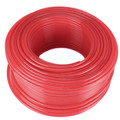
| Length (Feet): | 1000' |
|---|---|
| Size: | 1/2" |
| Color: | Red |
| Fitting System Compatibility: | PEX Compression Push Fit Clamp PEX Press Crimp |
| Material: | PEX |
| Grade: | PEX-b |
| Inside Diameter: | 0.475" |
| Tubing Type: | Oxygen Barrier |
| Outside Diameter: | 0.625" |
| Application: | Heating |
| Warranty: | 25 Year |


Questions?

Product Reviews
Most Liked Positive Review
 --%3E %3Csvg version='1.1' id='With-RB' xmlns='http://www.w3.org/2000/svg' xmlns:xlink='http://www.w3.org/1999/xlink' x='0px' y='0px' viewBox='0 0 100 100' enable-background='new 0 0 100 100' xml:space='preserve'%3E %3Cpath fill='%23FBC8B4' d='M79.44,0.95H20.56C9.78,0.95,0.95,9.78,0.95,20.56v58.87c0,10.79,8.82,19.61,19.61,19.61h58.87 c10.79,0,19.61-8.83,19.61-19.61V20.56C99.05,9.78,90.22,0.95,79.44,0.95z M65.38,58.24l9.38,29.58L49.69,69.78L24.5,87.82 l9.34-29.6L8.8,39.6l30.73-0.17c0,0,6.98-19.61,10-28.93c0.54,1.36,9.88,29.1,9.88,29.1H91.2L65.38,58.24z'/%3E %3C/svg%3E)
Decent pex tubing
Most Liked Negative Review
More brittle and difficult to handle than other pex I used
Has worked good for me. No complaints.

Not all Pex-b is the same
was easy to install in extrusions
SQUEAKY!! And difficult to work with
For the price it's worth it
Best price in the USA
Good price
O2 pex B
Good value
I would buy again and recommend to all friends
Product Q&A
102 QuestionsQ: can this bend easily for ceiling installation 16inch centers what reflector system do you recomend
Asked by Robert 12 years ago
Add your answer
I used ½” pex under a floor that had engineered floor trusses at 24” on center. I was able to have three lengths of tubing between trusses without much difficulty. Having a helper to watch as the pex plays off the reel and at loop/return ends is helpful to prevent kinking the product. I used homemade aluminum fins for spreading the heat.
The way it sits it is a bit stiff if you can put in in a big vat of hot water or a heat gun propane torch careful not to get it too hot were you need to make tight bends to soften it up and helps a lot. Mine was in the ground so cant help with the reflector.
Q: can i use Uponor PROPEX expanding tool with this product?
Asked by MATTHEW 12 years ago
Add your answer
Verified Reply- PexSupply StaffNo, ProPEX fittings only work with PEX-A grade tubing (Rifeng PEX carries the PEX-B grade).
Q: I want to use pex for hot water baseboard the rating is 180degrees but the boiler is usually set at 180 degrees for baseboard heat.With the boiler set at 180degrees will it affect the tubing
Asked by kevin 13 years ago
Add your answer
Verified Reply- PexSupply StaffRifeng oxygen-barrier PEX is rated to 180°F at 100 psi, so you should not have any problems.
This pex works very well for baseboard and fine at that temperature. I do this professionally and have installed thousands of feet of this and have never had a problem. Just used it to connect a wood boiler to air handlers and that is 190 degrees. Deepgreen Geothermal
i believe it should be fine but check with pex to be sure. i have used it in heating systems with a range of 160f - 220f with no problems. it could be that pex is understating the limit for liability concerns.
Hi Kevin: I used the 1" PEX tubing for heating which was rated for 200 degrees I run my Portage and Main Outdoor Furnace at 180degrees with no problems for a year now . I have had it up to 206 degrees for a short period with no problems except the tubing gets very soft. Fred
Q: I am wanting to use the 1inch pex from brand rifeng and was wondering if is ok to use in outdoor wood burner set ups. the pipe will be in the ground and using a taco pump that puts out 125psi. i dont see any specs for this product. also will sharkbite fittings work for this pex
Asked by dude 13 years ago
Add your answer
Verified Reply- PexSupply StaffRifeng PEX is only rated to 100 psi at 180°F fluid temperatures. It can handle higher pressures as temperatures drop. You should only use it if the system will operate within the tubing's specified temperature and pressure range.
This Pex can can handle 100psi @ 180 degree water temp .... It will be perfectly fine for a outdoor boiler setup at long as you insulate it very well to prevent freezing ..... As far as the taco pump running 125psi that might be the specs to the max psi it can handle , a hot water boiler runs at 12-15 psi anyways. Sent from my iPhone
We buried three coils of this same pipe, weren't sure about the sharkbite fittings so the pressure was left on for over a year with zero loss. !25 psi working pressure seems too ambitious especially since the woodburner heats in cycles and can get to temp. shutoff points.
125psi is rather high. You should only see about 25 to 30 psi under normal situations. JOHN LADD
Q: I'm running new baseboard heat in my home with two zones. I want to run the 3/4" oxygen barrier pex for the baseboard supply and return and where else needed. I will have 100ft to 125ft in one series with about 40ft of baseboard heat. The second will be 125ft to 150ft with about 35ft of baseboard heat. My question is will I have enough flow ratio to BTUs running PEX instead of copper? Will it be enough to heat my approximately 1000 sqft home?
Asked by Sean 13 years ago
Add your answer
3/4 pex will have the same flow characteristics as 3/4 copper and a substantially reduced heat loss from the exposed PEX so essentially I would expect it to perform as good or better than copper. Be certain to support it every other floor joist to help reduce the "telegraph" sag between hangers as the pex warms up. Sent on the Sprint® Now Network from my BlackBerry®
You should have more then enough heat. I use 3/4 and run 150feet. Just give it time to heat everything up.
3/4" will be fine as long as you are connecting all the baseboard of a zone "in series" (pipe feeds the first unit, out of the first unit into the second unit, out of the second unit into the next, out of the last unit to return to the boiler.) If you are running the units of a zone "in parallel", 3/4" is too small of a trunk. The distance causes no more heat loss than if you used copper. If you're still concerned, insulate the pipes. The volume contained in 3/4" copper is more than 3/4" pex, but the pex will still have sufficient heat for your amount of baseboard.
The nice thing about PEX vrs. Copper is that the majority of the heat escapes through your baseboard radiators instead of the pipe. So in laying out your baseboard, you need to calculate each room, and determine the size of each baseboard. Make sure to place them on an exterior wall under the largest window in each room.
Q: I am planning a new heating system and need help with what size pex pipe would be big enough to supply radiant heat to my radiators. 2000Sq ft. 75ft loops at the most cold climate.
Asked by steve 13 years ago
Add your answer
Yours is a complex question and there is simply not enough information to say with confidence which size PEX pipe you should use. If you are running separate lines to each radiator it is likely that the 1/2" PEX will be just fine. The 1/2 inch PEX will typically handle flows up to 1 gpm easily and this equates to about 10,000 Btu/hr at a 20 degree temperature drop. However, pipe size is best determined when you know the gpm and temperature requirement for each radiator. For Example some radiators are rated at a flow rate of 1 gpm and 180 degrees. If you intend to operate at a lower temperature using a condensing boiler the radiator Btu rating will be less than at 180 degrees and it may be necessary to circulate fluid at a higher rate to attain the needed Btus for that area. I have some radiator circuits that are provided with 3/4 size PEX pipe simply because they need flows of 4 gpm or may be on circuits with several radiators in a series. I know this does not answer your question but I hope it provides some background. Here is a link to an excellent on-line manual on Understanding Hydronics that might be of some assistance in planning your heating system. http://www.caleffi.us/caleffi/en_US/Site/Technical_library/Idraulica_magazine/args/detail/~Details~Magazines~magazine_detail_0000114/type/magazine/index.sdo
I use 3/4 pex Sent from my iPad
Q: Utility room is done (concrete poured) I will be poring he rest of the basement in 2 pours. 1 zone in the first pour (next to utility room). 2 zones in the second pour (20 ft from the utility room). A) Can i run feed lines to the zones in the second pour overhead vs buried in the first pour? B) I'm nervous about any "connection" other than hooking to a manifold. I would never burry a connection, but am I being too fussy about an additional above ground connection?
Asked by QuackAttack 13 years ago
Add your answer
Verified Reply- PexSupply StaffIt would be okay to feed lines overhead or through the wall back to the manifold. It is ideal not to have any connections between the supply and return of the manifold (especially in the slab), but PEX fittings are usually quite reliable.
I haven't had to make joints in concrete but I've heard repairs are butt spliced and poured over. If you are worried about the concrete corroding the bands and possibly leaking you could put heat shrink over the join as an added precaution. Hope this helps
Q: What type Pex tubing should I use? I have a 120 gallon stoned lined solar-closed loop hot water tank and a 42 gallon electric tank for domestic hot water. Can I hook up to these and what Pex tubing should I use?
Asked by will 13 years ago
Add your answer
Oxygen barrier
the O2 barrier pex should be dedicated for the "Closed Loop" system, because you never want oxygen to prematurely corrode the components in your solar system. As far as the domestic hot water, typical pex rated for "Potable" water is used.I would recommend using 3/4" for both projects. ( which is also much cheaper in price)
The closed loop to the solar panel should be pex with an oxygen barrier as long as it contains water only. If there is any other content, glycol, or similar, then pex won't handle the higher heat but water alone is fine. The domestic water can use any pex, including oxygen barrier.
The type of PEX you use depends on how you choose to use the hot water in the tanks. If this is for domestic hot water distribution to bathrooms; tubs, sinks, etc. then the plumbing inspector will be looking for an NSF indication on the tube wall to show that it is approved for domestic hot water distribution. If however you are using it for radiant heat then the oxygen barrier tube you are showing in the question is quite adequate. A word of caution.....beware any issues with solar stagnation. A panel that has no circulation during a power outage can easily rise in temperature to well above the boiling point and exceed the thermal and pressure limitations of pex tube. Any connections between a solar panel and a storage tank need to be with copper or a tube material that can tolerate these super high temperatures.
Q: I understand my loops should not exceed 300 ft, what if I have two loops on one zone, first loop is 300 ft second loop is 150 ft. How would I make this work? Also if I have one loop on one zone this loop can be any length under 300 ft right?
Asked by Pat 13 years ago
Add your answer
Verified Reply- PexSupply StaffThe 300-foot maximum is a rule-of-thumb with 1/2" PEX. There are systems in which shorter maximums should be observed and others in which loops longer than 300' would be okay. When loops have widely varying lengths, you should use a manifold with balancing valves to regulate the flow to each line.
Q: What is the best way to repair a kink when installing rifeng in floor radiant applacation?
Asked by pat 13 years ago
Add your answer
Verified Reply- PexSupply StaffHeating the tubing can help, but you may need to insert a repair coupling when using PEX-B grade tubing.
I use a "hot air gun". Straighten the kink area and carefully heat the full circumference of the tube at the kink. The tube will swell slightly as it warms. Once it us uniform and no longer shows any indentation of the kink remove the heat gun and let it cool slowly. This will allow the PEX tube to reassume its original molecular structure with no distortion or weakness that was created by the original kink.
using a heat gun or torch, gently warm up the kinked area (Without melting it!) the cross linked properties of pex will return it to its original state. Allow it to cool naturally before further installation.