



Rinnai Tankless Water Heater Parts

 --%3E %3Csvg version='1.1' id='No-RB' xmlns='http://www.w3.org/2000/svg' xmlns:xlink='http://www.w3.org/1999/xlink' x='0px' y='0px' viewBox='0 0 100 100' enable-background='new 0 0 100 100' xml:space='preserve'%3E %3Cpath fill='%23CECECE' d='M79.44,0.95H20.56C9.78,0.95,0.95,9.78,0.95,20.56v58.87c0,10.79,8.82,19.61,19.61,19.61h58.87 c10.79,0,19.61-8.83,19.61-19.61V20.56C99.05,9.78,90.22,0.95,79.44,0.95z M65.38,58.24l9.38,29.58L49.69,69.78L24.5,87.82 l9.34-29.6L8.8,39.6l30.73-0.17c0,0,6.98-19.61,10-28.93c0.54,1.36,9.88,29.1,9.88,29.1H91.2L65.38,58.24z'/%3E %3C/svg%3E)


 --%3E %3Csvg version='1.1' id='Fill' xmlns='http://www.w3.org/2000/svg' xmlns:xlink='http://www.w3.org/1999/xlink' x='0px' y='0px' viewBox='0 0 100 100' enable-background='new 0 0 100 100' xml:space='preserve'%3E %3Cpath fill='%23F15C02' d='M79.44,0.95H20.56C9.78,0.95,0.95,9.78,0.95,20.56v58.87c0,10.79,8.82,19.61,19.61,19.61h58.87 c10.79,0,19.61-8.83,19.61-19.61V20.56C99.05,9.78,90.22,0.95,79.44,0.95z M65.38,58.24l9.38,29.58L49.69,69.78L24.5,87.82 l9.34-29.6L8.8,39.6l30.73-0.17c0,0,6.98-19.61,10-28.93c0.54,1.36,9.88,29.1,9.88,29.1H91.2L65.38,58.24z'/%3E %3C/svg%3E)


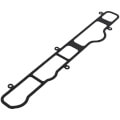
Rinnai tankless water heater parts cover the components that keep a condensing or non-condensing tankless unit running after the warranty call is over, from heat exchangers and igniters to flow sensors and PC boards. A tankless system has more electronic controls than a standard tank, so troubleshooting often comes down to identifying the failed sensor or board rather than replacing a single simple part like a thermocouple. Rinnai publishes installation manuals, spec sheets, and technical bulletins for its units, which service techs use to match a diagnostic code to the specific part before ordering. Because tankless units are less forgiving of hard water and scale buildup than tank-style heaters, parts like the heat exchanger and flow sensor tend to see more wear-driven replacement over the life of the unit. Stocking the common failure parts for the Rinnai models a shop services most often cuts a return trip down to a single visit.
Subcategories
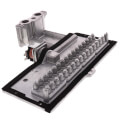
- Heat Exchangers: The heat exchanger is the core component that transfers burner heat into the water passing through the unit, and it is also the part most affected by scale buildup in hard water areas. Replacement is usually the highest cost repair on a tankless unit, so techs confirm scale damage or a leak before ordering rather than assuming the exchanger is the problem. Annual descaling reduces how often this part needs replacement. A failed heat exchanger commonly shows up as a specific diagnostic code rather than a simple no-heat complaint.
- Igniters and Flame Rods: Igniters start the burner and flame rods confirm the flame is present once lit, and either one failing can produce an ignition-failure code on the unit's display. These are lower-cost, faster replacement parts compared to a heat exchanger or PC board, which makes them a reasonable first check on an ignition complaint. Flame rods can also fail from carbon buildup rather than an actual electrical failure, so cleaning is sometimes enough to resolve the issue. Techs typically stock these for same-day service calls.
- PC Boards and Control Boards: The PC board manages ignition timing, modulation, and safety shutoffs, and a failure here can produce a wide range of error codes depending on which function is affected. Boards are model-specific, so confirming the exact Rinnai model and revision before ordering avoids a mismatch. Board failures are less common than sensor or igniter issues but tend to take the unit fully offline when they happen. Power surges and voltage irregularities are common contributors to board failure in the field.
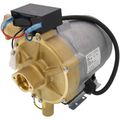
- Flow Sensors: The flow sensor detects water movement through the unit and tells the control board when to fire the burner, so a fouled or failed sensor can cause the unit to not ignite even with good water flow. Sediment and scale are common causes of flow sensor issues, particularly in areas without a water softener or pre-filter. This is a relatively low-cost part and a common first-check item on a no-ignition complaint after confirming gas supply. Replacement is usually straightforward compared to a heat exchanger or board swap.
Buying Guide
Confirm the exact model and, where possible, the serial number or manufacture date range before ordering any Rinnai tankless water heater parts. Rinnai has updated internal components across model revisions, and a part that fits one production run may not fit an earlier or later one even under the same model number.
Match the diagnostic code on the unit's display to the likely part before assuming which component failed. Ignition codes usually point to the igniter, flame rod, or gas valve, while flow-related codes point to the flow sensor or a restriction in the water path, and heat exchanger codes are usually the most expensive to resolve.
For recurring service accounts, stocking the common wear parts for Rinnai Tankless Water Heater Parts, such as flow sensors, igniters, and flame rods, cuts down on the number of trips needed to close out a routine service call, since these fail more often than PC boards or heat exchangers.
Factor in local water hardness when deciding how often to expect heat exchanger or flow sensor service. Properties without a softener or scale filter see more frequent flow and heat exchanger issues, which is worth flagging to the customer as a maintenance item rather than a one-time repair.
Keep a couple of PC boards on hand only if servicing a high volume of a specific model, since boards are the most model-specific and highest cost part in the lineup and carry the most risk of becoming dead stock if the model mix changes.
Frequently Asked Questions
What is the most common part that fails on a Rinnai tankless water heater?
Igniters, flame rods, and flow sensors tend to fail more often than heat exchangers or PC boards, largely because they are more exposed to normal wear and mineral buildup. Heat exchanger failures happen less frequently but usually cost more to resolve when they do occur.
Does hard water affect which Rinnai parts fail most?
Yes, scale buildup from hard water is a major contributor to flow sensor and heat exchanger issues on tankless units. Annual descaling and, where possible, a water softener or scale filter reduce how often those specific parts need replacement.
How do I know which PC board fits a specific Rinnai unit?
Confirm the exact model number and, when available, the serial number or manufacture date, since internal components including PC boards can change across production revisions of the same model. Ordering by model number alone without checking the revision can lead to a board that does not fit or function correctly.
Can a flame rod be cleaned instead of replaced?
In many cases yes, since flame rod failures are often caused by carbon buildup rather than an actual electrical fault. Cleaning the rod is a reasonable first step before ordering a replacement, especially on a unit with otherwise low run hours.
What diagnostic information should be gathered before ordering a heat exchanger replacement?
Confirm the specific error code displayed, rule out a simple flow restriction or sensor issue first, and inspect for visible scale or leakage at the exchanger itself. Heat exchangers are the highest cost part in the lineup, so confirming the failure before ordering avoids an unnecessary return trip.
