




Filters
SORT
Product Availability –
Voltage –
Wattage –
Review Score –
 --%3E %3Csvg version='1.1' id='Fill' xmlns='http://www.w3.org/2000/svg' xmlns:xlink='http://www.w3.org/1999/xlink' x='0px' y='0px' viewBox='0 0 100 100' enable-background='new 0 0 100 100' xml:space='preserve'%3E %3Cpath fill='%23F15C02' d='M79.44,0.95H20.56C9.78,0.95,0.95,9.78,0.95,20.56v58.87c0,10.79,8.82,19.61,19.61,19.61h58.87 c10.79,0,19.61-8.83,19.61-19.61V20.56C99.05,9.78,90.22,0.95,79.44,0.95z M65.38,58.24l9.38,29.58L49.69,69.78L24.5,87.82 l9.34-29.6L8.8,39.6l30.73-0.17c0,0,6.98-19.61,10-28.93c0.54,1.36,9.88,29.1,9.88,29.1H91.2L65.38,58.24z'/%3E %3C/svg%3E)
 --%3E %3Csvg version='1.1' id='With-RB' xmlns='http://www.w3.org/2000/svg' xmlns:xlink='http://www.w3.org/1999/xlink' x='0px' y='0px' viewBox='0 0 100 100' enable-background='new 0 0 100 100' xml:space='preserve'%3E %3Cpath fill='%23FBC8B4' d='M79.44,0.95H20.56C9.78,0.95,0.95,9.78,0.95,20.56v58.87c0,10.79,8.82,19.61,19.61,19.61h58.87 c10.79,0,19.61-8.83,19.61-19.61V20.56C99.05,9.78,90.22,0.95,79.44,0.95z M65.38,58.24l9.38,29.58L49.69,69.78L24.5,87.82 l9.34-29.6L8.8,39.6l30.73-0.17c0,0,6.98-19.61,10-28.93c0.54,1.36,9.88,29.1,9.88,29.1H91.2L65.38,58.24z'/%3E %3C/svg%3E)
Price Range –
Screw-In Elements (Residential)

 --%3E %3Csvg version='1.1' id='No-RB' xmlns='http://www.w3.org/2000/svg' xmlns:xlink='http://www.w3.org/1999/xlink' x='0px' y='0px' viewBox='0 0 100 100' enable-background='new 0 0 100 100' xml:space='preserve'%3E %3Cpath fill='%23CECECE' d='M79.44,0.95H20.56C9.78,0.95,0.95,9.78,0.95,20.56v58.87c0,10.79,8.82,19.61,19.61,19.61h58.87 c10.79,0,19.61-8.83,19.61-19.61V20.56C99.05,9.78,90.22,0.95,79.44,0.95z M65.38,58.24l9.38,29.58L49.69,69.78L24.5,87.82 l9.34-29.6L8.8,39.6l30.73-0.17c0,0,6.98-19.61,10-28.93c0.54,1.36,9.88,29.1,9.88,29.1H91.2L65.38,58.24z'/%3E %3C/svg%3E)
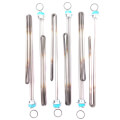
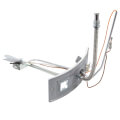
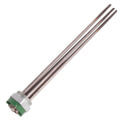
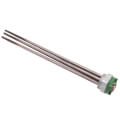

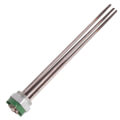
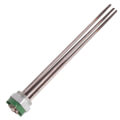
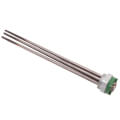
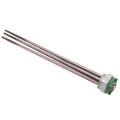
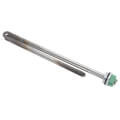
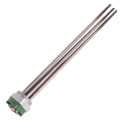
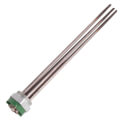
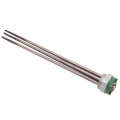
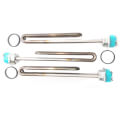
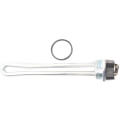
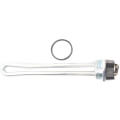
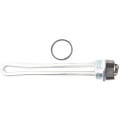
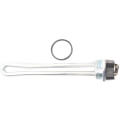
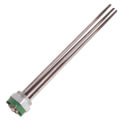
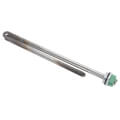
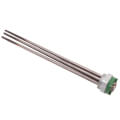
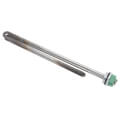
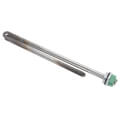
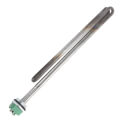
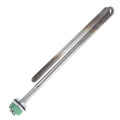
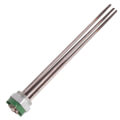
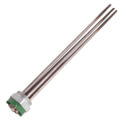
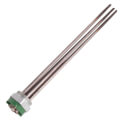
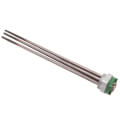
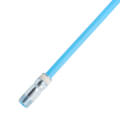
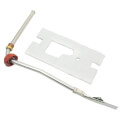
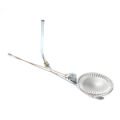
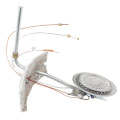
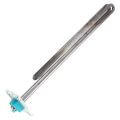

Screw-In Elements (Residential) are replacement heating elements for electric water heaters, threading directly into the tank to restore hot water production after a failure. The traditional residential heating element is rated at 4500 watts and 240 volts, making it the most common replacement spec technicians stock for standard single-family water heaters. Screw-in style elements are the more common design in current residential tanks, though a four-bolt flange style also exists on some models. Elements are manufactured across a range of wattages and voltages to match different tank sizes and household hot water demand, so matching the replacement to the data plate on the existing unit is critical. Plumbers and service techs use these on routine water heater repairs when a customer reports no hot water or inconsistent heating. Because a mismatched wattage or voltage element can damage the tank or trip breakers repeatedly, checking the existing element's rating before replacement keeps the repair straightforward and avoids a second trip.
Subcategories
- Standard Wattage Elements: Standard wattage elements cover the most common residential replacement spec, with 4500 watts at 240 volts representing the traditional residential heating element rating. Techs stock this size most often since it matches the majority of standard single-family water heater tanks. These elements are the default replacement when the data plate confirms a 240-volt, standard-density tank. Matching wattage exactly to the original element avoids overloading the circuit or underheating the tank.
- Low Watt Density Elements: Low watt density elements spread the same wattage output over a larger heating surface area, which reduces the rate of mineral scale buildup compared to standard density elements. Technicians recommend this style in areas with hard water, where scale buildup shortens standard element life. The lower density design helps extend service life between replacements in mineral-heavy water conditions. These elements still come in common residential voltage and wattage ratings to match existing tanks.
- 240-Volt Elements: 240-volt elements are the standard voltage used in the majority of residential electric water heaters. The traditional configuration pairs 240 volts with a 4500-watt rating, though other wattages are available at this voltage to match different tank sizes. Techs confirm voltage on the data plate before replacement, since installing the wrong voltage element can cause improper heating or damage. This voltage class covers most single-family home installations.
- 120-Volt Elements: 120-volt elements are used in smaller water heaters, point-of-use units, and installations where a dedicated 240-volt circuit isn't available. These elements are wired differently from 240-volt models and aren't interchangeable without confirming the tank's rated voltage. Techs working on undersink or small point-of-use heaters are most likely to encounter this voltage class. Checking the existing element's voltage rating before ordering a replacement prevents a mismatched install.
Buying Guide
Always start with the data plate on the existing water heater, since it lists the rated voltage and maximum wattage input for that specific tank. Screw-In Elements (Residential) must match both the voltage and wattage of the element being replaced, because installing a mismatched element can damage the tank, trip breakers repeatedly, or fail to heat water properly. Most residential tanks run on 240 volts, with the traditional element rated at 4500 watts, but smaller or point-of-use tanks may use 120-volt elements at lower wattages instead. Confirm the thread style matches the tank's element port, since screw-in elements are the more common style found in current residential tanks compared to the four-bolt flange design used on some other models. In areas with hard water, a low watt density element is worth considering over a standard density unit, since spreading the wattage over a larger surface slows mineral scale accumulation and can extend service life between failures. Techs should also check whether the tank uses matching upper and lower elements or a single element configuration before ordering replacement parts. Keeping common wattage and voltage combinations stocked on the truck, particularly the standard 4500-watt, 240-volt spec, covers the majority of residential service calls without a return trip to the supply house.
Frequently Asked Questions
What wattage is a standard residential water heater element?
The traditional residential heating element is rated at 4500 watts and 240 volts, covering most standard single-family electric water heater tanks. Other wattages exist for different tank sizes and hot water demand levels. Checking the data plate on the existing tank confirms the exact rating needed for replacement.
Can a 120-volt element be installed in place of a 240-volt element?
A 120-volt element is not a direct substitute for a 240-volt element, since the two are rated for different circuits and wired differently. Installing the wrong voltage element can result in improper heating or electrical issues. The replacement element should always match the voltage listed on the tank's data plate.
What's the benefit of a low watt density element?
A low watt density element spreads the same wattage output over a larger surface area, which slows mineral scale buildup compared to a standard density element. This makes it a better option in areas with hard water where scale shortens element life. It still needs to match the tank's rated voltage and wattage like any other replacement element.
Are all screw-in water heater elements interchangeable?
Screw-in elements need to match the voltage and wattage of the original element to work correctly in a given tank. Two screw-in elements with different wattage or voltage ratings aren't interchangeable even if the thread style matches. Confirming specs against the data plate before purchase avoids installing the wrong part.
How do I know if my water heater uses a screw-in or flange-style element?
Screw-in elements thread directly into the tank, while flange-style elements bolt on using a four-bolt pattern. Screw-in style is the more common design found in current residential water heaters, though flange style still appears on some models. Checking the existing element's mounting style before ordering a replacement confirms the correct part type.
