




Shower Pans
 --%3E %3Csvg version='1.1' id='No-RB' xmlns='http://www.w3.org/2000/svg' xmlns:xlink='http://www.w3.org/1999/xlink' x='0px' y='0px' viewBox='0 0 100 100' enable-background='new 0 0 100 100' xml:space='preserve'%3E %3Cpath fill='%23CECECE' d='M79.44,0.95H20.56C9.78,0.95,0.95,9.78,0.95,20.56v58.87c0,10.79,8.82,19.61,19.61,19.61h58.87 c10.79,0,19.61-8.83,19.61-19.61V20.56C99.05,9.78,90.22,0.95,79.44,0.95z M65.38,58.24l9.38,29.58L49.69,69.78L24.5,87.82 l9.34-29.6L8.8,39.6l30.73-0.17c0,0,6.98-19.61,10-28.93c0.54,1.36,9.88,29.1,9.88,29.1H91.2L65.38,58.24z'/%3E %3C/svg%3E)



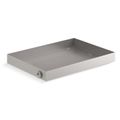
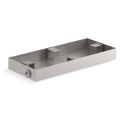

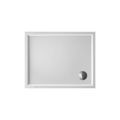
Shower pans are the waterproof base that supports a shower's walls and directs water toward the drain, making them one of the most critical components in a new shower build or bathroom remodel. Plumbers and remodeling contractors install them before any wall surround or tile goes up, since a properly sloped pan is what keeps water moving to the drain instead of pooling at the floor. Most pans are molded in one piece from acrylic or fiberglass, while tile-ready versions are built as a mortar or foam base meant to be finished with ceramic or porcelain tile on site. Sizes cover standard alcove openings as well as corner and neo-angle configurations, and drain placement, centered or off-center, is one of the first specs to confirm against the rough-in before ordering. Getting the pan and drain location right at the start of the job avoids a costly tear-out later, since the pan sits beneath finished walls and flooring that are far harder to access once the job is closed up.
Subcategories
- Tile-Ready Shower Pans: Tile-ready pans are mortar or foam bases designed to be finished with ceramic or porcelain tile rather than sold with a finished surface. Tile and stone contractors favor them for custom showers where the finished look needs to match the rest of the bathroom. Most come pre-sloped toward a center or linear drain location. They pair with a separate waterproofing membrane installed over the mortar bed before tile goes down.
- Acrylic and Fiberglass Shower Pans: These are one-piece molded pans with a finished, ready-to-use surface that doesn't require tile work. Remodeling contractors use them on faster turnaround jobs where a tiled base isn't in the budget or scope. Acrylic pans generally hold up better to scratching than fiberglass over years of use. Installation typically involves setting the pan on a mortar bed for support before securing the walls above it.
- Neo-Angle Shower Pans: Neo-angle pans are cut with an angled front corner instead of a straight or square edge, letting a shower fit into a corner of a small bathroom. They're common in tight remodels where a standard rectangular footprint won't clear the door swing or vanity. The angled front typically pairs with a matching neo-angle door and wall kit sold separately.
- Curbless Shower Pans: Curbless, or barrier-free, pans sit flush with the surrounding floor instead of behind a raised threshold, relying on a linear drain and a gentle slope to contain water. Contractors building accessible or aging-in-place bathrooms specify them for wheelchair and walker clearance. They require more careful subfloor planning than a standard curbed pan since there's no raised edge to catch a shallow installation.
- Shower Pan Liners: Pan liners are a flexible waterproofing membrane installed under a mortar bed rather than a rigid molded base, used mainly in custom tile-ready showers. They're sold by the roll and cut to fit the shower footprint on site. Tile setters fold and seal the liner up the walls before the mortar bed and tile go in, creating the actual waterproof barrier for the whole assembly.
Buying Guide
Start by confirming the rough-in dimensions and drain location against the pan's spec sheet before ordering, since a mismatch here is the most common reason a pan gets returned or reworked mid-job. Standard rectangular and square footprints cover most alcove showers, but corner layouts, small bathrooms, or accessibility requirements often call for a neo-angle or curbless pan instead. Shower pans also split into two installation paths: a finished acrylic or fiberglass pan that's ready to use out of the box, or a tile-ready base that needs a separate waterproofing membrane and tile finish. The finished option moves faster on the job site, while the tile-ready option gives more control over the final look and matches custom tile work elsewhere in the bathroom. Drain location matters just as much as footprint. A center drain works for most standard layouts, but off-center and linear drain configurations are often necessary when the existing plumbing can't be relocated without breaking into the subfloor. For accessible installations, a curbless pan with a linear drain generally simplifies the transition from bathroom floor to shower floor better than a curbed design retrofitted after the fact. Whichever path fits the job, confirm the pan's slope direction and threshold height match the surround and door being installed with it, since those parts are sold separately and aren't always interchangeable across pan styles.
Frequently Asked Questions
What's the difference between a tile-ready and a finished shower pan?
A finished pan, usually acrylic or fiberglass, comes ready to install with no additional surface work needed. A tile-ready pan is a mortar or foam base that still needs a waterproofing membrane and a tile finish applied on site before it's usable.
Can a shower pan be installed without a mortar bed underneath it?
Most manufacturers call for a mortar bed under a molded pan to support it evenly and prevent flexing that can crack the pan or break the seal at the drain over time. Skipping this step is a common cause of comeback calls on remodels.
How do I choose between a center drain and an off-center drain pan?
The choice comes down to where the existing drain rough-in sits. Matching the pan to the existing drain location avoids breaking into the subfloor to relocate plumbing, which adds significant time and cost to a remodel.
Are curbless shower pans harder to install than curbed pans?
Curbless pans generally need more careful subfloor prep since there's no raised threshold to contain water, so the slope and drain placement have to be precise. A linear drain paired with the pan makes this easier to get right on a barrier-free layout.
What size shower pan fits a standard alcove opening?
Standard alcove pans are sized to match common rough-in openings in three-wall shower stalls, but exact dimensions vary by manufacturer. Measuring the existing framed opening before ordering avoids a pan that's too large or leaves gaps at the walls.
