



'/%3E%3C/svg%3E)
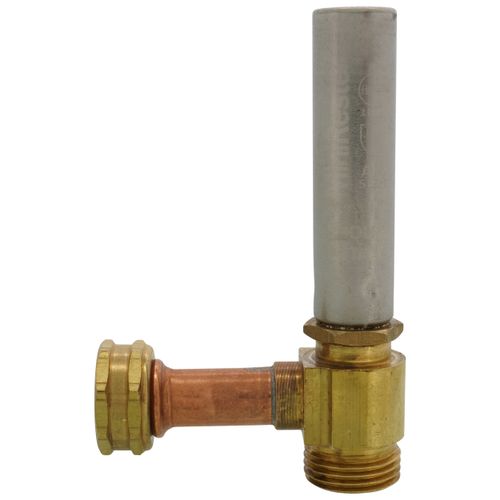
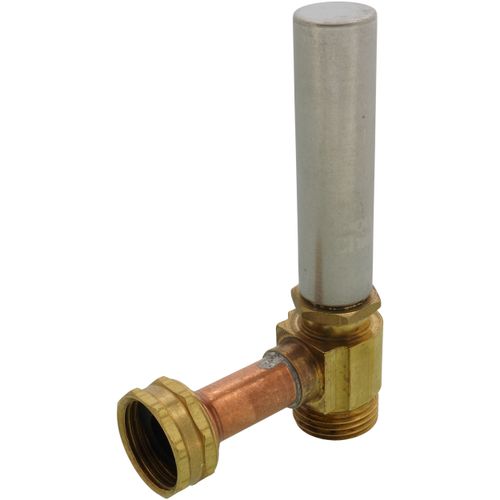
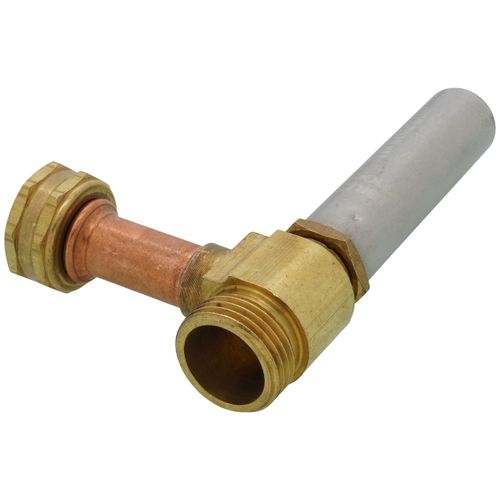
Mini-Rester Water Hammer Arrestor - 3/4" F Swivel Hose Thread x 3/4" M Hose Thread Tee
 --%3E %3Csvg version='1.1' id='Fill' xmlns='http://www.w3.org/2000/svg' xmlns:xlink='http://www.w3.org/1999/xlink' x='0px' y='0px' viewBox='0 0 100 100' enable-background='new 0 0 100 100' xml:space='preserve'%3E %3Cpath fill='%23F15C02' d='M79.44,0.95H20.56C9.78,0.95,0.95,9.78,0.95,20.56v58.87c0,10.79,8.82,19.61,19.61,19.61h58.87 c10.79,0,19.61-8.83,19.61-19.61V20.56C99.05,9.78,90.22,0.95,79.44,0.95z M65.38,58.24l9.38,29.58L49.69,69.78L24.5,87.82 l9.34-29.6L8.8,39.6l30.73-0.17c0,0,6.98-19.61,10-28.93c0.54,1.36,9.88,29.1,9.88,29.1H91.2L65.38,58.24z'/%3E %3C/svg%3E)
 --%3E %3Csvg version='1.1' id='Half' xmlns='http://www.w3.org/2000/svg' xmlns:xlink='http://www.w3.org/1999/xlink' x='0px' y='0px' viewBox='0 0 100 100' enable-background='new 0 0 100 100' xml:space='preserve'%3E %3Cg%3E %3Cpath fill='%23F15C02' d='M30.05,70.23l3.79-12.01L8.8,39.6l30.73-0.17c0,0,6.98-19.61,10-28.93c0.54,1.36,9.88,29.1,9.88,29.1h1.58 L93.71,7.18c-3.58-3.82-8.66-6.23-14.28-6.23H20.56C9.78,0.95,0.95,9.78,0.95,20.56v58.87c0,5.41,2.22,10.32,5.79,13.88 L30.05,70.23z'/%3E %3C/g%3E %3Cpath fill='%23FBC8B4' d='M93.71,7.18L60.98,39.6H91.2L65.38,58.24l9.38,29.58L49.69,69.78L24.5,87.82l5.55-17.59L6.75,93.32 c3.55,3.54,8.44,5.73,13.82,5.73h58.87c10.79,0,19.61-8.83,19.61-19.61V20.56C99.05,15.4,97.01,10.69,93.71,7.18z'/%3E %3C/svg%3E)


MANUALS (4)
Product Highlights


Description
Features:
- Full slip tee sweats in-line on 1/2" CTS near problem valve or fixture
- Hose tee arresters install on washing machine supply valves or directly to washing machine
- All Mini-Resters are AA size
- All Mini-Resters are approved for sealed wall installations with no access panel required
- May be installed at any angle
Materials:
- Arrester body: 304 stainless steel
- Piston: polypropylene with two EPDM o-rings
- Tee body: UNS C36000 machined brass
Specs
| Body Type: | Tee |
|---|---|
| Application: | Plumbing |
| Size: | 3/4" |
| Connection Type: | FNPT Hose x MNPT Hose |
| Connection Method: | Threaded |
| Max. Working Pressure: | 350 psi |
| Max Temp (F): | 250°F |
| Material: | Brass Stainless Steel |


Questions?
Compare Similar Products
You May Also Need
Product Reviews
Most Liked Positive Review
Excellent, easy to install and solved the problem
Most Liked Negative Review
 --%3E %3Csvg version='1.1' id='With-RB' xmlns='http://www.w3.org/2000/svg' xmlns:xlink='http://www.w3.org/1999/xlink' x='0px' y='0px' viewBox='0 0 100 100' enable-background='new 0 0 100 100' xml:space='preserve'%3E %3Cpath fill='%23FBC8B4' d='M79.44,0.95H20.56C9.78,0.95,0.95,9.78,0.95,20.56v58.87c0,10.79,8.82,19.61,19.61,19.61h58.87 c10.79,0,19.61-8.83,19.61-19.61V20.56C99.05,9.78,90.22,0.95,79.44,0.95z M65.38,58.24l9.38,29.58L49.69,69.78L24.5,87.82 l9.34-29.6L8.8,39.6l30.73-0.17c0,0,6.98-19.61,10-28.93c0.54,1.36,9.88,29.1,9.88,29.1H91.2L65.38,58.24z'/%3E %3C/svg%3E)
This water hammer arrestor was helpful.
No more hammering
Water Hammer Arrestor
Excellent product and purchasing experience
YES
Stopped the pipes from banging
Reduces hammer at washing machine.
Didn't live up to the hype
I would buy again
excellent
Nope
Product Q&A
11 QuestionsQ: does the restor have to be perfectly vertical to operate properly?
Asked by Guy 9 years ago
Add your answer
Verified Reply- MarissaSioux Chief Mfg. currently instructs that their arresters be installed "horizontally, vertically or anywhere in between." It's recommended that this be installed vertically but can also work with any orientation.
Q: Why is this product full of lead and not to be used on water lines for drinking yet other Mini-resters are lead-free? The water line that fills my toilet is the same line that runs to the rest of the houses drinking water.
Asked by John 11 years ago
Add your answer
Verified Reply- SupplyHouse StaffThis item does not need to be lead free, as it is designed to connect to a toilet. Branching off of the main line to the toilet will not effect the water supply to other fixtures.
The lead-free for potable water thing is fairly new so it will take time for leaded plumbing items to be phased out. But they may keep some leaded items due to ease of manufacturing and cost. Normally, for best results, the arrestor should be installed as close to the valve or appliance as possible. So for ice makers, refrigerators, and sinks, one would install a lead-free arrestor on the supply line. Leaded arresters can be used for toilets, washing machines, and showers if access allows. Some people like to install an arrestor along the main water line, which is also effective (I did) but this must be lead-free.
Q: When I turn off the water supply at the top of the hot water heater the air hammer in the house stops. I want to try one of these...does in go on the hot water or cold water hose or on both? I get air hammer using both hot and cold water in the bathroom.
Asked by Diane 11 years ago
Add your answer
I installed on both hot and cold to conform to building code on a finished basement. No issues with water hammer.
I installed the Mini-Rester Water Hammer Arrestor - 3/4" F Swivel Hose Thread x 3/4" M Hose Thread Tee between the shut off valves and the hoses leading to my washing machine. It improved but did not eliminate the water hammer caused by the rapid closing of the valves within the washing machine. It is extremely doubtful an arrestor installed at this location would have any effect on water hammer caused by valves in another location like the bathroom. An arrestor should be installed as close as possible to the valves causing the problem. The reviews on the supply house website listed under the above unit are actually for all of the various models they sell, most of which require a reasonable amount of plumbing ability to install. Water hammer is a banging noise that lasts for just a few seconds after rapidly closing a water valve. I'm not sure that is what you have because turning off a valve by the water heater would prevent water hammer in a hot water pipe, but you couldn't turn it off fast enough to stop water hammer. Just a wild guess on my part, but if you have a combination tub/shower and when using it you hear an annoying, almost whistling sound, it is not water hammer. The problem is in the diverter in the spout that switches the water flow from the tub spout to the shower head. If you hear this noise from a faucet at the sink, it is from a loose washer in the faucet.
You probably need a whole house arrestor. You should talk to a plumber.
If you get the hammer when shutting off either the hot or cold water at the sink, you want an arrestor or both supplies - at the sink. But this particular model would be used on a washer machine connection. These hose-type connectors are not what you usually find on a bathroom fixture. You probably want another model.
You will need it on both hot and cold. I used this model on my washing machine to stop the banging. The one pictured has the wrong fittings for bathroom faucets.
Diane- I have not experience water hammer as bad as you are describing. It might a good idea to get your water pressure checked. Inexpensive water pressure gauges that hook up to a garden hose are sold on eBay if you do not want to hire a plumber. My water pressure was about 100 psi until I installed a water regulator by the main shut off, which brought it down to 40 psi. If you have access to to any pipes that seem to move freely or vibrate, try to brace or support if possible. To answer your question: The mini-rester can be install on both hot or cold, and just about anywhere. However, for best results, try to install the unit as close to the valve/faucet as possible. They make other arrestors that screw onto the shut-off valves for sink, washing machines, dishwashers & ice makers that work well, I have a few of those. I also has a larger arrestor that is installed on my main water line before the hot water heater, which is also an option. I hope this helps.
Q: I don't know the 'plumbing' words, 3/8" O.D., in the description of this arrestor "Mini-Rester Water Hammer Arrestor - 3/8" O.D. Compression x 3/8" O.D. Female Compression Tee". I plan on installing these, on both hot and cold feeds to the bathroom sinks, the kitchen sink and the laundry tub. To do this I presume that all I have to do is to undo the pipe on the sink side of the shutoff valve (is this the 3/8" O.D. size the arrestor fits?), cut a piece off the end of the pipe equal to the size of the arrestor, put a new brass collar (olive!?) onto the pipe and tighten everything up. Is this the correct arrestor for my purposes?
Asked by Ed 12 years ago
Add your answer
Ed, From your description and assuming you have a residential home, you should be OK. O.D. is commonly understood in industry as Outside Diameter, and I.D. is Inside Diameter. The correct size is critical if you want an easy installation, otherwise you’ll end up making a trip to the hardware store for adapters. Usually ¼” OD is used on ice makers. 3/8” OD will fit most shutoff valves for kitchen sinks, toilets, and bathroom sinks. ½” OD is used on larger applications. Your installation instructions look good. The silver threaded end will fit the shutoff valve and the brass end will connect to the supply line. The brass end should come with a new compression collar. Note: the flexible plastic and braided supply lines will easy attach without any compression collars. Good luck, Steve T.
Q: CAN THE ARRESTOR BE INSTALLED AFTER THE ZONE VALVE OR MUST IT GO BETWEEN THE SUPPLY AND THE VALVE?
Asked by FRED 13 years ago
Add your answer
Assuming the sudden closing of the zone valve is causing your water hammer, it must be installed on the supply side of the valve.
I installed this item after the valve and it works perfectly.
Zone valve? Are you installing this in a heating system? I installed them close to the taps serving my clothes washer to eliminate the hammer created by the solenoid fill valves closing rapidly.
I apologize in advance because this might be a lengthy response. Note: I am not a plumber but do have plenty of plumbing experience, and have installed a few Sioux Chief Arrestors. Simple answer: Yes, these arrestors can be installed about anywhere along the supply. However, they are most effective when installed as close as to the valve as possible (within reason). Usually by the appliance shut off valve. Since most of the blunt force of water hammer is on the valve when closed, the arrestor acts as a shock absorber. These aren't really necessary for manual valve items (faucets, toilets, showers, etc.). But recommended for appliances that have electronic valves (ice makers, dishwashers, clothes washers, etc.) since they close the flow of water so fast. Water hammer can damage these valves. I have an ice maker that the water valve would go bad at least once a year due to a combination of high water pressure and water hammer. Not a big deal to change, but sometimes when the valve went bad, it would start to leak; causing more trouble. No more problems now that I installed a water regulator and arrestor. I actually have a larger Sioux Chief arrestor installed after the regulator, and mini-arrestors installed for both the ice maker and dishwasher. I hope this answers your question, feel free to get a 2nd opinion by a professional. There's also a lot of good info online. Regards, Steve
Q: Im confused. I want to install this in a 3/4" copper line yet there is discussion about 1/2" pipe! Will this work since the arrestor will be installed in front of a water powered sump pump that requires the 3/4" supply line?
Asked by Geno 14 years ago
Add your answer
Verified Reply- PexSupply StaffThis particular arrestor (660-H) has 3/4" hose thread. The questions about 1/2" pipe are referring to other similar products that get grouped together on the Q&A section.
It should still work OK but you will have to purchase a couple of reducers/adapters at the hardware store. Sioux Chief makes Water Hammer Arrestors in many different sizes & styles if the one below does not fit your setup. Steve
First, confirm that you really have 3/4" copper. 3/4" copper has a 7/8" outside diameter (OD) If the measured OD is 3/4" then it is actually 5/8" copper. However, what you really need to consider is the type and size of the connection fitting. The Sioux Chief model shown has hose thread connections (think garden hose). This is probably not what you need to connect to a copper line, which would typically require some combination of soldered slip connection, compression fitting, or pipe thread connection -- male MIPS or female FIPS. Also, the Shark Bite type connections have become popular. There is more than one way to do what you want.
Q: Can this arrestor be installed horizontally? Also is there a sweat tee that can be installed in lieu of the threated connection?
Asked by Geno 14 years ago
Add your answer
I don't know, probably other surge protectors around that would work...
Yes it can be installed horizontally and will work fine. I am unclear as to where you wanted to put the sweat tee; in place of the female threaded inlet? If so, I would do that with an adapter, rather than modifying the mini-rester itself. But if you need to eliminate the FIP inlet fitting for space reasons, you could cut it off, leaving as much of the ½” copper tubing as possible and de-burr it thoroughly, being sure that no debris from that process gets into the mini-rester. Then when you solder that new end into a tee, wrap a damp rag tightly around the cast brass tee which is part of the mini-rester to keep the piston seals as cool as possible during the soldering operation. If you happen to have an automatic shut-off valve in the wall, which is designed to close the water supply to the washer if there is a leak, this mini-rester will not work downstream from it. If that is the case, write me back and I will tell you what to do.
The arrestors can be installed in any position, even up-side-down.
The answer to both questions is, yes.
I installed these on my front loading washing machine and I'm still having a water hammer issue. They didn't help one bit.
I have two of these arrestors installed horizontally, one on a washing machine connection and the other on an outdoor spigot, and they seem to work fine. Not certain about the sweat connection!?
they can be installed at any angle, i would not sweat this arrester since you would most likley need another adapter to sweat to. there are better options for sweatable arresters. search some more, that it was i went with since this arrester pictured belowe was not large enough to handle the water hammer. i went with a sioux chief 3/4" sweatable arrester. the arrester itself was about a foot long. got rid of the hammer. hope this helps.
1. Yes 2. No
The Sioux Chief data sheet on their arrestors clearly states that the operate in any orientation. Sioux Chief offers a wide selection of attachments - but the arrestor itself is threaded and can be removed from whatever adapter it is on and screwed into a threaded fitting. For instance, it can be mounted directly on the valves in their arrestor-less OxBox products by removing the threaded plugs in the valves and screwing the arrestor in. Joe
Q: hello 660-h mini rester water hammer arrestor 3/4"m by hose thread tee does this have to be sweated in place or is it fixed in place already meaning the t section thanks wes of new jersey
Asked by thevez 15 years ago
Add your answer
Verified Reply- PexSupply StaffNo, 660-H arrestors do not require any sweating. They come pre-assembled as pictured with hose thread fittings.
Q: Can F1807 be used with ProPex and if so are additional fittings needed to connect to 1/2" ProPex?
Asked by 15 years ago
Add your answer
Verified Reply- PexSupply StaffF1807 is an ASTM standard for PEX crimp fittings. The 660-TX2 Water Hammer Arrestor uses crimp connections to attach to PEX tubing (not ProPEX expansion connections).
Q: The ad title indicates 1/2" PEX crimp tee, but the picture and description indicates 1/2"MIP threaded. Which is it?
Asked by Mike 15 years ago
Add your answer
Verified Reply- PexSupply StaffThe current picture is incorrect: it is a 1/2 PEX crimp tee. We apologize for any confusion.