




Sloan Sensor Faucets


 --%3E %3Csvg version='1.1' id='No-RB' xmlns='http://www.w3.org/2000/svg' xmlns:xlink='http://www.w3.org/1999/xlink' x='0px' y='0px' viewBox='0 0 100 100' enable-background='new 0 0 100 100' xml:space='preserve'%3E %3Cpath fill='%23CECECE' d='M79.44,0.95H20.56C9.78,0.95,0.95,9.78,0.95,20.56v58.87c0,10.79,8.82,19.61,19.61,19.61h58.87 c10.79,0,19.61-8.83,19.61-19.61V20.56C99.05,9.78,90.22,0.95,79.44,0.95z M65.38,58.24l9.38,29.58L49.69,69.78L24.5,87.82 l9.34-29.6L8.8,39.6l30.73-0.17c0,0,6.98-19.61,10-28.93c0.54,1.36,9.88,29.1,9.88,29.1H91.2L65.38,58.24z'/%3E %3C/svg%3E)

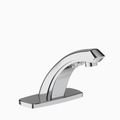


Sloan sensor faucets are touch-free, sensor-activated fixtures built for commercial restrooms where hygiene and reliable water control matter most. Sloan builds these faucets around four power configurations, including battery-powered, hardwired, solar-powered, and hybrid models, so facility teams can match a faucet to available wiring and maintenance capacity. The BASYS series uses Active Infrared sensing as its standard technology, with capacitance sensing offered on select models for more precise activation in busy washrooms. Because the faucet shuts off automatically once hands clear the sensor field, it cuts water waste and lowers the number of surfaces patrons touch during a visit. Schools, airports, hospitals, and office buildings rely on this technology to keep restrooms sanitary and water bills predictable. Plumbers and facility maintenance crews specifying Sloan sensor faucets for a project need to match the sensor type and power source to the building's electrical access and long-term maintenance plan before ordering. Getting that match right early keeps callbacks low and restrooms running smoothly for years.
Subcategories
- Battery-Powered Sensor Faucets: Battery-powered Sloan sensor faucets run on an internal battery pack instead of building wiring, making them a common choice for retrofit projects where running new electrical lines isn't practical. Facility maintenance teams favor this option in older buildings or leased spaces where rewiring adds cost and disruption. Sloan lists battery power as one of four standard power configurations across its sensor faucet lines. Regular battery checks become part of the maintenance routine, so crews typically track replacement schedules alongside other restroom fixtures.
- Hardwired Sensor Faucets: Hardwired sensor faucets draw power directly from the building's electrical system, which removes battery replacement from the maintenance checklist entirely. New construction and major renovation projects often specify hardwired units because the wiring gets installed during rough-in, before walls and fixtures go in. Sloan offers hardwired versions across its BASYS, Clark Street, and Rush Street faucet series. Once installed, these faucets deliver consistent sensor performance without the gradual power drain that comes with battery-only systems.
- Solar-Powered Sensor Faucets: Solar-powered sensor faucets pull energy from ambient or direct light to supplement or replace battery power, cutting down on maintenance visits tied to battery swaps. Sloan includes solar power among its four sensor faucet power configurations, positioning it as an option for facilities focused on lowering long-term maintenance demands. Restrooms with skylights or strong overhead lighting suit this option well. Facility managers weigh solar power against upfront cost and lighting conditions before specifying it for a project.
- Infrared Sensor Faucets: Infrared sensor faucets use Active Infrared technology to detect hands and activate water flow, and Sloan lists Active Infrared as the standard sensing method on its BASYS series. The sensor reads reflected infrared light to determine when a hand enters the activation zone, then shuts the water off once the hand clears that zone. Contractors specifying restroom fixtures for high-traffic commercial buildings often default to infrared sensing because of its established reliability. Adjustable sensor range lets installers fine-tune activation distance during setup to reduce false triggers.
- Capacitance Sensor Faucets: Capacitance sensor faucets detect the electrical field change caused by a hand approaching the faucet, and Sloan offers this sensor type on select BASYS models as an alternative to standard infrared. This sensing method can offer more precise activation in washrooms with heavy foot traffic or reflective surfaces that sometimes cause infrared sensors to misfire. Facility teams specifying fixtures for high-use commercial restrooms sometimes choose capacitance sensing to reduce false activations. Matching sensor type to the washroom's traffic pattern and surface materials helps cut down on service calls after installation.
Buying Guide
Start by identifying the building's electrical access at each fixture location before choosing a power source. Hardwired sensor faucets need wiring in place before wall finishes go up, so new construction and gut renovations are the easiest place to specify them. Retrofit projects without accessible wiring usually call for battery-powered or solar-powered units instead, since both skip the need for new electrical runs. Sensor type matters just as much as power source. Active infrared sensing works well in most commercial washrooms and has a long track record across Sloan sensor faucets, while capacitance sensing suits high-traffic restrooms where reflective surfaces or heavy foot traffic sometimes trigger false activations on infrared units. Facility maintenance capacity also factors into the decision. Battery-powered faucets require a replacement schedule, so buildings without dedicated maintenance staff might do better with hardwired or solar-powered options that reduce service visits. Water flow and mounting style should match the existing sink and countertop cutout to avoid retrofitting plumbing runs. Contractors ordering Sloan sensor faucets for multi-fixture restroom projects should standardize on one power source and sensor type across the space where possible, since mixed systems complicate future maintenance and parts stocking. Reviewing the building's electrical infrastructure, expected traffic volume, and maintenance staffing before placing an order keeps the project on schedule and avoids costly change orders mid-installation.
Frequently Asked Questions
What's the difference between battery-powered and hardwired Sloan sensor faucets?
Battery-powered Sloan sensor faucets run on an internal battery and work well for retrofit projects without accessible wiring, while hardwired units draw power from the building's electrical system and skip battery replacement entirely. Sloan offers both configurations, along with solar-powered and hybrid options, across its sensor faucet lines. The choice usually comes down to wiring access at the fixture location and how much ongoing maintenance a facility can handle.
How does the infrared sensor on a Sloan faucet actually work?
Active Infrared sensing, the standard technology on Sloan's BASYS series, detects reflected infrared light when a hand enters the activation zone and turns water flow on automatically. Water shuts off once the hand clears that zone. Installers can adjust the sensor range during setup to reduce false triggers in busy washrooms.
When does capacitance sensing make more sense than infrared?
Capacitance sensing detects the electrical field change caused by an approaching hand rather than reflected light, which makes it less prone to false activation in washrooms with reflective surfaces or heavy foot traffic. Sloan offers capacitance sensing on select BASYS models as an alternative to standard infrared. Facility teams specifying fixtures for high-use commercial restrooms sometimes choose it specifically to cut down on nuisance activations.
Do solar-powered sensor faucets still need a battery?
Many solar-powered Sloan sensor faucets pair solar cells with a battery to keep the faucet running during low-light periods, reducing how often maintenance crews need to swap batteries. Sloan lists solar power as one of four standard power configurations available across its sensor faucet lines. Restrooms with strong ambient or overhead lighting tend to get the most benefit from this setup.
Can a plumber mix power sources and sensor types within the same restroom?
Mixing power sources and sensor types across fixtures in one restroom is technically possible but adds complexity to maintenance and parts stocking down the line. Standardizing on one power source and sensor type across a restroom project keeps replacement parts and service procedures consistent. Most facility maintenance teams find that consistency saves time when a faucet eventually needs service.
