




Filters
SORT
Product Availability –
Brand –
Amperage –
Review Score –
 --%3E %3Csvg version='1.1' id='Fill' xmlns='http://www.w3.org/2000/svg' xmlns:xlink='http://www.w3.org/1999/xlink' x='0px' y='0px' viewBox='0 0 100 100' enable-background='new 0 0 100 100' xml:space='preserve'%3E %3Cpath fill='%23F15C02' d='M79.44,0.95H20.56C9.78,0.95,0.95,9.78,0.95,20.56v58.87c0,10.79,8.82,19.61,19.61,19.61h58.87 c10.79,0,19.61-8.83,19.61-19.61V20.56C99.05,9.78,90.22,0.95,79.44,0.95z M65.38,58.24l9.38,29.58L49.69,69.78L24.5,87.82 l9.34-29.6L8.8,39.6l30.73-0.17c0,0,6.98-19.61,10-28.93c0.54,1.36,9.88,29.1,9.88,29.1H91.2L65.38,58.24z'/%3E %3C/svg%3E)
 --%3E %3Csvg version='1.1' id='With-RB' xmlns='http://www.w3.org/2000/svg' xmlns:xlink='http://www.w3.org/1999/xlink' x='0px' y='0px' viewBox='0 0 100 100' enable-background='new 0 0 100 100' xml:space='preserve'%3E %3Cpath fill='%23FBC8B4' d='M79.44,0.95H20.56C9.78,0.95,0.95,9.78,0.95,20.56v58.87c0,10.79,8.82,19.61,19.61,19.61h58.87 c10.79,0,19.61-8.83,19.61-19.61V20.56C99.05,9.78,90.22,0.95,79.44,0.95z M65.38,58.24l9.38,29.58L49.69,69.78L24.5,87.82 l9.34-29.6L8.8,39.6l30.73-0.17c0,0,6.98-19.61,10-28.93c0.54,1.36,9.88,29.1,9.88,29.1H91.2L65.38,58.24z'/%3E %3C/svg%3E)
Price Range –
Snap Action Switches

 --%3E %3Csvg version='1.1' id='Half' xmlns='http://www.w3.org/2000/svg' xmlns:xlink='http://www.w3.org/1999/xlink' x='0px' y='0px' viewBox='0 0 100 100' enable-background='new 0 0 100 100' xml:space='preserve'%3E %3Cg%3E %3Cpath fill='%23F15C02' d='M30.05,70.23l3.79-12.01L8.8,39.6l30.73-0.17c0,0,6.98-19.61,10-28.93c0.54,1.36,9.88,29.1,9.88,29.1h1.58 L93.71,7.18c-3.58-3.82-8.66-6.23-14.28-6.23H20.56C9.78,0.95,0.95,9.78,0.95,20.56v58.87c0,5.41,2.22,10.32,5.79,13.88 L30.05,70.23z'/%3E %3C/g%3E %3Cpath fill='%23FBC8B4' d='M93.71,7.18L60.98,39.6H91.2L65.38,58.24l9.38,29.58L49.69,69.78L24.5,87.82l5.55-17.59L6.75,93.32 c3.55,3.54,8.44,5.73,13.82,5.73h58.87c10.79,0,19.61-8.83,19.61-19.61V20.56C99.05,15.4,97.01,10.69,93.71,7.18z'/%3E %3C/svg%3E)

 --%3E %3Csvg version='1.1' id='No-RB' xmlns='http://www.w3.org/2000/svg' xmlns:xlink='http://www.w3.org/1999/xlink' x='0px' y='0px' viewBox='0 0 100 100' enable-background='new 0 0 100 100' xml:space='preserve'%3E %3Cpath fill='%23CECECE' d='M79.44,0.95H20.56C9.78,0.95,0.95,9.78,0.95,20.56v58.87c0,10.79,8.82,19.61,19.61,19.61h58.87 c10.79,0,19.61-8.83,19.61-19.61V20.56C99.05,9.78,90.22,0.95,79.44,0.95z M65.38,58.24l9.38,29.58L49.69,69.78L24.5,87.82 l9.34-29.6L8.8,39.6l30.73-0.17c0,0,6.98-19.61,10-28.93c0.54,1.36,9.88,29.1,9.88,29.1H91.2L65.38,58.24z'/%3E %3C/svg%3E)
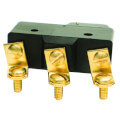
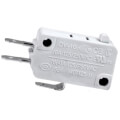


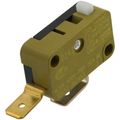
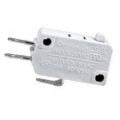
Snap action switches are electromechanical switches built with an internal spring mechanism that snaps the contacts open or closed quickly once an actuating force crosses a set threshold, rather than transitioning gradually as the actuator moves. That fast, positive transition matters in HVAC and appliance controls, where a slow-closing contact can arc, chatter, or fail to reliably break a circuit under load. Technicians run into these switches inside limit controls, pressure switches, thermostats, and safety interlocks, where a single component often needs to reliably open a circuit the moment a door, lever, or diaphragm reaches a specific position. Because the internal mechanism does the same job across many different control applications, snap action switches show up as both original-equipment parts and stocked service replacements. Matching a replacement to the exact application, actuator style, and electrical rating of the original part is what keeps a repair reliable rather than just temporarily working.
Subcategories
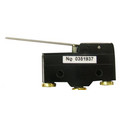
- Lever and Roller Actuated Switches: These switches use an external lever or roller arm as the actuator, tripping the internal snap mechanism when something physically pushes or rotates the arm past its set point. Technicians find them in limit switches on dampers, doors, and moving mechanical assemblies where a physical position needs to trigger an electrical response. The roller variant reduces wear when the actuating surface slides across the lever repeatedly rather than pressing it once. Lever length and roller diameter both affect how much travel is needed before the switch trips, so matching those dimensions to the original part matters for a proper fit.
- Pin Plunger Switches: Pin plunger switches use a small straight plunger as the actuator instead of a lever, tripping when something presses directly down on the pin. Contractors use this style where space is tight and a lever arm wouldn't clear surrounding components, such as inside compact control housings or behind access panels. The short, direct travel of a plunger switch also makes it a common choice for detecting a closed door or panel. Plunger switches are typically the most compact snap action option available for a given electrical rating.
- High-Temperature Snap Switches: High-temperature snap switches are built with materials rated to hold up inside furnaces, ovens, and other appliances where ambient heat would degrade a standard switch housing over time. Technicians specify these for limit and safety controls mounted close to a heat exchanger or burner assembly. Housing and internal component materials are selected specifically for extended exposure to elevated operating temperatures rather than just intermittent contact. Because they're used in safety-critical shutoff roles, matching the exact temperature rating of the original part to its replacement is especially important.
- Miniature Snap Action Switches: Miniature snap switches shrink the same internal mechanism into a smaller housing for use inside compact control assemblies, thermostats, and appliance panels where a standard-size switch won't fit. Contractors reach for these when replacing a factory-installed switch inside a tight enclosure rather than retrofitting a larger aftermarket part. Despite the smaller footprint, the snap action principle stays the same: a quick, positive transition once the actuator crosses its trip point. Mounting hole spacing and terminal layout are the details most likely to differ between otherwise similar-looking miniature switches.
Buying Guide
Sourcing the correct snap action switches for a repair starts with identifying the actuator style on the failed part, since a lever, roller, or plunger switch generally isn't interchangeable with another style without modifying the mounting bracket or linkage it connects to. Beyond actuator type, the electrical rating of the switch, meaning the voltage and current it's built to handle, needs to match the original component; an undersized replacement can fail prematurely or create a safety hazard in the control circuit it's protecting. Application matters as much as physical fit: a switch pulled from a general-purpose limit control isn't necessarily suited for a high-temperature location near a heat exchanger, where housing and internal materials need to tolerate sustained heat exposure. For safety and shutoff controls specifically, sourcing snap action switches that match the original manufacturer's specification as closely as possible reduces the risk of a control that looks like it works but doesn't reliably trip when it needs to. Mounting details, including hole spacing, bracket orientation, and terminal configuration, should be checked against the failed part before ordering, since two switches with the same electrical rating can still have incompatible mounting footprints. Keeping a small assortment of common actuator styles and ratings on the truck helps with same-day repairs on the appliance and HVAC control calls where these switches turn up most often.
Frequently Asked Questions
What makes a snap action switch different from a standard toggle switch?
A snap action switch uses an internal spring mechanism that closes or opens the contacts quickly once the actuator crosses a trip point, rather than transitioning gradually. That fast transition reduces arcing and contact wear compared to a slow-closing switch.
Can I substitute a plunger switch for a lever switch in the same application?
Not usually without modifying the mounting or linkage, since the two actuator styles engage differently with whatever mechanism is triggering them. It's best to match the original actuator style unless the application is being redesigned.
Why do high-temperature snap switches cost more than standard ones?
High-temperature switches use housing and internal materials built to hold up under sustained heat exposure near burners or heat exchangers, which standard switches aren't built to tolerate over time.
How do I know what electrical rating I need for a replacement switch?
Check the rating printed on the original switch housing or the equipment's service documentation. Matching voltage and current rating to the original part is important for both reliability and safety.
Are miniature snap switches less durable than full-size ones?
Not inherently. Miniature switches use the same snap action mechanism, just packaged in a smaller housing for tight spaces. Durability depends more on the specific switch's build and rating than its physical size.
